Category
page 1Permian first appearances

Bennettitales
Bennettitales (also known as cycadeoids) is an extinct order of seed plants that first appeared in the Permian period and became extinct in most areas toward the end of the Cretaceous. Bennettitales were amongst the most common seed plants of the Mesozoic, and had morphologies including shrub and cycad-like forms. The foliage of bennettitaleans is superficially nearly indistinguishable from that of cycads, but they are distinguished from cycads by their more complex flower-like reproductive organs, at least some of which were likely pollinated by insects.
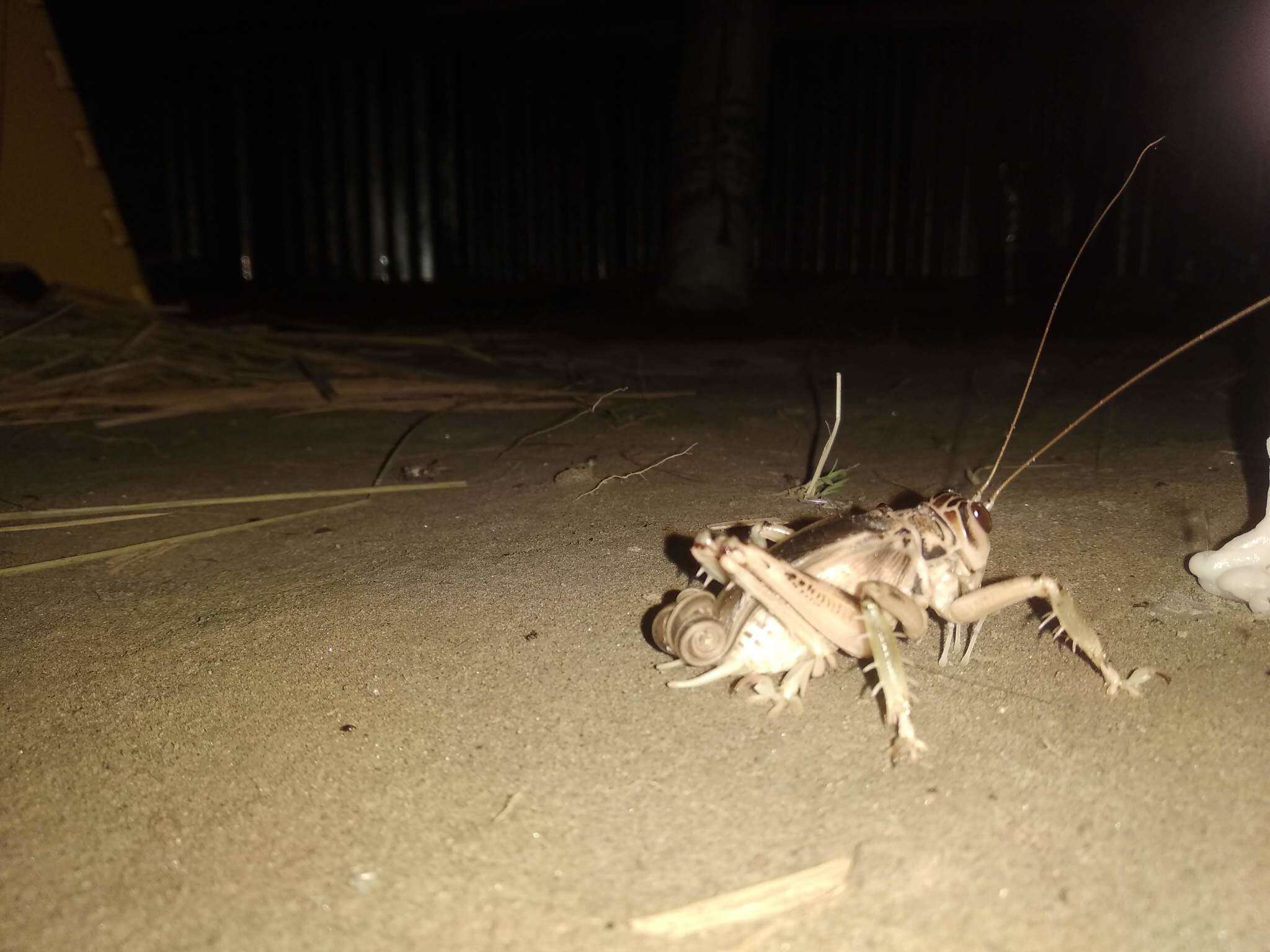
Schizodactylidae
Schizodactylidae is a family of orthopteran insects found in Asia and southern Africa, known as dune crickets or splay-footed crickets. They are usually found in desert and sandy areas. Species are predatory, including Schizodactylus inexspectatus. T. B. Fletcher notes that one captive individual did not feed on any vegetable matter. Fossils are known since the Early Cretaceous.

Younginiformes
Younginiformes is a potential group of diapsid reptiles known from the Permian–Triassic of Africa. It has been used as a replacement for the more problematically-defined "Eosuchia". Younginiforms were historically suggested to be lepidosauromorphs, but are now regarded as basal non-saurian neodiapsids. Some younginiforms like Hovasaurus and Acerosodontosaurus are thought to have had an amphibious lifestyle, while others like Kenyasaurus, Thadeosaurus, and younginids were probably terrestrial.
Coelacanthidae
Coelacanthidae is an extinct family of coelacanths found in freshwater and marine strata throughout the world, originating during the Permian, and finally dying out during the Jurassic.
Eosuchia
Eosuchia is a proposed order of extinct diapsid reptiles comprising taxa from the Permian and Triassic. Eosuchia was initially defined to include all "thecodontian" reptiles which did not have an antorbital fenestra but did retain tabulars, postparietals, and a large pineal foramen (Broom, 1914). Broom coined the term as a new suborder for Youngina.
Eutherocephalia
Eutherocephalia ("true beast head") is an extinct clade of advanced therocephalian therapsids. Eutherocephalians are distinguished from the lycosuchids and scylacosaurids, two early therocephalian families. While lycosuchids and scyalosaurids became extinct by the end of the Permian period, eutherocephalians survived the Permian–Triassic extinction event. The group eventually became extinct in the Middle Triassic.
== Characteristics ==
The Eutherocephalians evolved several mammal-like traits through convergent evolution with Cynodontia. Among those traits were the loss of palatine teeth and th
Peltaspermales
The Peltaspermales are an extinct order of seed plants, often considered "seed ferns". They span from the Late Carboniferous to the Early Jurassic or the Jurassic-Cretaceous Boundary. It includes at least one valid family, Peltaspermaceae, which spans from the Permian to Early Jurassic, which is typified by a group of plants with Lepidopteris leaves, Antevsia pollen-organs, and Peltaspermum ovulate organs, though the family now also includes other genera like Peltaspermopsis, Meyenopteris and Scytophyllum. Along with these, two informal groups (the "Supaioids" and the "Comioids") of uncertain
Trigonia
thumb|right|225px|Diagram of Trigonia costata James Parkinson, showing main morphological features of the shell exterior;a) [[Anterior; p) Posterior; d) Dorsal; v) Ventral; F) Flank; A) Area; c) Costae; mc) Marginal CarinaTrigonia costata ranges from the Lower Jurassic (Toarcian) to Middle Jurassic (Callovian).]]
thumb|350x350px|Trigonia sp. from the Jurassic of the Canjuers plateau, Var, France. Max Rouger Collection.
Trigonia is an extinct genus of saltwater clams, fossil marine bivalve mollusk in the family Trigoniidae. The fossil range of the genus spans the Paleozoic, Mesozoic and Paleoce
Inoceramidae
The Inoceramidae are an extinct family of bivalves ("clams") in the Class Mollusca. Fossils of inoceramids are found in marine sediments of Permian to latest Cretaceous in age. Inoceramids tended to live in upper bathyal and neritic environments. Many species of inoceramid are found all over the world, demonstrating the wide distribution of their preferred ecosystems, and possibly long-lived planktotrophic larvae. Despite their wide distribution, the pace of evolution of inoceramids was great, with species ranges commonly averaging 0.2-0.5 Ma.
Whaitsiidae
Whaitsiidae is an extinct family of therocephalian therapsids. Whaitsiids were among the most diverse therocephalians of the Late Permian, though they would go extinct at the end-Permian mass extinction.
Baurioidea
Baurioidea is a superfamily of therocephalian therapsids. It includes advanced therocephalians such as Regisaurus and Bauria. The superfamily was named by South African paleontologist Robert Broom in 1911. Bauriamorpha, named by D. M. S. Watson and Alfred Romer in 1956, is a junior synonym of Baurioidea.
Pylaecephalidae
Pylaecephalidae is a family of dicynodont therapsids that includes Diictodon, Robertia, and Prosictodon from the Permian of South Africa. Pylaecephalids were small burrowing dicynodonts with long tusks. The family was first named in 1934 and was redefined in 2009. Diictodontidae and Robertiidae are considered junior synonyms of Pylaecephalidae; although Pylaecephalus itself is considered a junior synonym of Diictodon, the name Pylaecephalidae predates these names and therefore takes priority.
Cladophlebis
Cladophlebis is an extinct form genus of fern, which has been reported from the Permian to the end of the Cretaceous and from all continents of the world.
Bauriidae
Bauriidae is an extinct family of therocephalian therapsids. Bauriids were the latest-surviving group of therocephalians after the Permian–Triassic extinction event, going extinct in the Middle Triassic. They are among the most advanced eutherocephalians and possess several mammal-like features such as a secondary palate and wide postcanine teeth at the back of the jaws (analogous to mammalian molars). Unlike other therocephalians, bauriids were herbivorous. They were also smaller than earlier members of the group. Two subfamilies are classified within Bauriidae: Nothogomphodontinae and Baurii
Hofmeyriidae
Hofmeyriidae is a family of therocephalian therapsids. It includes the genus Ictidostoma and others.
Cheirophyllum
Cheirophyllum is an extinct plant genus that existed during the Permian.
Protodiptera
Protodiptera is an extinct suborder of mecopteran insects containing the two families Permotanyderidae and Permotipulidae with a total of four genera Choristotanyderus, Permila, Permotanyderus and Permotipula.
==References==

Chiropteris
Chiropteris is an extinct genus of plants that existed from the Early Permian (Sakmarian stage) to the Late Jurassic (?Oxfordian stage, maybe latter).
Synechodontiformes
Synechodontiformes is an extinct order of prehistoric shark-like cartilaginous fish, known from the Permian to the Paleogene. They are considered to be members of Neoselachii, the group that contains modern sharks and rays.
Neocalamites
Neocalamites is an extinct genus of equisetalean plant. Neocalamites thrived during the Permian and Triassic, and occurs worldwide.