Category
page 1Pertusariales genera

Pertusaria
Pertusaria is a large genus of warty crustose lichens in the Pertusariaceae family. The fruiting bodies are usually modified apothecia that immersed in warts on the main body (thallus) with small holes for the spores to emerge, similar to ostioles, or are fully above and lecanorine (spore bearing discs surrounded by a ring of tissue similar to the tissue of the thallus. Members of the genus are commonly called wart lichens.

Ochrolechia
Ochrolechia is the sole genus in the fungal family Ochrolechiaceae. It comprises about 40 species of crustose lichens. These lichens typically form uneven, often thick, crust-like growths on various surfaces and are characterised by their white to pale grey thalli, which may have a greenish tint. The genus has a long evolutionary history, with fossils dating back to the Paleogene period, about 34 million years ago. Ochrolechia species have disc-like apothecia (fruiting bodies), which are usually yellowish or brownish-pink and often covered with a fine white powdery coating. The genus is widely
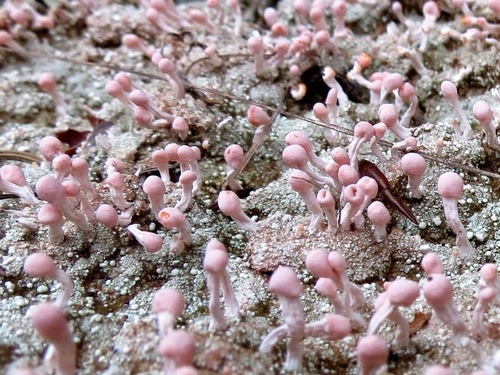
Dibaeis
Dibaeis is a genus of lichen-forming fungi in the family Icmadophilaceae. The genus is widely distributed in tropical regions. Dibaeis was circumscribed in 1909 by Frederic Edward Clements with Dibaeis rosea as the type species. Several species were transferred from other genera in a 1993 publication.
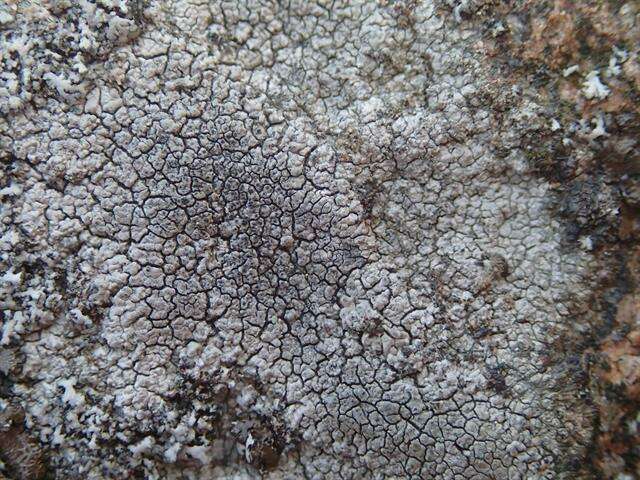
Aspicilia
Aspicilia (sunken disk lichen) is a genus of mostly crustose areolate lichens that grow on rock. Most members have black apothecia discs that are slightly immersed in the areolas, hence the common name"''Given the same reason, the naming of Aspicilia'' is derived from the Greek word for "shield concave".
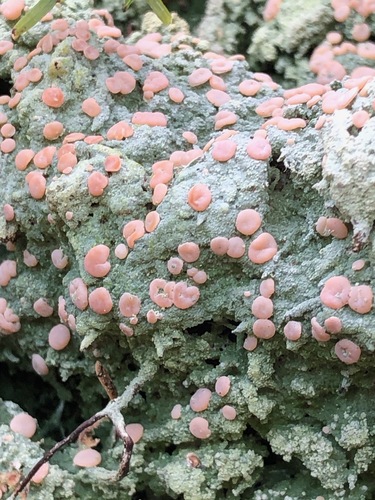
Icmadophila
Icmadophila is a genus of crustose lichen. The genus has a widespread distribution in the Northern Hemisphere and contains six species. The only species found in North America, Icmadophila ericetorum, has a mint green crustose thallus that is dotted with bright pink apothecial disks, and is sometimes colloquially referred to as "fairy puke". It aggressively grows over mosses on well-rotted wood and peat. It looks very distinctive, but may be confused with species of Dibaeis.

Lobothallia
Lobothallia is a genus of lichen-forming fungi in the family Megasporaceae. Dark brown to black apothecia may be sunken into the surface of the thallus, as indicated in the common name puffed sunken-disk lichen. Originally described as a subgenus of Aspicilia in 1984, Lobothallia was elevated to full genus status in 1991 based on distinctive features including peripheral and small, thin-walled ascospores. The genus was established to clarify a group of rock-dwelling lichens that had previously been classified across several different genera.

Circinaria
Circinaria is a genus of lichen-forming fungi in the family Megasporaceae. It was circumscribed by Johann Heinrich Friedrich Link in 1809.

Megaspora
Megaspora is a genus of lichen-forming fungi in the family Megasporaceae. It contains four species of crustose lichens that typically grow on soil, bryophytes (mosses and liverworts), or plant litter on chalky .

Thamnolia
Thamnolia is a genus of lichens in the family Icmadophilaceae. Members of the genus are commonly called whiteworm lichens.

Siphula
Siphula is a genus of lichen-forming fungi in the family Icmadophilaceae. The widespread genus was circumscribed by the Swedish mycologist Elias Fries in 1831.

Coccotrema
Coccotrema is a genus of lichen-forming fungi. It is the type genus of the family Coccotremataceae, in the order Pertusariales. The genus contains 16 species.
Microcaliciaceae
Microcalicium is a genus of lichen-forming fungi in the order Pertusariales. It is the only genus in the monotypic family Microcaliciaceae. These taxa were circumscribed by the Finnish lichenologist Edvard August Vainio in 1927, with Microcalicium disseminatum assigned as the type species.

Varicellaria
Varicellaria is a genus of crustose lichens. It is the only genus in the family Varicellariaceae. The genus contains 12 recognized species found worldwide. These lichens typically form pale bluish-grey or whitish-grey crusts on tree bark or rocks, and they produce a lichen product called lecanoric acid. Genetic studies have helped clarify the boundaries between species in this group, showing that where they grow (bark versus rock) and certain physical features are important for telling them apart.
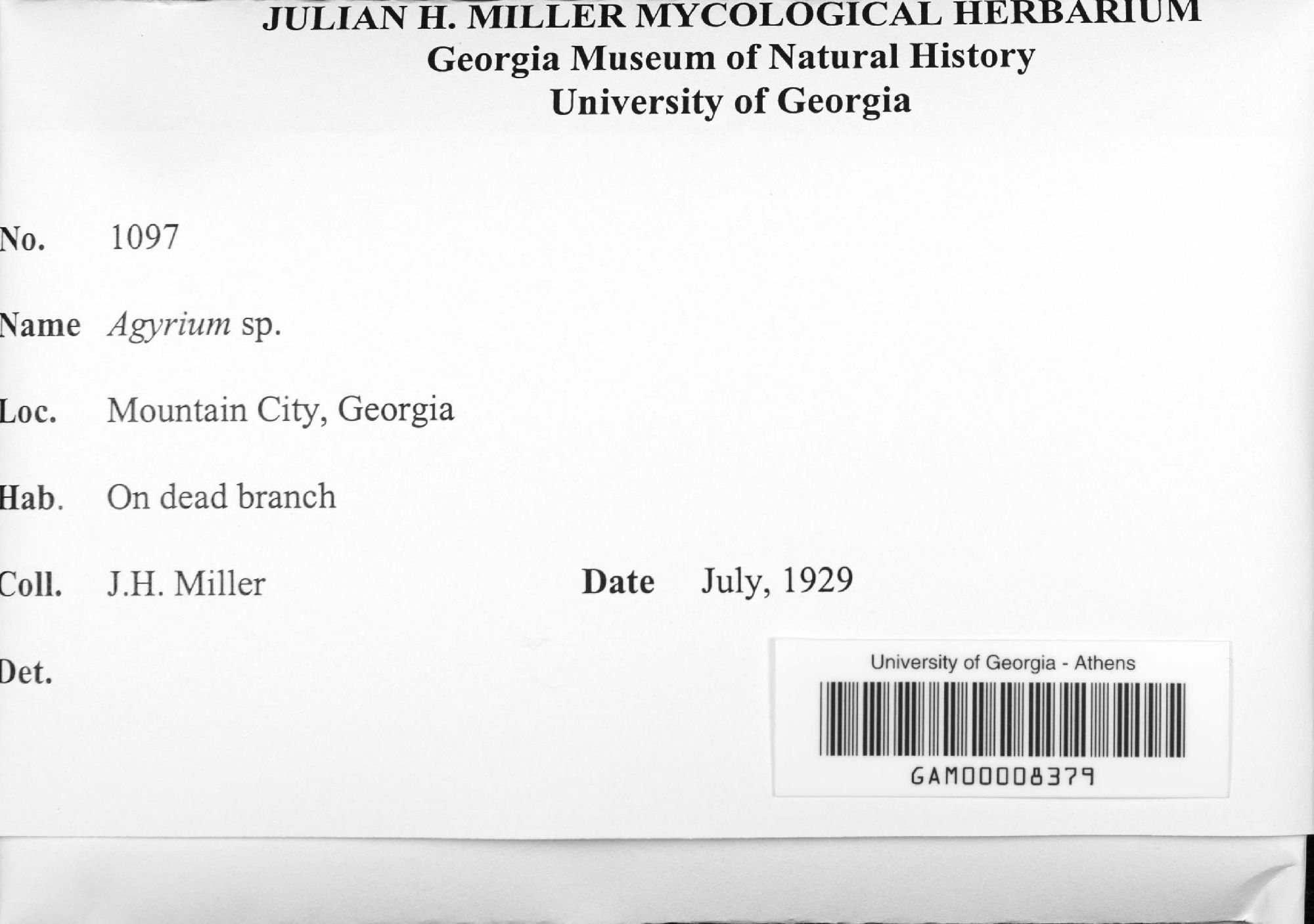
Agyrium
Agyrium is a genus of saprophytic fungi in the family Agyriaceae. It probably evolved from a lichen ancestor, as it is closely related to many lichenized species of fungi.