Category
page 1Pharaohs

pharaoh
The Pharaoh was the monarch of ancient Egypt. The title came into use from the Eighteenth Dynasty onwards and was subsequently attributed to all the previous kings of Egypt. Before this Pharaoh was a term that meant more of the kings' administration. The earliest confirmed instance of the title used contemporaneously for a ruler is a letter to Akhenaten (reigned –1336 BCE), possibly preceded by an inscription referring to Thutmose III (–1425 BCE). Although the title only came into use in the Eighteenth Dynasty during the New Kingdom, scholars today use it for all the rulers of Egypt from the F

list of pharaohs
Wikimedia list article

Sahure
Sahure (also Sahura, meaning "He who is close to Re") was a pharaoh of ancient Egypt and the second ruler of the Fifth Dynasty. He reigned for about 13 years in the early 25th century BC during the Old Kingdom Period. Sahure's reign marks the political and cultural high point of the Fifth Dynasty. He was probably the son of his predecessor Userkaf with Queen NeferhetepesII, and was in turn succeeded by his son Neferirkare Kakai.

Shepseskaf
Shepseskaf (meaning "His Ka is noble") was a pharaoh of ancient Egypt, the sixth and probably last ruler of the Fourth Dynasty during the Old Kingdom period. He reigned most probably for four but possibly up to seven years in the late 26th to mid-25th century BC.
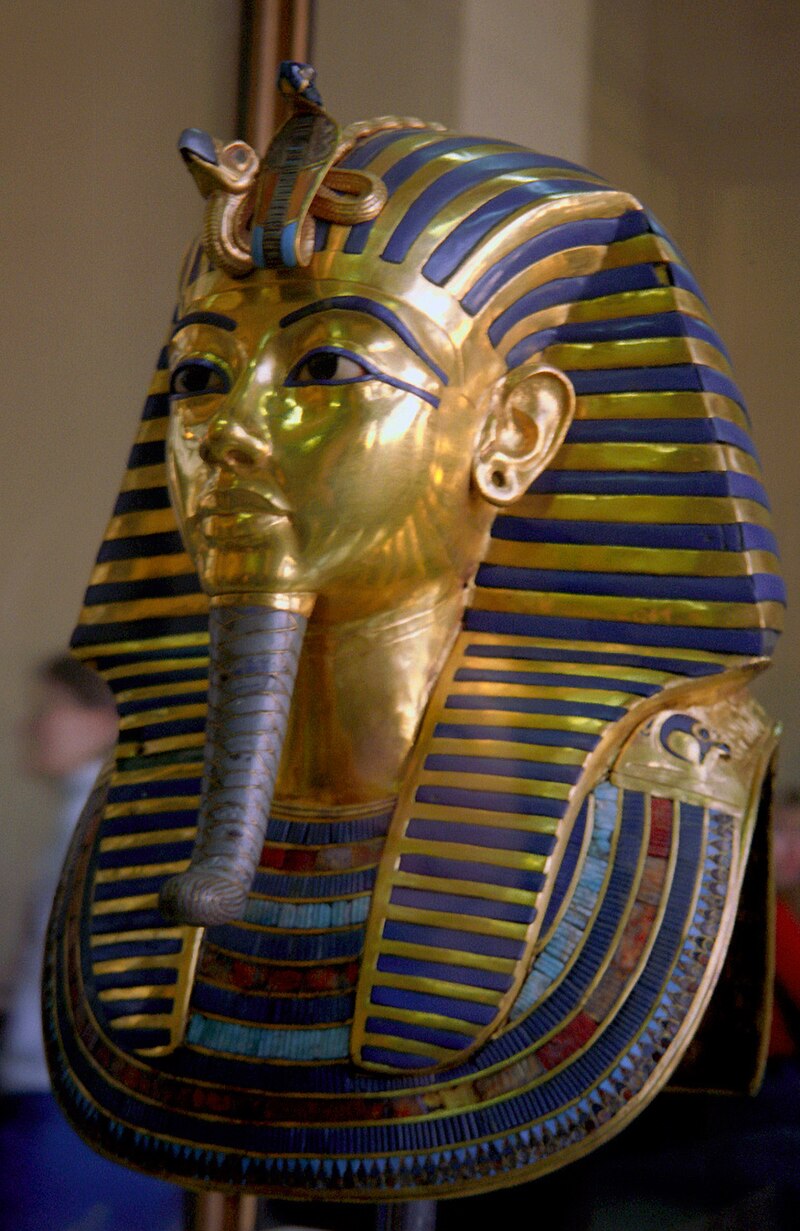
Curse of the pharaohs
alleged curse believed by some to be cast upon any person who disturbs the mummy of an Ancient Egyptian person, especially a pharaoh
template:Kings of ancient Egypt
Wikimedia template
clothing in ancient Egypt
aspect of history
The Pharaohs' Golden Parade
transport of royal mummies in Egypt into a new museum on April 3rd, 2021
crook and flail
symbols of ancient Egyptian royalty
Pharaoh's daughter (wife of Solomon)
figure in the Hebrew Bible who is described as marrying Solomon to cement a political alliance between the United Monarchy of Israel and Egypt (First Book of Kings)
Template:Queens of ancient Egypt
Wikimedia template