Category
page 1Philosophical methodology

dialectic
Dialectic (; ), also known as the dialectical method, refers originally to dialogue between people holding different points of view about a subject but wishing to arrive at the truth through reasoned argument. Dialectic resembles debate, but the concept excludes subjective elements such as emotional appeal and rhetoric; the object is more an eventual and commonly held truth than the "winning" of an (often binary) competition. It has its origins in ancient philosophy and continued to be developed in the Middle Ages.

empiricism
In philosophy, empiricism is an epistemological view which holds that true knowledge or justification comes either only or primarily from sensory experience and empirical evidence. It is one of several competing views within epistemology, along with rationalism and skepticism.
.jpg)
dialogue
thumb|right|200px|A dialogue amongst participants in a 1972 cross-cultural youth convention
Dialogue (sometimes spelled dialog in American English) is an interactive communication between two or more people, and a literary and theatrical form that depicts such an exchange. As a philosophical or didactic device, it is chiefly associated in the West with the Socratic dialogue as developed by Plato, but antecedents are also found in other traditions including Indian literature.

criticism
thumb|La Crítica, a 1906 self-portrait by Julio Ruelas where criticism is depicted as a creature atop his head.

hermeneutics
Hermeneutics () is the theory and methodology of interpretation, especially the interpretation of biblical texts, wisdom literature, and philosophical texts. As necessary, hermeneutics may include the art of understanding and communication.
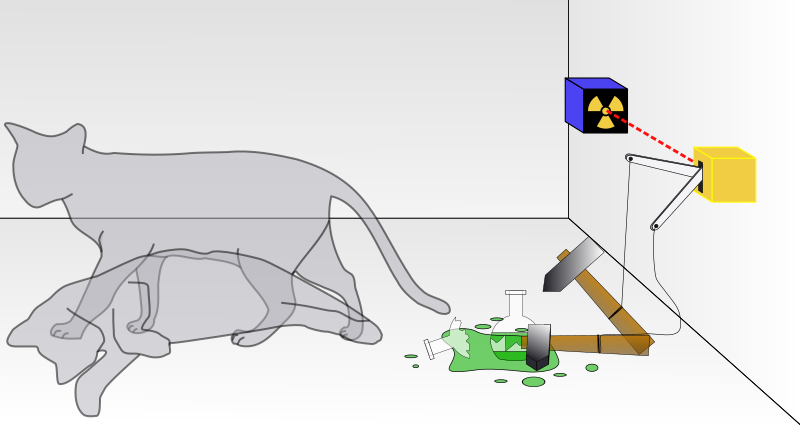
thought experiment
considering hypothesis, theory, or principle for the purpose of thinking through its consequences

Socratic method
type of dialog or debate
philosophical skepticism
questioning the possibility of certainty, or of judgement, due to inadequate evidence
meta-
Greek prefix: prefix of abstraction
ordinary language philosophy
view that philosophical problems are based in distortions of language
eristic
In philosophy and rhetoric, eristic (from Eris, the ancient Greek goddess of chaos, strife, and discord) refers to an argument that aims to successfully dispute another's argument, rather than searching for truth. According to T.H. Irwin, "It is characteristic of the eristic to think of some arguments as a way of defeating the other side, by showing that an opponent must assent to the negation of what he initially took himself to believe." Eristic is defined by Rankin as arguing for the sake of conflict, as opposed to resolving conflict.
Cartesian doubt
form of methodological skepticism associated with the writings and methodology of René Descartes
experimental philosophy
field of philosophical inquiry that makes use of empirical data in order to inform research on philosophical questions
principle of charity
in philosophy or rhetoric, the principle that one should interpret a speaker's statements in the most rational way possible and, in the case of any argument, considering its best, strongest possible interpretation
dialectical logic
system of laws of thought
philosophical analysis
general term for techniques typically used by philosophers in the analytic tradition
fictionalism
Fictionalism is a view in philosophy that posits that statements appearing to be descriptions of the world should not be construed as such, but should instead be understood as cases of "make believe", thus allowing individuals to treat something as literally true (a "useful fiction").
Diairesis
Diairesis (, "division") is a form of classification used in ancient (especially Platonic) logic that serves to systematize concepts and come to definitions. When defining a concept using diairesis, one starts with a broad concept, then divides this into two or more specific sub-concepts, and this procedure is repeated until a definition of the desired concept is reached. Aristotle makes extensive use of diaresis in categorization as basis for syllogizing. He makes clear, however, that definition by diaresis does not in itself prove anything. Apart from this definition, the procedure also resu
antipedagogy
Antipedagogy (; ; ), sometimes spelled anti-pedagogy with the hyphen, is a critical theory that examines traditional pedagogical dynamics, particularly scrutinizing the exercise of parental or educational authority as a violation of human rights. The anti-pedagogical enlightenment brings attention to the detrimental effects of conventional pedagogy and advocates for intergenerational equality. In 1975, Ekkehard von Braunmühl laid the foundation for this theory with his publication, "Antipedagogy – Studies on the Abolition of Education".
linguistic philosophy
view emphasising importance of language in philosophy

Socratic questioning
type of question to predict knowledge on a topic
Dissoi Logoi
Ancient Greek rhetorical exercise
intercultural philosophy
approach to philosophy that emphasizes the integration of influences from different cultures
Quietism
view on the purpose of philosophy
philosophical method
tool in philosophy
intellectual honesty
applied method of problem solving
bracketing
in the philosophy of Husserl, an act of suspending judgment about the natural world to instead focus on analysis of experience
Methodism
philosophy