Category
page 1Philosophy of biology

clade
thumb|400px| Cladogram (a branching tree diagram) illustrating the relationships of organisms within groups of taxa known as clades. The vertical line (stem) at the base (bottom) represents the [[last common ancestor. The blue and red subgroups are clades, each defined by a common ancestor stem at the base of its respective subgroup (branch). The green subgroup alone, however, is not a clade; it is a paraphyletic group relative to the blue subgroup because it excludes the blue branch, which shares the same common ancestor. Together, the green and blue subgroups form a clade.]]

evolutionary biology
study of the processes that produced the diversity of life

developmental biology
discipline that explores the processes by which individual organisms grow and develop (ontogeny)

cladistics
Cladistics ( ; from Ancient Greek 'branch') is an approach to biological classification in which organisms are categorized in groups ("clades") based on hypotheses of most recent common ancestry. The evidence for hypothesized relationships is typically shared derived characteristics (synapomorphies) that are not present in more distant groups and ancestors. However, from an empirical perspective, common ancestors are inferences based on a cladistic hypothesis of relationships of taxa whose character states can be observed. Theoretically, a last common ancestor and all its descendants constitut
.JPG)
bioethics
Bioethics is both a field of study and professional practice, interested in ethical issues related to health (primarily focused on the human, but also increasingly includes animal ethics), including those emerging from advances in biology, medicine, and technologies. It proposes the discussion about moral discernment in society (what decisions are "good" or "bad" and why) and it is often related to medical policy and practice, but also to broader questions as environment, well-being and public health. Bioethics is concerned with the ethical questions that arise in the relationships among life
antinatalism
Antinatalism or anti-natalism is the philosophical value judgment that procreation is unethical or unjustifiable. Antinatalists thus argue that humans should abstain from making children. Some antinatalists consider coming into existence to always be a serious harm. Their views are not necessarily limited only to humans but may encompass all sentient creatures, arguing that coming into existence is a serious harm for sentient beings in general.
conservation biology
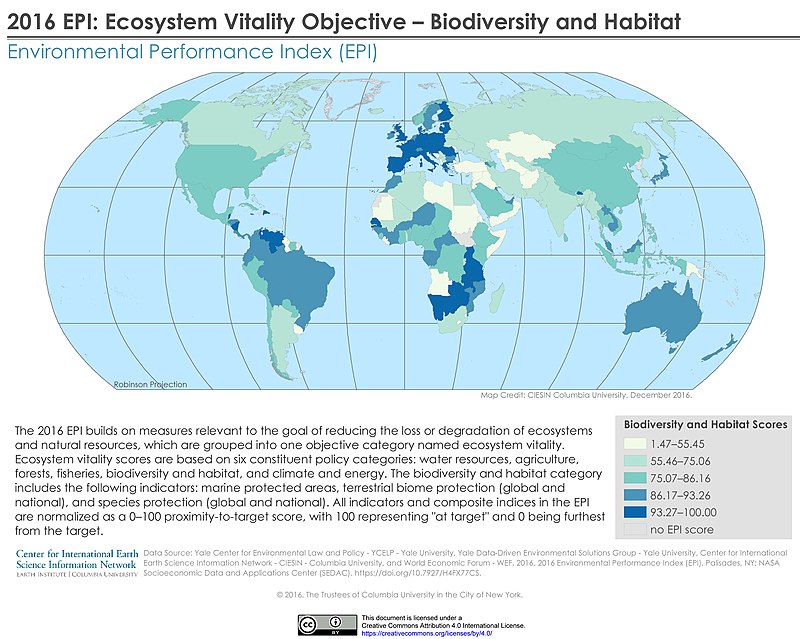
study of threats to biological diversity
theistic evolution
views that regard religious teachings about God as compatible with modern scientific understanding about biological evolution
biological determinism
absolutization of the influence of biological characteristics, such as genes, brain structure or physiology, on a person
natural landscape
original landscape formed by nature
philosophy of biology
subfield of philosophy of science

carnism
Carnism is a concept used in discussions of humanity's relation to other animals, defined as a prevailing ideology in which people support the use and consumption of animal products, especially meat. Carnism is presented as a dominant belief system supported by a variety of defense mechanisms and mostly unchallenged assumptions.
As a dominant ideological system of which meat consumption and animal exploitation are a part, it prescribes norms and beliefs about animal treatment. The term carnism was coined by social psychologist and author Melanie Joy in 2001 and popularized by her book Why We

natalism
thumb|upright=1.1|Uruguayan poet Juan Zorrilla de San Martín, surrounded by his family. Twice married, he fathered 16 children during his life.
Natalism (also called pronatalism or the pro-birth position) is a policy paradigm or personal value that promotes the reproduction of human life as an important objective of humanity and therefore advocates a high birthrate.
philosophy of medicine
branch of philosophy

neurophilosophy
Neurophilosophy, or the philosophy of neuroscience, is the interdisciplinary study of neuroscience and philosophy that explores the relevance of neuroscientific studies to the arguments traditionally categorized as philosophy of mind. Recent scientific discourse elucidates the distinction between "neurophilosophy" and "philosophy of neuroscience".
What Is Life?
1944 non-fiction work by Erwin Schrödinger
Fisherian runaway
Sexual selection mechanism
structuralism
school of biological thought that objects to an exclusively Darwinian or adaptationist explanation of natural selection, arguing that other mechanisms also guide evolution, and sometimes implying that these supersede selection altogether
teleology in biology
use of language of goal-directedness in the context of evolutionary adaptation

Natural Theology or Evidences of the Existence and Attributes of the Deity
1802 book by William Paley
shadow biosphere
hypothetical microbial biosphere of Earth that would use radically different biochemical and molecular processes from that of currently known life
Precambrian rabbit
hypothetical fossil that would falsify evolution
feminist biology
approach to biology
biological naturalism
an approach to the mind–body problem proposed by John Searle, that mental phenomena are higher-level features of the brain caused by neurobiological processes
Chemoton
thumb|400px|Reaction scheme of the chemoton, showing the interplay of metabolism, information and structural closure. Based on Fig. 1.1 of Gánti (2003)The term chemoton (short for 'chemical automaton') refers to an abstract model for the fundamental unit of life introduced by Hungarian theoretical biologist Tibor Gánti. Gánti conceived the basic idea in 1952 and formulated the concept in 1971 in his book The Principles of Life (originally written in Hungarian, and translated to English only in 2003). He suggested that the chemoton was the original ancestor of all organisms.
Biology and Philosophy
academic journal