Category
page 1Philosophy of physics

time travel
hypothetical activity of traveling into the past or future

classical physics
theories of physics that predate modern, more complete, or more widely applicable theories

physical cosmology
branch of cosmology which studies mathematical models of the universe

emergence
thumb|The formation of complex symmetrical and fractal patterns in [[snowflakes exemplifies emergence in a physical system.]]
thumb|A termite "cathedral" mound produced by a termites|termite colony offers a classic example of emergence in nature.

physicalism
In philosophy (metaphysics), physicalism is the position that everything is physical, that there is nothing over and above the physical, and that everything supervenes on the physical. It stands in direct opposition to idealism, which asserts that reality arises from the mind. Physicalism is a form of ontological monism—a single-substance account of the nature of reality, in contrast to "two-substance" (mind–body dualism) or "many-substance" (pluralism) views. Physicalism is closely related to naturalism, though important distinctions exist between them.
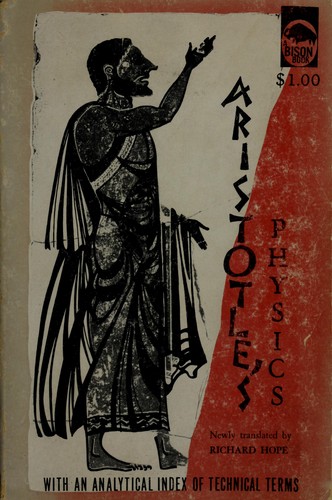
Physics
treatise by Aristotle

coincidence
alt=An image of a total solar eclipse at Orin Junction, Wyoming in 2017. A total solar eclipse happens when the Moon completely blocks the face of the Sun. It is the result of a cosmic coincidence. Even though the Sun is about 400 times bigger than the Moon, it is also about 400 times farther away. This makes the Sun and the Moon appear almost exactly the same size in our sky. |thumb|Solar eclipse of August 21, 2017|A total solar eclipse at Orin Junction, Wyoming in 2017. A total solar eclipse happens when the [[Moon completely blocks the face of the Sun. It is the result of a cosmic coinciden
inverse-square law
physical law
correspondence principle
physics principle that quantum theories reproduce classical physics in the limit of large quantum numbers, formulated by Niels Bohr in 1920
philosophy of physics
branch of philosophy
philosophy of space and time
branch of philosophy relating to spatiality and temporality
interpretation of quantum mechanics
set of statements which attempt to explain how quantum mechanics informs our understanding of nature
eternalism
View that past, present and future exist
measurement in quantum mechanics
interaction of a quantum system with a classical observer
Ansatz
In physics and mathematics, an ansatz (; , meaning: "initial placement of a tool at a work piece", plural ansatzes or, from German, ansätze ; ) is an educated guess or an additional assumption made to help solve a problem, and which may later be verified to be part of the solution by its results.
Bohr–Einstein debates
Series of public disputes between physicists Niels Bohr and Albert Einstein
causality
conceptual link between natural phenomena that temporally follow one another because one is the cause of the other
time
fundamental quantity in physics

superdeterminism
In quantum mechanics, superdeterminism is a loophole in Bell's theorem. By postulating that all systems being measured are correlated with the choices of which measurements to make on them, the assumptions of the theorem are no longer fulfilled. A hidden variables theory which is superdeterministic can thus fulfill Bell's notion of local causality and still violate the inequalities derived from Bell's theorem. This makes it possible to construct a local hidden-variable theory that reproduces the predictions of quantum mechanics, for which a few toy models have been proposed. In addition to bei
problem of time
conceptual conflict between general relativity and quantum mechanics
criticism of the theory of relativity
overview about the criticism of the theory of relativity
A series and B series
Philosophical terms regarding the temporal ordering of events
Implicate and explicate order
quantum physics concepts developed by David Bohm regarding wholeness and non-locality
Consciousness causes collapse
Interpretation of quantum mechanics in which consciousness is postulated to be necessary for the completion of the process of quantum measurement
the Void
manifestation of nothingness
temporal finitism
philosophical doctrine
Afshar experiment
Controversial physics experiment
four-dimensionalism
In philosophy, four-dimensionalism (sometimes called the doctrine of temporal parts) is a family of views about the ontology of time and persistence. Roughly, four-dimensionalists hold that persisting objects are extended in time in a way analogous to their extension in space, and that they are composed of distinct temporal parts located at different times, in addition to their spatial parts.
Background independence
concept of universality in physical science
relationship between mathematics and physics
relationship
interaction-free measurement
non-invasive measurement of a quantum system
Foundations of Physics
journal
Popper's experiment
experiment proposed by Karl Popper to put to the test different interpretations of quantum mechanics
quantum clock
atomic clock with laser cooled single ions confined together in an electromagnetic ion trap
Black Hole Initiative
interdisciplinary science program at Harvard University
Model-dependent realism
view of scientific inquiry