Category
page 1Philosophy of time

future
300px|thumb|upright=1.5|The Zeitpyramide in 2023

present
The present is the period of time that is occurring right now. The present is in contrast to the past, the period of time that has already occurred; and the future, the period of time that has yet to occur.

past
thumb|upright=1.5|A picture of a basketball bouncing, composed of frames taken at different points in the past

eternity
Eternity, also referred to as sempiternity or forever, is time with no end i.e. infinite.

physical cosmology
branch of cosmology which studies mathematical models of the universe
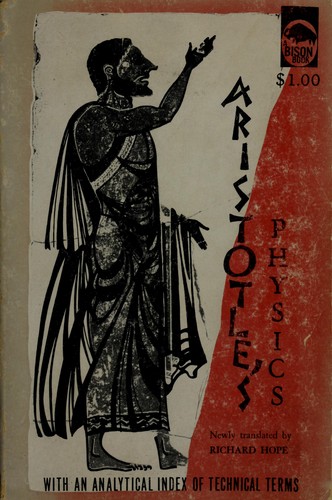
Physics
treatise by Aristotle

coincidence
alt=An image of a total solar eclipse at Orin Junction, Wyoming in 2017. A total solar eclipse happens when the Moon completely blocks the face of the Sun. It is the result of a cosmic coincidence. Even though the Sun is about 400 times bigger than the Moon, it is also about 400 times farther away. This makes the Sun and the Moon appear almost exactly the same size in our sky. |thumb|Solar eclipse of August 21, 2017|A total solar eclipse at Orin Junction, Wyoming in 2017. A total solar eclipse happens when the [[Moon completely blocks the face of the Sun. It is the result of a cosmic coinciden
eternal return
philosophical concept regarding infinite continuance of the universe
absolute time and space
theoretical foundation of Newtonian mechanics
arrow of time
one-way direction, or asymmetry, of time
temporal logic
system for representing and reasoning about time
philosophy of space and time
branch of philosophy relating to spatiality and temporality
eternalism
View that past, present and future exist
time perception
perception of the passing of time
imaginary time
Wick-rotated time coordinates in relativistic field theory

hauntology
thumb|upright=1.2|Hamlet, Prince of Denmark, Act I, Scene IV by Henry Fuseli (1789)
event
objects in time or instantiations of properties in objects (in philosophy)
problem of time
conceptual conflict between general relativity and quantum mechanics
Q7771686
1908 academic journal article by J. Ellis McTaggart
A series and B series
Philosophical terms regarding the temporal ordering of events
temporality
In philosophy, temporality refers to the idea of a linear progression of past, present, and future. The term is frequently used, however, in the context of critiques of commonly held ideas of linear time. In social sciences, temporality is studied with respect to the human perception of time and the social organization of time. The perception of time in Western thought underwent significant changes in the three hundred years between the Middle Ages and modernity.
tempora mutantur
Latin adage
B-theory of time
philosophical theory in which the flow of time is only a subjective illusion of human consciousness and that the past, present and future are equally real, without ontological privileging of the present
Eternity of the world
philosophical question

An Experiment with Time
essay by John William Dunne
duration
theory of time and consciousness posited by the French philosopher Henri Bergson
Repetition
book by Søren Kierkegaard
quantum clock
atomic clock with laser cooled single ions confined together in an electromagnetic ion trap
growing block universe
past and present exist while the future does not
non-simultaneity
Non-simultaneity or nonsynchronism (German: Ungleichzeitigkeit, sometimes also translated as non-synchronicity) is a concept in the writings of Ernst Bloch which denotes the time lag, or uneven temporal development, produced in the social sphere by the processes of capitalist modernization and/or the incomplete nature of those processes. The term, especially in the phrase "the simultaneity of the non-simultaneous", has been used subsequently in predominantly Marxist theories of modernity, world-systems, postmodernity and globalization.

From Eternity to Here
book by Sean M. Carroll