Category
page 1Places in the Iliad
.jpg)
Mycenae
Mycenae ( ; or , Mykē̂nai or Mykḗnē) is an archaeological site near Mykines in Argolis, north-eastern Peloponnese, Greece. It is located about south-west of Athens; north of Argos; and south of Corinth. The site is inland from the Saronic Gulf and built upon a hill rising above sea level.

Mount Athos
mountain in northeastern Greece

Kos
Kos or Cos (; ) is a Greek island, which is part of the Dodecanese island chain in the southeastern Aegean Sea. Kos is the third largest island of the Dodecanese, after Rhodes and Karpathos; it has a population of 37,089 (2021 census), making it the second most populous of the Dodecanese after Rhodes. The island measures . Administratively, Kos constitutes a municipality within the Kos regional unit, which is part of the South Aegean region. The principal town of the island and seat of the municipality is the town of Kos.
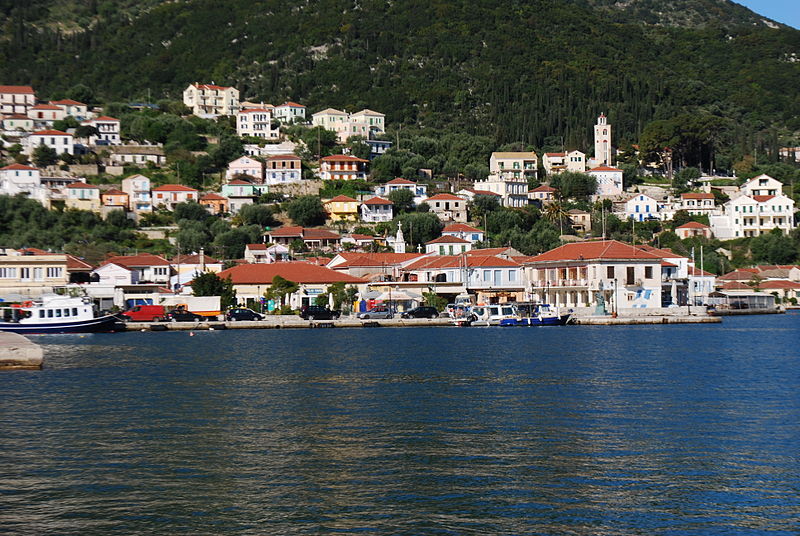
Ithaca
Greek island in the Ionian Sea

Thebes
modern city in Boeotia, Greece

Lemnos
Lemnos ( ) or Limnos ( ) is a Greek island in the northern Aegean Sea. Administratively the island forms a separate municipality within the Lemnos regional unit, which is part of the North Aegean region. The principal town of the island and seat of the municipality is Myrina. At , it is the 8th-largest island of Greece.

Imbros
Imbros (; ; ), officially Gökçeada () since 29 July 1970, is the largest island of Turkey, located in Çanakkale Province. It is located in the north-northeastern Aegean Sea, at the entrance of Saros Bay, and has the westernmost point of Turkey (Cape İncirburnu). Imbros has an area of , and has some wooded areas.

Tiryns
Tiryns ( or ; Ancient Greek: Τίρυνς; Modern Greek: Τίρυνθα) is a Mycenaean archaeological site in Argolis in the Peloponnese, and the location from which the mythical hero Heracles was said to have performed his Twelve Labours. It lies south of Mycenae.

Sakarya River
river in Turkey

Q208566
Skyros (, ), in some historical contexts Latinized Scyros (, ), is an island in Greece. It is the southernmost inhabited island of the Sporades, an archipelago in the Aegean Sea. Around the 2nd millennium BC, the island was known as The Island of the Magnetes; later, it was consecutively known as Pelasgia, Dolopia, and finally Skyros. At , it is the largest island of the Sporades, and had a population of about 3,000 in 2021.

Bozcaada
Tenedos (; ; ), or Bozcaada in Turkish, is an island of Turkey in the northeastern part of the Aegean Sea. Administratively, the island constitutes the Bozcaada district of Çanakkale Province. With an area of , it is the third-largest Turkish island after Imbros (Gökçeada) and Marmara. In 2022, the district had a population of 3,120 inhabitants. The main industries are tourism, wine production and fishing. The island has been famous for its grapes, wines and red poppies for centuries. It is a former bishopric and presently a Latin Catholic titular see.

Kasos
thumb|right|280px|Kasos Island

Nisyros
Nisyros, also spelled Nisiros (; ), is a volcanic Greek island and municipality located in the Aegean Sea. It is part of the Dodecanese group of islands, situated between the islands of Kos and Tilos.
.jpg)
Sicyon
thumb|260px|Ruins of Sicyon
Elis
ancient city-state, capital city of the district of Elis
Mount Ida
mountain in Turkey

Sounion
thumb|View of Cape Sounion and the ruins of the Temple of Poseidon, Sounion|Temple of Poseidon looking west, with Patroklos island visible in the background
thumb|Sunset at Cape Sounion
Cape Sounion (Modern Greek: Aκρωτήριο Σούνιο Akrotírio Soúnio ; Άkron Soúnion, latinized Sunium; Venetian: Capo Colonne "Cape of Columns") is the promontory at the southernmost tip of the Attica peninsula, south of the town of Lavrio (ancient Thoricus), and 69.5 km (43.1 miles) southeast of Athens in the Athens Riviera. It is part of Lavreotiki municipality, East Attica, Greece.

Calydon
thumb|250px|The Laphrion sanctuary plateau of Calydon with Varasova mountain on the background.
thumb|250px|Ancient Theater (building)|theater of Calydon
Calydon (; , ) was a Greek city in ancient Aetolia, situated on the west bank of the river Evenus, 7.5 Roman miles (approx. 11 km) from the sea.
Its name is most famous today for the Calydonian boar that had to be overcome by heroes of the Olympian age.
Tegea
Tegea (; ) was a settlement in ancient Arcadia, and it is also a former municipality in Arcadia, Peloponnese, Greece. Since the 2011 local government reform it is part of the Tripoli municipality, of which it is a municipal unit with an area of 118.350 km2. It is near the modern villages of Alea and Episkopi.

Aethiopia
thumb|1747 map with all the oceans surrounding the African continent
Cape Baba
cape

Iolcos
Iolcus (; also rendered Iolkos ; and Ἰαωλκός; ; ) is an ancient city, a modern village and a former municipality in Magnesia, Thessaly, Greece. Since the 2011 local government reform it is part of Volos, of which it is a municipal unit. It is located in central Magnesia, north of the Pagasitic Gulf. Its land area is 1.981 km2. The municipal unit is divided into three communities, Agios Onoufrios (pop. 433), Anakasia (pop. 888) and Ano Volos (pop. 687), with a total population of 2,008 (2021 census). The seat of the former municipality was the village of Ano Volos.
Pieria Regional Unit
regional unit of Central Macedonia, Greece

Helike
Helike (; , pronounced , modern ) was an ancient Greek polis or city-state that was submerged by a tsunami in the winter of 373 BC.

Sestos
Sestos (, ) was an ancient city in Thrace. It was located at the Thracian Chersonese peninsula on the European coast of the Hellespont, opposite the ancient city of Abydos, and near the town of Eceabat in Turkey.

Gortyn
thumb|300px|Ruins of Gortyna.
Gortyna (; also known as Gortyn (Γορτύν)) was a town of ancient Crete which appears in the Homeric poems under the form of Γορτύν; but afterwards became usually Gortyna (Γόρτυνα). According to Stephanus of Byzantium it was originally called Larissa (Λάρισσα) and Cremnia or Kremnia (Κρήμνια).

Gortyn Municipality
Gortyn, Gortys or Gortyna (, , or , ) is a municipality, and an archaeological site, on the Mediterranean island of Crete away from the island's capital, Heraklion. The seat of the municipality is the village Agioi Deka. Gortyn was the Roman capital of Creta et Cyrenaica. The area was first inhabited around 7000 BC.
Aulis
ancient Greek port and sanctuary
Phthia
Phthia (; or ) was a city or district in ancient Thessaly according to Greek mythology.
Beşparmak Mountains
mountain range

Simoeis
thumb|right|Water, or the fight of Achilles against Scamander and Simoeis by Auguste Couder (1819), decoration of the Rotonde d'Apollon in the [[Palais du Louvre.]]

Aigeira
Aigeira () (, or Αἴγειρα, ) is a town and a former municipality in northeastern Achaea, West Greece, Greece. Since the 2011 local government reform it has been a municipal unit of the Aigialeia municipality, with an area of 103.646 km2. The municipal unit stretches from the Gulf of Corinth, where the town of Aigeira is located, to the mountains in the south. The town of Aigeira is southeast of Aigio, northwest of Corinth and east of Patras.

Asine
thumb|Ruins of Asine.|242x242px
thumb|Swedish and visiting archaeologists, 1922.|242x242px
Asine (; ) is a Greek city on the coast of ancient Argolis. Homer mentions it in the Catalogue of Ships in the Iliad as one of the places subject to Diomedes, king of Argos. It is said to have been founded by the Dryopes, who originally dwelt on Mount Parnassus. In one of the early wars (740 BCE) between the Lacedaemonians and the Argives, the Asinaeans joined the former when they invaded the Argive territory under their king Nicander; but as soon as the Lacedaemonians returned home, the Argives lai
Karamenderes River
river in Çanakkale, northwestern Turkey
Koroneia
ancient city in Boeotia, Greece
Heraclea in Trachis
ancient city of central Greece
Opus
ancient city in Greece
Cleonae
ancient polis between Argos and Corinth
Crisa
Crissa or Krissa () or Crisa or Krisa (Κρῖσα) was a town in ancient Phocis. Crissa was regarded as one of the most ancient cities in Greece. It was situated inland a little southwest of Delphi, at the southern end of a projecting spur of Mount Parnassus. It is mentioned in the Catalogue of Ships in the Iliad as the "divine Crissa" (Κρῖσα ζαθέη). According to the Homeric Hymn to Apollo, it was founded by a colony of Cretans, who were led to the spot by Apollo himself, and whom the god had chosen to be his priests in the sanctuary which he had intended to establish at Pytho. In this hymn, Crissa
Cranae
Cranae or Kranai ( ) (also called Marathonisi) is a Greek island on the Mani Peninsula in the southern Peloponnese. Located just off the coast of the port town Gytheio (ancient Gythium), the island is linked to the mainland by a causeway built in 1898.
Stymphalos
ancient city in Arcadia
Pharae
ancient city of Messenia
Pellene
Pellene (; ; ) was a city and polis (city-state) of ancient Achaea, the most easterly of the twelve Achaean cities (the Achaean League). Its territory bordered upon that of Sicyon on the east and upon that of Aegeira on the west. Pellene was situated 60 stadia from the sea, upon a strongly fortified hill, the summit of which rose into an inaccessible peak, dividing the city into two parts. Its port was at Aristonautae.
right|thumb|300px|Map of ancient Achaea (with place names in Greek)
%20-%201887.jpg)
Daulis
thumb|360px|Ruins of Daulis as of 1887.
Daulis (), at a later time Daulia (Δαυλία), and also Daulium or Daulion (Δαύλιον), was a town of ancient Phocis, near the frontiers of Boeotia, and on the road from Orchomenus and Chaeroneia to Delphi.
Emathia
ancient region of northern Greece
Anthedon
ancient city-state of Boeotia
Eleonas
Eleon (), or Heleon (), was a town in ancient Boeotia, mentioned by Homer in the Catalogue of Ships in the Iliad in the same line with Hyle and Peteon. It is said by Strabo to have been one of the smaller places in the territory of Tanagra, and to have derived its name from its marshy situation.
Zeleia
Zeleia () was a town of the ancient Troad, at the foot of Mount Ida and on the banks of the river Aesepus (both located in Turkey), at a distance of 80 stadia from its mouth. It is mentioned by Homer in the Trojan Battle Order in the Iliad, and later when Homer calls it a holy town. Zeleia led a force of warriors to aid Troy during the Trojan War, led by Pandarus, son of Lycaon (the latter Lycaon not to be confused with Lycaon, son of Priam. It is later related that the people of Zeleia are "Lycians", though the Zeleians are distinct from the Lycians who come from Lycia in southwestern Asia Mi
Dulichium
Dulichium ( ; , ), also called Dolicha ( ; , ) or Doliche ( ; , ), was a place noted by numerous ancient writers that was either a city on, or an island off, the Ionian Sea coast of Acarnania, Greece.

Pheneos
thumb|350px|Coin from ancient Pheneus
Pheneus or Pheneos ( or Φενεός) was a town in the northeast of ancient Arcadia. Its territory, called Pheniatis (ἡ Φενεατική or ἡ Φενεᾶτις or η Φενική), was bounded on the north by that of the Achaean towns of Aegeira and Pellene, east by the Stymphalia, west by the Cleitoria, and south by the Caphyatis and Orchomenia. This territory is shut in on every side by lofty mountains, offshoots of Mount Cyllene and the Aroanian chain; and it is about 7 miles (12 km) in length and the same in breadth. Two streams descend from the northern mountains, and unite
Pleuron
ancient city in Aitolia, Greece
Panopeus
Panopeus (), or Phanoteus (the name is given in a variety of forms in the ancient sources), was a Greek town of ancient Phocis, near the frontier of Boeotia, and on the road from Daulis to Chaeronea. Pausanias said that Panopeus was 20 stadia from Chaeronea and 7 from Daulis; but the latter number is almost certainly a mistake. The ruins at the village of Agios Vlasios (or Aio Vlasi) (), which are clearly those of Panopeus, are about 20 stadia distant from Chaeronea, but as much as 27 stadia distant from Daulis.
Histiaia
[[File:Euboia Histiaia 2 BMC61 1.xcf|alt=Silver tetrobol from Euboia, Histiaia|thumb|299x299px|Silver tetrobol from Euboia, Histaia. Wreathed head of the Nymph Histiaia right; [IΣTI] - AEIΩN, Nymph Histiaia seated right on stern of galley, ornamented with wing, holding naval standard; AP monogram and labrys in exergue; BMC 61; BCD 391]]
Percote
Percote or Perkote () was a town or city of ancient Mysia on the southern (Asian) side of the Hellespont, to the northeast of Troy. Percote is mentioned a few times in Greek mythology, where it plays a very minor role each time. It was said to be the home of a notable seer named Merops, also its ruler. Merops was the father of Arisbe (the first wife of King Priam, and subsequently wife of King Hyrtacus), Cleite (wife of King Cyzicus), and two sons named Amphius and Adrastus who fought during the Trojan War. As an ally of Troy, Percote sent a contingent to help King Priam during the Trojan War
Onchestus
Onchestos or Onchestus () was a Greek town in ancient Boeotia northwest of Thebes. In ancient times it was famous for its sanctuary of Poseidon. The site has been excavated intermittently since the 1960s. It was in the territory of Haliartus, said to have been founded by Onchestos, a son of Poseidon.
Meliboea
ancient city and archaeological site in Greece
Hyampolis
Hyampolis (Ὑάμπολις Iabolis) was a city in ancient Phocis, Greece. A native of this city was called a Hyampolites. Some ancient authors record that the city was also called simply Hya.
Oechalia
ancient city of Thessaly
Hermione (Argolis)
ancient city in Peloponnese, Greece
Thebe
ancient city of Mysia, in modern-day Turkey