Category
page 1Plasmodium
malaria
Malaria is a mosquito-borne infectious disease which is transmitted by the bite of Anopheles mosquitoes. Human malaria causes symptoms that typically include fever, fatigue, vomiting, and headaches; in severe cases, it can cause jaundice, seizures, coma, or death. Symptoms usually begin 10 to 15 days after being bitten by an infected Anopheles mosquito. If not properly treated, people may have recurrences of the disease months later. Those who survive an infection develop partial immunity, being susceptible to reinfection although with milder symptoms. This partial resistance disappears over m

Plasmodium
Plasmodium is a genus of unicellular eukaryotes that are obligate parasites of vertebrates and insects. The life cycles of Plasmodium species involve development in a blood-feeding insect host which then injects parasites into a vertebrate host during a blood meal. Parasites grow within a vertebrate body tissue (often the liver) before entering the bloodstream to infect red blood cells. The ensuing destruction of host red blood cells can result in malaria. During this infection, some parasites are picked up by a blood-feeding insect (mosquitoes in majority cases), continuing the life cycle.

Plasmodium falciparum
species of malaria parasite

Plasmodium vivax
species of malaria parasite

Plasmodium malariae
parasitic protozoon that causes malaria in humans

Plasmodium ovale
species of parasitic protozoan

Plasmodium knowlesi
species of parasitic protist that can cause malaria
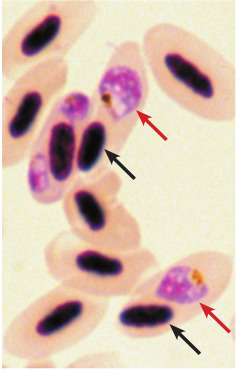
Plasmodium relictum
species of parasitic protists
Plasmodium cynomolgi
species of parasitic protist that can cause malaria
Plasmodium yoelii
species of parasitic protist that can cause malaria
Plasmodium gallinaceum
species of parasitic protist that can cause malaria

Plasmodium berghei
species of parasitic protist that can cause malaria