Category
page 1Plastics and the environment

plastic pollution
contamination of the natural environment with plastic products

microplastics
thumb|upright=1.3|Micro plastics of diverse shapes in sediments from four rivers in white arrowheads indicate aluminium, glass and sand (white bars represent 1mm for scale)
thumb|upright=1.3|Photodegraded plastic straw. A light touch breaks larger straw into microplastics.

Great Pacific Garbage Patch
gyre of marine debris in the central North Pacific Ocean
.jpg)
plogging
thumb|A woman picks up litter, while a man jogs alongside, with a garbage bag, at a plogging event in Kent, England
wet wipe
small pre-moistened, disposable piece of paper or cloth used for cleaning purposes like personal hygiene and household cleaning
Boyan Slat
Dutch inventor and environmentalist
wood-plastic composite
composite materials made of wood fiber and thermoplastics
The Ocean Cleanup Foundation
project to cleanse the ocean of pieces of plastic
marine plastic pollution
environmental pollution by plastics
Global plastic pollution treaty
international agreement on plastics that will address the entire life cycle of plastics, from design to production and disposal
coated paper
paper which has been coated by a compound or polymer
plastic bag ban
government campaign to discourage plastic shopping bag use

photodegradation
thumb|A plastic bucket used as an open-air flowerpot photodegraded after some years.
Photodegradation is the alteration of materials by light. Commonly, the term is used loosely to refer to the combined action of sunlight and air, which cause oxidation and hydrolysis. Often photodegradation is intentionally avoided, since it destroys paintings and other artifacts. It is, however, partly responsible for remineralization of biomass and is used intentionally in some disinfection technologies. Photodegradation does not apply to how materials may be aged or degraded via infrared light or heat, but

plastiglomerate
thumb|The melting of plastic waste from campfires or high temperatures on beaches (1) is resulting in the formation of a new type of rock known as plastiglomerate (2). Formed plastiglomerate merges with surrounding sediment to create a compositionally different sediment layer (3).The emergence of this new layer is being used as physical evidence of a marker horizon for an Anthropocene Epoch (4).
Plastiglomerate is a rock made of a mixture of sedimentary grains, and other natural debris (e.g. shells, wood) that is held together by plastic. It has been considered a potential marker of the Anthro

plastisphere
thumb|upright=1.2|A colony of limpets attached to a diving mask, found washed ashore on a beach
plastic particle water pollution
marine debris from plastic particles used to manufacture large-scale plastics

Plasticulture
thumb|upright=1.3|Plastic mulch used for growing strawberries
Indian Ocean garbage patch
The Indian Ocean garbage patch is a gyre of marine litter suspended in the upper water column of the central Indian Ocean, specifically the Indian Ocean Gyre.
Plasticosis
Plasticosis is a form of fibrotic scarring that is caused by small pieces of plastic which inflame the digestive tract.
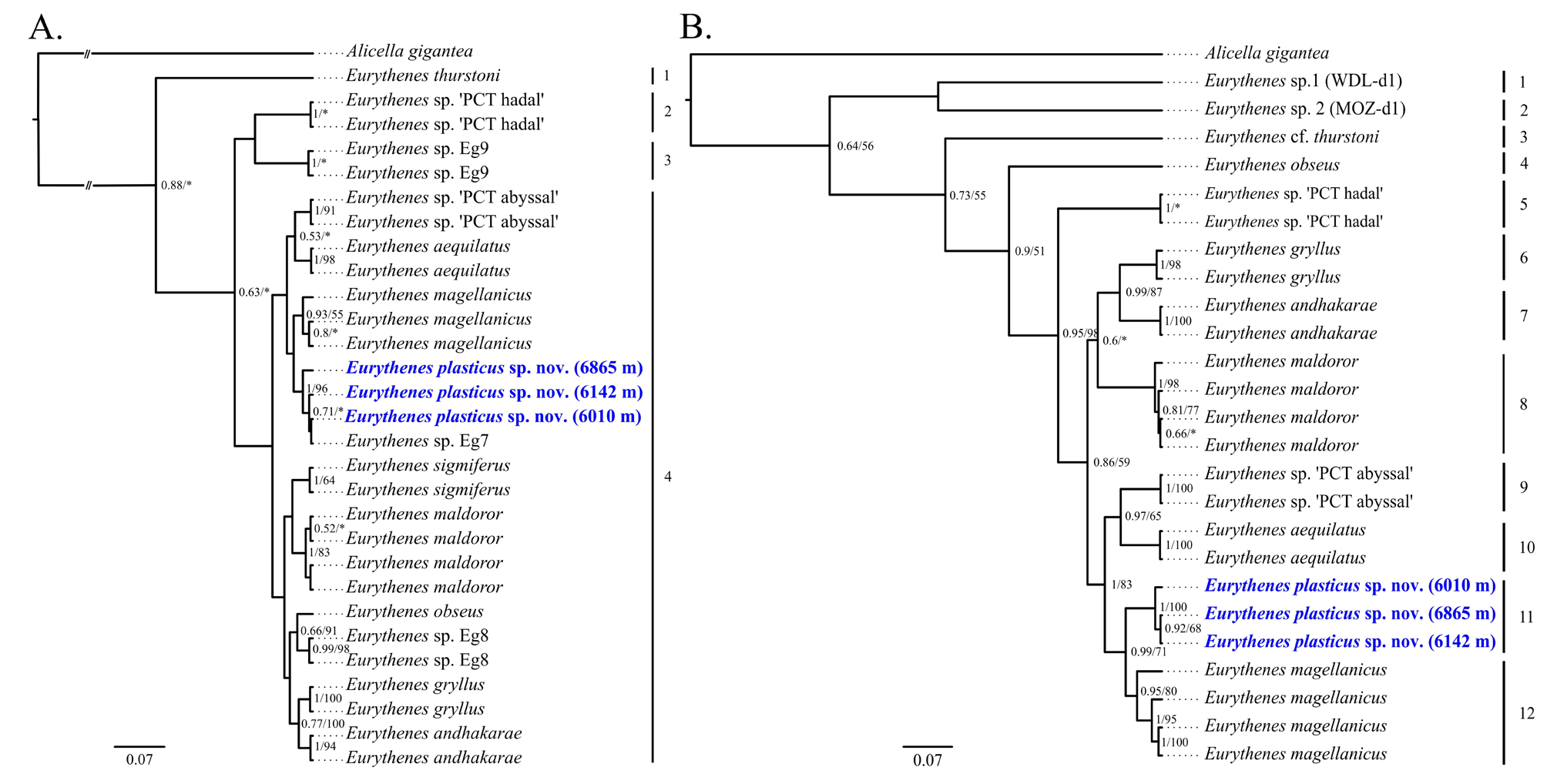
Eurythenes plasticus
species of amphipod
aegagropile
fibrous marine material
balloon release
releasing gas-filled balloons into the air
South Pacific garbage patch
area of marine debris
fiber optic drone
uncrewed vehicle guided by an optical fiber
six-pack rings
set of connected plastic rings that are used as packaging
photo-oxidation
photo-oxidation of polymers
Alliance to End Plastic Waste
Organisation with an aim to promote solutions that reduce and avoid environmental pollution from plastic waste, formed and run by members of the packaging, plastics and petrochemical industries
Tokio Express
container ship built in 1973