Category
page 1Plays by Plautus
Miles gloriosus
ancient Roman play by Plautus
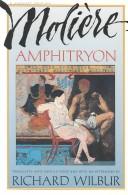
Amphitryon
Ancient Roman play by Plautus

Aulularia

Menaechmi
Menaechmi, a Latin-language play, is often considered Plautus' greatest play. The title is sometimes translated as The Brothers Menaechmus or The Two Menaechmuses.

Mostellaria
Mostellaria is a play by the Roman author Plautus. Its name translates from Latin as "The Ghost (play)" (with the word understood in the title). The play is believed to be an adaptation of a lost comedy of the Athenian poet Philemon called Phasma (the Ghost). It is set in a street in the city of Athens.

Pseudolus
Pseudolus is a play by the ancient Roman playwright Titus Maccius Plautus. It is one of the earliest examples of Roman literature and is a key example of the Fabulae Palliatae which are early Roman Comedies set in a Classical Greek setting. Pseudolus was first shown in 191 BC during the Megalesian Festival, which was a celebration for the Phrygian Goddess Cybele. The temple for worship of Cybele in Rome was completed during the same year in time for the festival.

Poenulus
Poenulus, also called The Little Carthaginian or The Little Punic Man, is a Latin comedic play for the early Roman theatre by Titus Maccius Plautus, probably written between 195 and 189 BC. The play is noteworthy for containing text in Carthaginian Punic, spoken by the character Hanno in the fifth act. Another remarkable feature is the sympathetic portrayal of the character of the Carthaginian Hanno at a time when only a few years previously the Romans had suffered huge losses in the 2nd Punic War fought against the Carthaginian general Hannibal (218–202 BC).

Bacchides
ancient Roman play by Plautus

Casina
Ancient Roman play by Plautus

Captivi

Asinaria
Asinaria ("The Comedy of Asses") is a comic play written in Latin by the Roman playwright Titus Maccius Plautus. In the play an Athenian gentleman, Demaenetus, tells his slave Libanus that he knows his son Argyrippus is having an affair with the prostitute Philaenium next door, and he asks him to try to find some money to pay for the affair. When by chance a stranger comes bringing money owed for some donkeys sold by Saurea, the steward of Demaenetus's wife, Libanus's fellow-slave Leonida pretends to be Saurea, and the two slaves trick the stranger into giving them the money. Argyrippus is giv

Stichus
Stichus is a comedic Latin play by the early Roman playwright Titus Maccius Plautus. According to a notice transmitted with the play, Stichus was first performed in 200 BC, and was adapted from the play Adelphoe by Menander.

Rudens
Rudens is a play by Roman author Plautus. Its name translates from Latin as "The Rope;" in English translation it has been called The Shipwreck or '''''The Fisherman's Rope'''''. It is a Roman comedy, which describes how a girl, Palaestra, stolen from her parents by pirates, is reunited with her father, Daemones, ironically, by means of her pimp, Labrax. The play is set on the coast of Cyrene, in north Africa, although the characters come from a range of cities around the Mediterranean, most notably, Athens.

Cistellaria
Cistellaria, translated as The Casket, is a comedic Latin play of the late 3rd century BC by the early Roman playwright Titus Maccius Plautus. The story, set in the Greek town of Sicyon, concerns a girl called Selenium who was exposed as a baby and brought up by a courtesan called Melaenis. By a happy chance it is discovered that her birth mother, married to a senator Demipho, lives next door, enabling her to marry the young man Alcesimarchus who loves her.

Mercator
Ancient Roman play by Plautus

Curculio
Ancient Roman play by Plautus

Trinummus
Trinummus is a comedic Latin play by the early Roman playwright Titus Maccius Plautus. It is called ("The Three Coins") because in the play an imposter () is paid three coins to dress up as a messenger from Syria. According to the prologue, the play is adapted from one called Thesaurus ("The Treasure") by the Greek playwright Philemon.

Truculentus
Truculentus is a comedic Latin play by the early Roman playwright Titus Maccius Plautus. Following the relationships between prostitutes and their customers, it contains perhaps Plautus's most cynical depiction of human nature in comparison with his other surviving plays.

Epidicus
Epidicus is an ancient Roman comedy written by Plautus in the 3rd or 2nd century BC. It is said to have been one of Plautus's favorite works. Epidicus is the name of the main character, who is a slave. The plot takes many turns as Epidicus tries to please his master's son, Stratippocles.

Persa
Ancient Roman play by Plautus