Category
page 1Pleasure

happiness
thumb|upright=1.2|A 93-year-old man from Pichilemu, Chile. His smile and facial expression indicates his happiness.
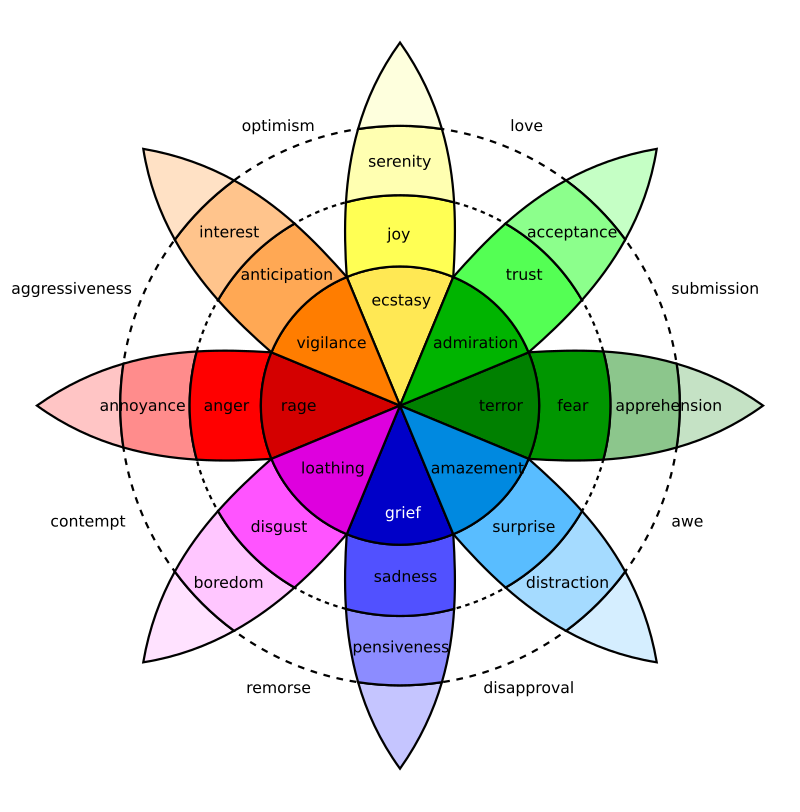
pleasure
Pleasure is an experience that feels good, that involves the enjoyment of something. It contrasts with pain or suffering, which are forms of feeling bad. It is closely related to value, desire and action: humans and other conscious animals find pleasure enjoyable, positive or worthy of seeking. A great variety of activities may be experienced as pleasurable, such as eating, having sex, listening to music or playing games. Pleasure is part of various other mental states such as ecstasy, euphoria and flow. Happiness and well-being are closely related to pleasure but not identical with it. There

ecstasy
advanced emotion, subjective experience of total involvement of the subject, with an object of their awareness

euphoria
Euphoria ( ) is the experience (or affect) of pleasure or excitement and intense feelings of well-being and happiness. Certain natural rewards and social activities, such as aerobic exercise, laughter, listening to or making music and dancing, can induce a state of euphoria. Euphoria is also a symptom of certain neurological or neuropsychiatric disorders, such as mania. Romantic love and components of the human sexual response cycle are also associated with the induction of euphoria. Certain drugs, many of which are addictive, can cause euphoria, which at least partially motivates their recrea
.jpg)
Kama
Kama (Sanskrit: काम, ) is the concept of pleasure, enjoyment and desire in Hinduism, Buddhism, Jainism, and Sikhism. It can also refer to "desire, wish, longing" in Hindu, Buddhist, Jain, and Sikh literature. However, the term is also used in a technical sense to refer to any sensory enjoyment, emotional attraction or aesthetic pleasure experienced in connection with the arts, dance, music, painting, sculpture, and nature.

anhedonia
Anhedonia is a diverse array of deficits in hedonic function, including reduced motivation or ability to experience pleasure. While earlier definitions emphasized the inability to experience pleasure, anhedonia is currently used by researchers to refer to reduced motivation, reduced anticipatory pleasure (wanting), reduced consummatory pleasure (liking), and deficits in reinforcement learning. In the Diagnostic and Statistical Manual of Mental Disorders, Fifth Edition (DSM-5), anhedonia is a component of depressive disorders, substance-related disorders, psychotic disorders, and personality di

hygge
thumb|Illustration of a hygge situation, with Meik Wiking's The Little Book of Hygge
thumb|"Hygge" sign in a restaurant in Nørrebro
pleasure principle
instinctual seeking of pleasure and avoiding of pain in order to satisfy biological and psychological needs
runner's high
Transient state of euphoria from physical exertion
sensual play
activities meant to impart physical sensations
cosiness
thumb|Beim Heurigen in [[Grinzing is a typical scene of Gemütlichkeit, painting by Rudolf Alfred Höger (1900).]]
thumb|Interior of the Café Hawelka with [[plush furniture and muted colours, serving cake and coffee, is a typical example of Gemütlichkeit.]]
thumb|A cosy Stube normally has many wooden elements, giving a feeling of warmth and comfort (inside of Schreiberhaus in [[Neustift am Walde, Vienna).]]
thumb|Hofbräukeller garden in Munich, a typical German beergarden scene, permeated by Gemütlichkeit
frisson
thumb|right|Piloerection (goose bumps), the physical part of frisson
Frisson ( , ; French for "shiver"), also known as aesthetic chills or psychogenic shivers, is a psychophysiological response to rewarding stimuli (including music, films, stories, people, photos, and rituals) that often induces a pleasurable or otherwise positively-valenced affective state and transient paresthesia (skin tingling or chills), sometimes along with piloerection (goose bumps) and mydriasis (pupil dilation). The sensation can occur as a mildly to moderately pleasurable emotional response to music with skin tingli
felicific calculus
algorithm measuring the amount of pleasure that a specific action is likely to cause