Category
page 1Pleistocene proboscideans

Mammuthus
A mammoth is a member of the extinct elephantid genus Mammuthus. They lived from the late Miocene epoch (from around 6.2 million years ago) into the Holocene until about 4,000 years ago, with mammoth species at various times inhabiting Africa, Asia, Europe, and North America. Mammoths are distinguished from living elephants by their (typically large) spirally twisted tusks and in some later species, the development of numerous adaptions to living in cold environments, including a thick layer of fur.

Woolly Mammoth
extinct species of mammoth (Mammuthus)

Mammut
A mastodon () is a member of the genus , which was endemic to North America and lived from the late Miocene to the early Holocene. Mastodons belong to the order Proboscidea, the same order as elephants and mammoths (which belong to the family Elephantidae). Mammut is the type genus of the extinct family Mammutidae, which diverged from the ancestors of modern elephants at least 28 million years ago, during the Oligocene.
.jpg)
Deinotherium
Deinotherium is an extinct genus of large, elephant-like proboscideans that lived from the Middle Miocene until the end of the Early Pleistocene. Although its appearance is reminiscent of modern elephants, Deinotherium differered considerably from modern elephants in several anatomical details: it possessed a notably more flexible neck, proportionally more slender limbs, tapir-like teeth, as well as tusks which grew down and curved back from the lower jaw (mandible), and lacked tusks growing from the upper jaw. Several species of Deinotherium grew larger than modern elephants, not uncommonly r
Columbian mammoth
extinct species of mammoth (Mammuthus)

Stegodon
Stegodon (from the Ancient Greek στέγω (stégō), meaning "to cover", and ὀδούς (odoús), meaning "tooth", named for the distinctive ridges on the animal's molars) is an extinct genus of proboscidean, related to elephants. It was originally assigned to the family Elephantidae along with modern elephants but is now placed in the extinct family Stegodontidae. Like elephants, Stegodon had teeth with plate-like lophs that are different from those of more primitive proboscideans like gomphotheres and mammutids. Fossils of the genus are known from Africa and across much of Asia, as far southeast as Tim
straight-tusked elephant
extinct species of Elephantidae
Steppe mammoth
extinct species of mammoth (Mammuthus)

Gomphothere
Gomphotheres are an extinct group of proboscideans related to modern elephants. First appearing in Africa during the Oligocene, they dispersed into Eurasia and North America during the Miocene and arrived in South America during the Pleistocene as part of the Great American Interchange. Gomphotheres are a paraphyletic group ancestral to Elephantidae, which contains modern elephants, as well as Stegodontidae.
southern mammoth
extinct species of mammoth (Mammuthus)

Palaeoloxodon
Palaeoloxodon is an extinct genus of elephant. It originated in Africa during the Early Pleistocene, and expanded into Eurasia at the beginning of the Middle Pleistocene. Palaeoloxodon contains the largest known species of elephants, with mature bulls over tall at the shoulders and over in weight, representing among the largest land mammals ever, including the African Palaeoloxodon recki, the European straight-tusked elephant (Palaeoloxodon antiquus) and the South Asian Palaeoloxodon namadicus. P. namadicus has been suggested to be the largest known land mammal by some authors based on extrapo
Sicilian dwarf elephant
extinct species of elephants (Elephantidae)
Lyuba
female wooly mammoth calf mummy
Elephas recki
species of mammal (fossil)
Asian straight-tusked elephant
species of mammal

Cuvieronius
Cuvieronius is an extinct New World genus of gomphothere which ranged from southern North America to northwestern South America during the Pleistocene epoch. Reaching a shoulder height of and a body mass of , it was comparable in size to an Asian elephant. Cuvieronius inhabited subtropical and tropical latitudes in environments ranging from grasslands to tropical rainforest. Among the last gomphotheres along with the South American Notiomastodon, it became extinct as part of the end Pleistocene-extinction event, approximately 12-11,000 years ago, along with most other large mammals in the Amer

Anancus
Anancus is an extinct genus of "tetralophodont gomphothere" native to Afro-Eurasia, that lived from the Tortonian stage of the late Miocene until its extinction during the Early Pleistocene, roughly from 8.5–2 million years ago.
Palaeoloxodon naumanni
species of mammal (fossil)
Stegodontidae
Stegodontidae (from the Ancient Greek στέγω (stégō), meaning "to cover", and ὀδούς (odoús), meaning "tooth", named for the distinctive ridges on the animal's molars) is an extinct family of proboscideans from Africa and Asia (with a single occurrence in Europe) from the Early Miocene (at least 17.3 million years ago) to the Late Pleistocene. It contains two genera, the earlier Stegolophodon, known from the Miocene of Asia and the later Stegodon, from the Late Miocene to Late Pleistocene of Africa and Asia (with a single occurrence in Greece) which is thought to have evolved from the former. Th

Stegomastodon
Stegomastodon ('roof breast tooth') is an extinct genus of gomphotheres. It ranged throughout North America from the Pliocene (early Blancan ~4 Ma), to the Early Pleistocene (early Irvingtonian, ~1.2 Ma). The former South American species have been synonymized with Notiomastodon platensis. The neologism 'cornady' () has been proposed in some literature as an english name for the members of this genus.
Yuka
mammoth
Sardinian dwarf mammoth
extinct species of mammoth (Mammuthus)

Notiomastodon
Notiomastodon is an extinct genus of gomphothere proboscidean (related to modern elephants), endemic to South America from the Pleistocene to the early Holocene. Individuals of Notiomastodon reached a size similar to that of the modern Asian elephant, with a body mass of 3-4 tonnes. Like other brevirostrine gomphotheres such as Cuvieronius and Stegomastodon, Notiomastodon had a shortened lower jaw and lacked lower tusks, unlike more primitive gomphotheres like Gomphotherium.
Palaeoloxodon mnaidriensis
extinct species of elephantid (Sicily, Malta)
Sinomastodon
Sinomastodon ("Chinese mastodont") is an extinct gomphothere proboscidean known from the Late Miocene to Early Pleistocene of Asia, including China, Japan, Thailand, Myanmar, Indonesia and probably Kashmir.
Loxodonta atlantica
species of mammal
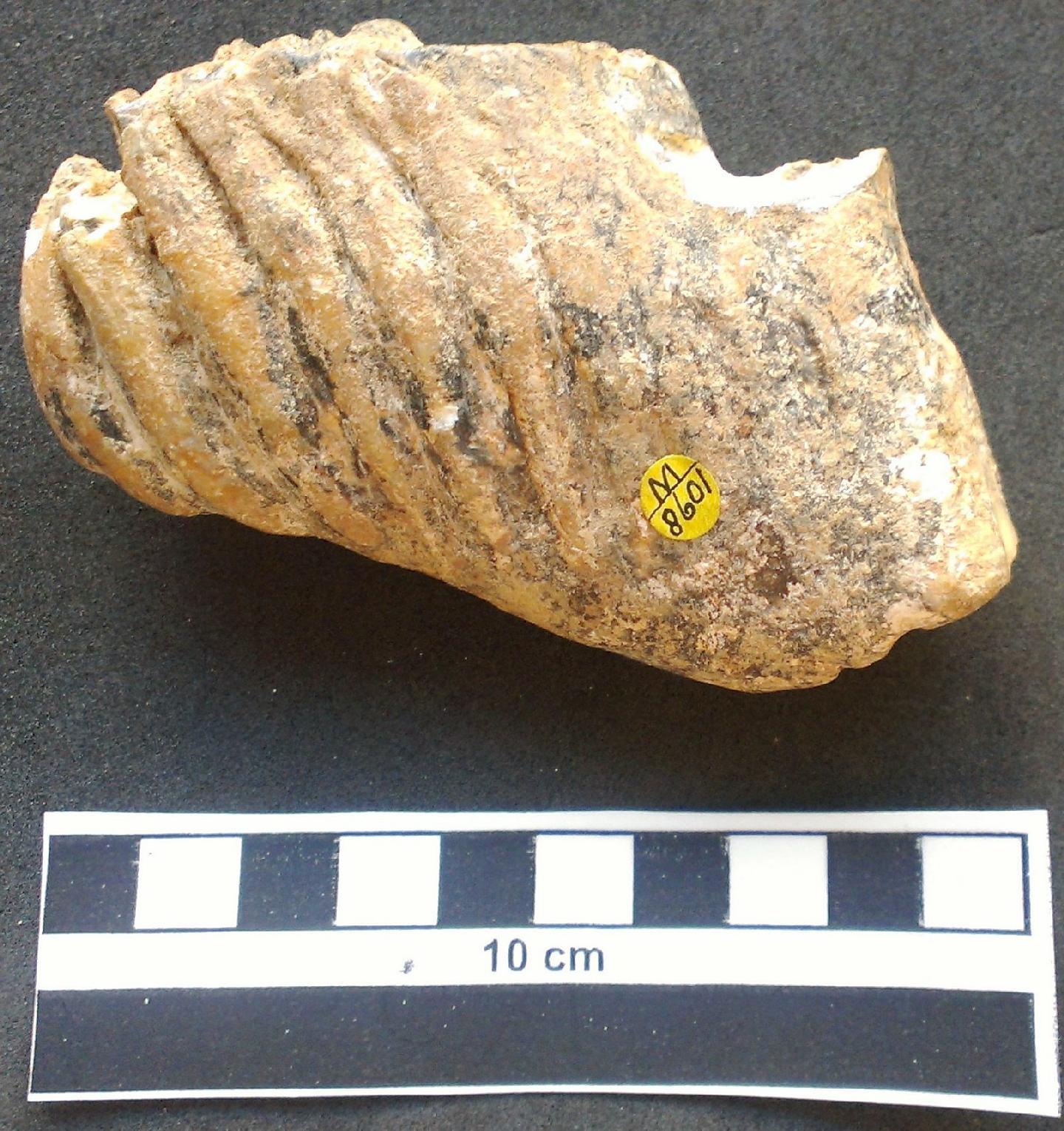
Palaeoloxodon cypriotes
species of mammal (fossil)
Elephas hysudricus
species of mammal
Yukagir mammoth
Woolly mammoth Yakutia Sakha, Arctic Siberia, Russia
Stegodon aurorae
species of mammal
Elephas hysudrindicus
species of mammal