Category
page 1Pliocene carnivorans

American black bear
species of bear

Homotherium
Homotherium is an extinct genus of scimitar-toothed cat belonging to the extinct subfamily Machairodontinae that inhabited North America, Eurasia, and Africa, as well as possibly South America during the Pliocene and Pleistocene epochs from around 4 million to 12,000 years ago. A probable descendant of Amphimachairodus, it was one of the last surviving members of Machairodontinae alongside the more famous sabertooth Smilodon, to which it was not particularly closely related. It was a large cat, comparable in size to a lion with a body mass of up to , functioning as an apex predator in the ecos
%20fig.%2011.png)
Dinofelis
Dinofelis is an extinct genus of machairodontine (sabre-toothed cat), usually classified in the tribe Metailurini. It was widespread in Europe, Asia, Africa and North America from 5 million to about 1.2 million years ago (early Pliocene to early Pleistocene). Fossils very similar to Dinofelis from Lothagam range back to around 8 million years ago, in the Late Miocene.
.png)
Miracinonyx
Miracinonyx, colloquially known as the American cheetah or the New World cheetah, is an extinct genus of felids belonging to the subfamily Felinae that was endemic to North America from the Pleistocene epoch (about 2.5 million to 16,000 years ago) and morphologically similar to the modern cheetah (Acinonyx jubatus), although its apparent similar ecological niches have been considered questionable due to anatomical morphologies of the former that would have limited its ability to act as a specialized pursuit predator. The genus was originally known from fragments of skeletons, but nearly comple

Arctoidea
Arctoidea is an infraorder of mostly carnivorous mammals which include the extinct Hemicyonidae (dog-bears), and the extant Musteloidea (weasels, raccoons, skunks, red pandas), Pinnipedia (seals, sea lions), and Ursidae (bears), found in all continents from the Eocene, , to the present. The oldest group of the clade is the bears, as their CMAH gene is still intact. The gene became non-functional in the common ancestor of the Mustelida (the musteloids and pinnipeds). Arctoids are caniforms, along with dogs (canids) and extinct bear dogs (Amphicyonidae). The earliest caniforms were superficially

Megantereon
Megantereon is an extinct genus of prehistoric machairodontine saber-toothed cat that lived in Eurasia, Africa and possibly North America from the late Pliocene to the Middle Pleistocene, first described by George Cuvier in 1824. It is a member of the tribe Smilodontini, and closely related to and possibly the ancestor of the more widely-known American sabertooth Smilodon, with which it shared greatly elongated saber canine teeth. In comparison to Smilodon, Megantereon was somewhat smaller, around the size of a jaguar, although it is thought to have had a similar hunting strategy as an ambush
%20(18017143788).jpg)
Pachycrocuta
Pachycrocuta is an extinct genus of hyena. The largest and most well-researched species is Pachycrocuta brevirostris, colloquially known as the giant short-faced hyena as it stood about at the shoulder and it is estimated to have averaged in weight, approaching the size of a lioness, making it the largest known undisputed hyena, only exceeded in size by the possible hyena Dinocrocuta. It is often hypothesised to have been a specialised kleptoparasitic scavenger, using its imposing size to force other predators off of carcasses, though some authors have suggested they may have been effective pa
Lynx issiodorensis
species of mammal (fossil)
Ursus etruscus
species of bear

Borophagus
Borophagus ("gluttonous eater") is an extinct genus of the subfamily Borophaginae, a group of canids endemic to North America from the Middle Miocene to the early Pleistocene (12—2Mya).

Chasmaporthetes
Chasmaporthetes, also known as hunting or running hyena, is an extinct genus of hyenas distributed in Eurasia, North America, and Africa during the Pliocene-Pleistocene epochs, living from 4.9 million to 780,000 years ago, existing for about . The genus probably arose from Eurasian Miocene hyenas such as Thalassictis or Lycyaena, with C. borissiaki being the oldest known representative. The species C. ossifragus was the only hyena to cross the Bering land bridge into the Americas, and ranged over what is now Arizona and Mexico during Blancan and early Irvingtonian Land Mammal ages, between 5.0
Metailurus
Metailurus is a genus of saber-toothed cat in the family Felidae, and belonging to the tribe Metailurini, which occurred in North America, Eurasia and Africa from the Miocene to the Middle Pleistocene.

Ictitherium
Ictitherium (meaning "weasel beast") is an extinct genus belonging to the family Hyaenidae and the subfamily Ictitheriinae erected by Trouessart in 1897. Ictitherium lived throughout Eurasia during the Late Miocene.

Chapalmalania
Chapalmalania is an extinct genus of procyonid from the Late Miocene or Early Pliocene to Early Pleistocene (Montehermosan to Uquian) of Argentina (Andalhualá Formation), Venezuela (San Gregorio Formation, Venezuela), and Colombia (Ware Formation, Cocinetas Basin, La Guajira).

Simocyon
Simocyon ("short-snouted dog") is a genus of extinct carnivoran mammal in the family Ailuridae. Simocyon, which was about the size of a mountain lion, lived in the late Miocene and early Pliocene epochs, and has been found in Europe, Asia, and rarely, North America and Africa.
Ailuropoda microta
species of mammal in the ursid subfamily (fossil)
Lycaon sekowei
species of mammal
Homotherini
Homotherini (Machairodontini) is a tribe (or subtribe) of saber-toothed cats of the family Felidae (true cats). The tribe is commonly known as scimitar-toothed cats. These saber-toothed cats were endemic to North America, Europe, Asia, Africa, and South America from the Miocene to Pleistocene living from c. 12.5 Ma until c. 12,000 years ago. The evolutionary relationship between the tribes Homotherini and Machairodontini cause paleontologists to classify Homotherini either as a subtribe of Machairodontini, or the same tribe often using either name interchangeably.
Protictitherium
Protictitherium (gr. first striking beast) is an extinct genus of hyena that lived across Europe and Asia during the Middle and Late Miocene, it is often considered to be the first hyena since it contains some of the oldest fossils of the family. They were especially prolific in Turkey, where every species has been registered.
Parailurus
Parailurus is a genus of extinct carnivoran mammal in the family Ailuridae. It was about 50% larger than Ailurus (red panda) and lived in the Early to Late Pliocene, and its fossils have been found in Europe, Asia and North America.

Ursus americanus luteolus
subspecies of bear
Puma pumoides
species of mammal
Puma lacustris
prehistoric cat
Nyctereutes abdeslami
species of mammal (fossil)
Plesiogulo
thumb|Plesiogulo marshalli
Plesiogulo is a genus of prehistoric carnivore that lived from the Miocene to the Pliocene of Africa, Eurasia, and North America. An ancestral relationship to the wolverine (Gulo gulo) was once suggested, but it is no longer considered likely. However, some authorities still consider it a member of the Guloninae.
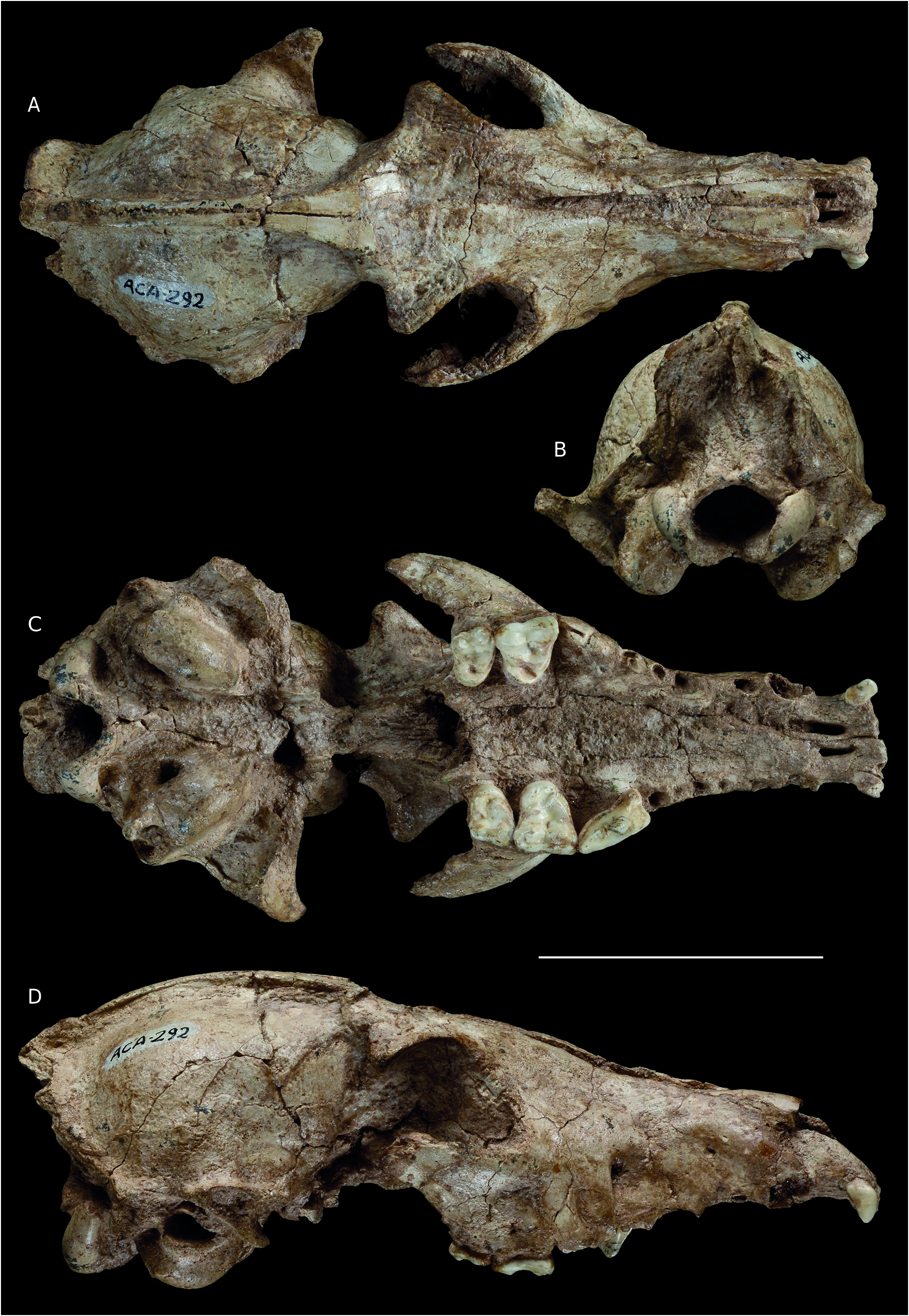
Nyctereutes donnezani
species of mammal
Pannonictis
Pannonictis is a genus of extinct mustelids. It is first known from the very Late Pliocene, and it survived until the end of the Villafranchian. The genus is most commonly recorded from deposits between 2.6 and 1.4 Ma. Fossil remains of Pannonictis have been found throughout Eurasia, from the Iberian Peninsula to eastern China.
Mellivora benfieldi
species of carnivore (fossil)
Nurocyon
Nurocyon is an extinct member of the dog family (Canidae) from the Pliocene of Mongolia. Nurocyon chonokhariensis is the only species in the genus. The teeth of Nurocyon show adaptations to an omnivorous diet, comparable to the living raccoon dog (Nyctereutes procyonoides). The overall structure of the skull is similar to the more primitive Eucyon.