Category
page 1Polabian Slavs
Polabian Slavs
ethnic group
Triglav
deity
Wendish Crusade
Saxons and Danes vs Slavs (Wends)

Milceni
thumb|265px|Milchans and other Sorbian tribes during the early medieval period

Lutici
The Lutici or Liutizi (known by various spelling variants) were a federation of West Slavic Polabian tribes, who between the 10th and 12th centuries lived in what is now northeastern Germany. Four tribes made up the core of the federation: the Redarians (Redari, Redarii), Circipanians (Circipani), Kessinians (Kessini, Kycini, Chizzini) and Tollensians (Tholenzi). At least in part, the Lutici were a continuation of the Veleti. In contrast to the former and the neighboring peoples, the Lutici were not led by a Christian monarch or duke, rather power was asserted through consensus formed in centr
Polabians
West Slavic tribe that lived between the Trave and the Elbe rivers
Great Slav Rising
983 rebellion: Polabian Slavs, Wends, Lutici and Obotrite tribes overthrew Ottonian rule over the Slavic lands and rejected Christianization under Emperor Otto I

Hevelli
thumb|Lands of the Hevelli and Sprevane,about 1150
The Hevelli or Hevellians/ Navellasîni (sometimes Havolane; or Stodoranen; or Stodoranie; or Stodorané) were a tribe of the Polabian Slavs, who settled around the middle Havel river in the present-day Havelland region of Brandenburg in eastern Germany from the 8th century onwards.
Veleti
The Veleti, also known as Veletians, Wilzi, Wielzians, and Wiltzes, were a group of medieval Lechitic tribes within the territory of Western Pomerania, related to Polabian Slavs. They had formed together the Confederation of the Veleti, also known as the Union of the Veleti, a loose monarchic confederation of the tribes. Said state existed between the 6th and 10th centuries, after which, it was succeeded by the Lutician Federation.
Rani
ethnic group
Glomatians
thumb|right|Glomatians (Głomacze) and other Sorbian tribes in the Early Middle Ages
March of Lusatia
March of the Holy Roman Empire (965–1367)
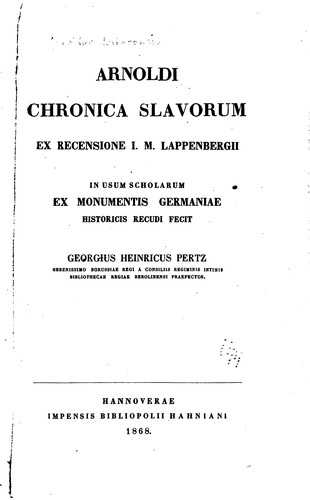
Chronica Slavorum
book by Helmold

Vitslav II, Prince of Rügen
Prince of Rügen
Vitslav III, Prince of Rügen
Danish noble
Rethra
Rethra (also known as Radagoszcz, Radegost, Radigast, Redigast, Radgosc and other forms like Ruthengost) was, in the 10th to the 12th centuries, the main town and political center of the Slavic Redarians, one of the four major Lutician tribes, located most likely in present-day Mecklenburg. It was also a major worship center, devoted to the cult of the Slavic deity Radegast-Swarożyc.

Ukrani
thumb|250px|right|Burgwallinsel, a former Ukrian burgh on an isle in Lake [[Oberuckersee]]

Jaxa of Köpenick
Slavic prince
Kessinians
The Kessinians, also known as Kessini, Chizzini, Kcynianie and Chyżanie, were a medieval West Slavic tribe in what is now northeastern Germany. They inhabited the territory between the Warnow and Recknitz rivers, today split between the districts of Rostock and Vorpommern-Rügen in Mecklenburg-Vorpommern. Their capital and name-giving stronghold was a gard near modern Kessin east of Rostock. Linguistically, they belonged to the Polabian Slavs.
Sprevane
thumb|Lands of the Sprevane and Hevelli, about 1150 AD.
The Sprevane or Sprevani (; Slavonic: Sprevjane) were a Slavic tribe who lived around the river Spree, where Berlin is now, in the Brandenburg area of eastern Germany. They were first recorded in 948 and again in 965 as living in the territory of the Holy Roman Empire under Otto I, Holy Roman Emperor. Archaeological finds point to them coming to the area in the 8th century, and by 825 they started to build a settlement in today's Köpenick, a district of Berlin.
Linones
The Linones were a small Slavic people first recorded in the early 9th century. They lived north and east of the Elbe, across from Höhbeck in the region around Lenzen, south of the Wilzi and Obotrites, north of the Hevelli and northeast of the Saxons. They may have been a sub-group of the Wilzi and were often under Obotrite control. They may be associated with the medieval Gau Liezizi.
Smeldingi
The Smeldingi were a small group of Polabian Slavs living on the border of the Old Saxony in the 9th century, probably between the Elbe and the Havel. They were a sub-group of the Hevelli. Their name is derived from the Proto-Slavic word *smola ('resin') and is related to the ethnonym of the South Slavic Smolyani and the name of the East Slavic city of Smolensk.
Tollensians
The Tollensians (, ) were a West Slavic tribe inhabiting the shores of the lower and middle Tollense (Dołęża) river, after which they were named. They were part of the Veleti/Lutician federation. During the civil war within the federation (1057-1060) the Dołężanie allied with the Redarians against the Kessini and the Circipani. Although the Redarian/Dołężan side was victorious, the devastation caused by the civil war led to the fall of the Lutician federation. In 1110, upon getting news of the defeat of the Holy Roman Emperor Henry V in the German-Polish War of 1109 the Dołężanie and the Redar
Pribislav
thumb|250px|Statue of Pribislav (rightmost figure) flanking that of Otto I, Margrave of Brandenburg|Otto I (center) on the former [[Siegesallee (1898), by Max Unger]]

Jaromar III
Doxani
Doxani was a Polabian Slavic tribe, that in the 10th century, lived in the region of Brandenburg, in Central Europe, which now is part of Germany. While the exact location of their settlements remains unknown, it is known that they inhabited areas of Havel river, and the upper portion of Dosse river, probably to the east of the settlements of Zamzizi tribe.