Category
page 1Polish nobility
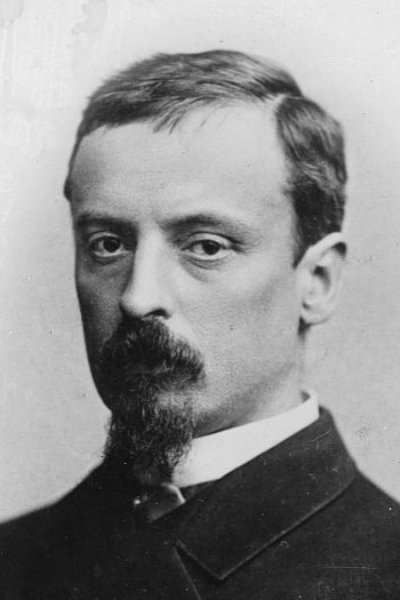
Henryk Sienkiewicz
Polish writer, novelist, journalist, philanthropist and Nobel Prize laureate (1846–1916)

Carolingian dynasty
Frankish noble family founded by Charles Martel

Jagiellonian dynasty
Lithuanian dynasty that ruled in Poland, Lithuania, Bohemia, Hungary and Croatia

Tadeusz Mazowiecki
Polish politician and prime minister (1927-2013)

Szlachta
upright=1.25|thumb|Szlachta in costumes of the voivodeships of the Crown of the Kingdom of Poland, [[Grand Duchy of Lithuania and the Polish–Lithuanian Commonwealth in the 17th and 18th century.]]
upright=1.25|thumb|right|Journey of a Magnates of Poland and Lithuania|Polish Lord During the Times of King [[Augustus III of Poland, by Jan Chełmiński, 1880.]]
thumb|right|Michał Kazimierz Ogiński, a nobleman from 18th century Poland and the Enlightenment

Roman Dmowski
Polish politician (1864–1939)
House of Radziwiłł
Polish noble family
.jpg)
Sarmatism
thumb|right|200px|Stanisław Antoni Szczuka in Sarmatian attire, wearing a [[kontusz]]
thumb|"Treatise about two [[Sarmatia Asian and European and about their composition" by Maciej Miechowita (1517)]]
thumb|200px|Sarmatian-style Karacena armor
Sarmatism (or Sarmatianism; ; ) was an ethno-cultural identity within the Polish–Lithuanian Commonwealth. It was the dominant Baroque culture and ideology of the nobility () that existed in the time from the Renaissance to the early 18th century. Together with the concept of "Golden Liberty", it formed a central aspect of the Commonwealth social elites’
Władysław Grabski
Polish economist, politician and academic (1874–1938)
Maksim Kovalevsky
Ukrainian sociologist (1851-1916)
Mieczysław Karłowicz
Polish composer and conductor (1876-1909)
Wincenty Kadłubek
Polish Roman Catholic monk, bishop and blessed (c. 1150 – 8 March 1223)
Maciej Kazimierz Sarbiewski
Polish writer (1595-1640)
Jan Łaski
Polish Reformer
Vyacheslav Lypynsky
Ukrainian historian (1882-1931)

Sergei Bortkiewicz
Russian Romantic composer and pianist (1877–1952)

Archduke Leo Karl of Austria
Archduke of Austria (1893-1939)
Vladimir Kovalevsky
Russian paleontologist
Napoleon Cybulski
Polish biologist (1854-1919)
Archduke Karl Albrecht of Austria
Austrian archduke (1888-1951)
Jan Czeczot
Polish and Belarusian romantic poet and ethnographer (1796–1847)
Gaude Mater Polonia
national anthem with lyrics by Wincenty of Kielcza
Zygmunt Gloger
Polish historian (1845-1910)

żupan
thumb|Polish magnate [[Jan Zamoyski (1542-1605) dressed in a crimson delia over a blue silk żupan, and tied with a pas kontuszowy. The right hand holds a buława.]]
Żupan (; , , , , ) is a long lined garment of West or Central Asian origin which was widely worn by male nobles in the multi-ethnic Polish–Lithuanian Commonwealth and by the Ukrainian Cossacks in the Cossack Hetmanate. It was a typical upper class male attire from the late 16th to the first half of the 18th century.
Karolina Lanckorońska
Polish World War II resistance fighter, historian and art historian (1898-2002)
Józef Mackiewicz
Polish writer, novelist and political commentator (1902–1985)
Joachim Chreptowicz
polish-Lithuanian nobleman, writer and politician
Kazimierz Fabrycy
Polish general (1888–1958)
Stanisław Mackiewicz
Polish writer (1896-1966)
Włodzimierz Krzyżanowski
Union United States Army general (1824-1887)
Egor Kovalevsky
Russian diplomat (1809–1868)

Michel-Jean Borch
Polish naturalist (1753-1810)
Andrzej Jastrzębiec
priest and diplomat, first bishop of Vilnius
Andrzej Krzycki
Polish archbishop
Élie Bertrand
Swiss scientist
Marcin Szyszkowski
Polish Prince and bishop
Stanisław Kiszka
Roman Catholic bishop
Michał Józef Massalski
Polish-Lithuanian nobleman
Krzysztof Zygmunt Pac
Polish noble
Roman Sanguszko
Russian general
Jan Gruszczyński
Medieval bishop of Kraków
Stanisław Lanckoroński
Polish-Lithuanian magnate
Eduard Pantserzhanskiy
Russian naval commander (1887–1937)
offices in the Polish–Lithuanian Commonwealth
organizational and administrative position in the Polish–Lithuanian Commonwealth
Mikołaj Stefan Pac
Bishop of Lithuania's capital city Vilnius
Mikołaj Łęczycki
Polish Catholic theologian, writer and mystic (1574–1653)
Walerian Protasewicz
Bishop of Lutsk and Vilnius, Counter-Reformation activist, founder of Vilnius University
Franciszek Ksawery Chomiński
Polish nobleman (1740-1809)
Zofia Szymanowska-Lenartowicz
Polish painter (1825–1870)
Polish landed gentry
historical group of hereditary landowners who held manorial estates in Poland
Stanisław Chomętowski
Polish politician and army commander
Celestyn Czaplic
Polish noble
Leon Michał Przyłuski
Polish noble and archbishop
Indygenat
Indygenat or 'naturalization' in the Polish–Lithuanian Commonwealth was the grant of nobility to foreign nobles. To grant indygenat, a foreign noble had to submit proof of their service to the Republic, together with proof of nobility issued by a foreign court, swear an oath of allegiance, and buy land. Grants of indygenat were limited in the history of Poland to just over 400 foreign nobles. It was granted by the King; after 1641 it was only valid with approval of the Sejm of the Polish–Lithuanian Commonwealth.
Józef Pułaski
Polish noble
Casimir Markievicz
Polish artist (1874-1932)
Tomasz Łubieński
Brigadier general in the Polish army and Senator
Zaścianek
thumb|A sketch of land by the Volok Reform: the hatched area is "beyond the wall", i.e., a zaścianek
thumb|Zaścianek Punki. Jazep Drazdovič, 1922
Magnates of Poland and Lithuania
Aleksander Jełowicki
Polish Roman Catholic priest and publisher (1804–1877)