Category
page 1Political realism
statism
In political science, statism or etatism (from French, état 'state') is the doctrine that the political authority of the state is legitimate to some degree. This may include economic and social policy, especially in regard to taxation and the means of production.
national interest
country's goals and ambitions whether economic, military, or cultural

Realism
international relations theory
.jpg)
Realpolitik
Realpolitik ( ) is the approach of conducting diplomatic or political policies based primarily on considerations of given circumstances and factors, rather than strictly following ideological, moral, or ethical premises. In this respect, it shares aspects of its philosophical approach with those of realism and pragmatism.

Overton window
range of ideas tolerated in public discourse
balance of power
idea that national security is enhanced when military capabilities are distributed so no state is strong enough to dominate
neorealism
concept in international relations
international relations theory
study of international relations from a theoretical perspective
security dilemma
actions by state actors likely to lead to escalation of tensions unwanted by all parties
Thucydides Trap
theory on international relations
offensive realism
structural theory of international relations
Kishore Mahbubani
Singaporean diplomat
English school of international relations theory
theory of international relations
legal realism
legal philosophy, naturalistic approach to law

Melian dialogue
debate between two Greek city states from Thucydides' history
developmentalism
Developmentalism is an economic theory which states that the best way for less developed economies to develop is through fostering a strong and varied internal market and imposing high tariffs on imported goods.
Hegemonic stability theory
theory of international relations
The National Interest
American international affairs magazine
Defensive realism
structural theory of international relations
Power politics
theory of power in international relations
European balance of power
tenet in international relations

The Rise and Fall of the Great Powers
book by Paul Kennedy
Classical realism
theory of international relations
neoclassical realism
theory in international relations

The Anarchical Society
book by Hedley Bull
The Twenty Years' Crisis
non-fiction work by E. H. Carr
Bandwagoning
Bandwagoning in international relations occurs when a state aligns with a stronger, adversarial power and concedes that the stronger adversary-turned-partner disproportionately gains in the spoils they conquer together. Bandwagoning, therefore, is a strategy employed by states that find themselves in a weak position. The logic stipulates that an outgunned, weaker state should align itself with a stronger adversary because the latter can take what it wants by force anyway. Thucydides' famous dictum that "the strong do what they can and the weak suffer what they must" captures the essence of ban
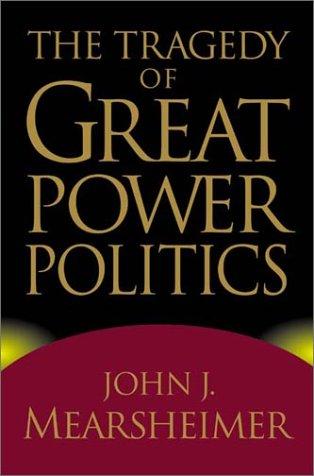
The Tragedy of Great Power Politics
book by John Mearsheimer
Great Debates
series of disagreements between international relations scholars

Politics Among Nations
book by Hans Morgenthau
balance of threat
theory of international relations stating that the alliance behavior of states is determined by the threat that they perceive from other states

Man, the State, and War
1959 essay by Kenneth Waltz
imperial overstretch
idea that empires can control territory beyond what can be feasibly controlled militarily

Theory of International Politics
book by Kenneth Waltz
balancing
concept in international relations
Christian Realism
philosophy developed by R. Niebuhr in the late 1940s and early 1950s; states that the Kingdom of God cannot be realized on earth due to innately corrupt tendencies of society
Left realism
School of thought in criminology