Category
page 1Polychaete genera

Osedax
Osedax is a genus of siboglinid polychaetes, commonly called snot worms or bone-eating worms. Osedax is Latin for 'bone devourer', derived from the worms' unique ecological niche of bone-boring. Osedax settle on a bone, then secrete an acid through specialized root tissues to dissolve the bone's external layers in order to access the lipids within. Osedax act as ecosystem engineers, enhancing the biodiversity of bones they inhabit by increasing their structural complexity, allowing microfauna to inhabit otherwise inaccessible regions of the internal bone.
Nereis
Nereis is a genus of polychaete worms in the family Nereididae. It comprises many species, most of which are marine. Nereis possess setae and parapodia for locomotion and gas exchange. They may have two types of setae, which are found on the parapodia. Acicular setae provide support. Locomotor setae are for crawling, and are the bristles that are visible on the exterior of the Polychaeta. They are cylindrical in shape, found not only in sandy areas, and they are adapted to burrow. They often cling to seagrass (posidonia) or other grass on rocks and sometimes gather in large groups.

Eunice
genus of worms
Lamellibrachia
Lamellibrachia is a genus of tube worms related to the giant tube worm, Riftia pachyptila. They live at deep-sea cold seeps where hydrocarbons (oil and methane) leak out of the seafloor, and are entirely reliant on internal, sulfide-oxidizing bacterial symbionts for their nutrition. The symbionts, gammaproteobacteria, require sulfide and inorganic carbon (carbon dioxide). The tube worms extract dissolved oxygen and hydrogen sulfide from the sea water with the crown of plumes. Species living near seeps can also obtain sulfide through their "roots", posterior extensions of their body and tube. S
Sabella
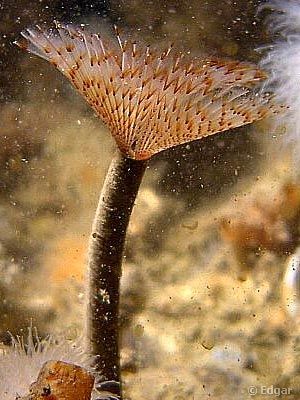
genus of annelids
Platynereis
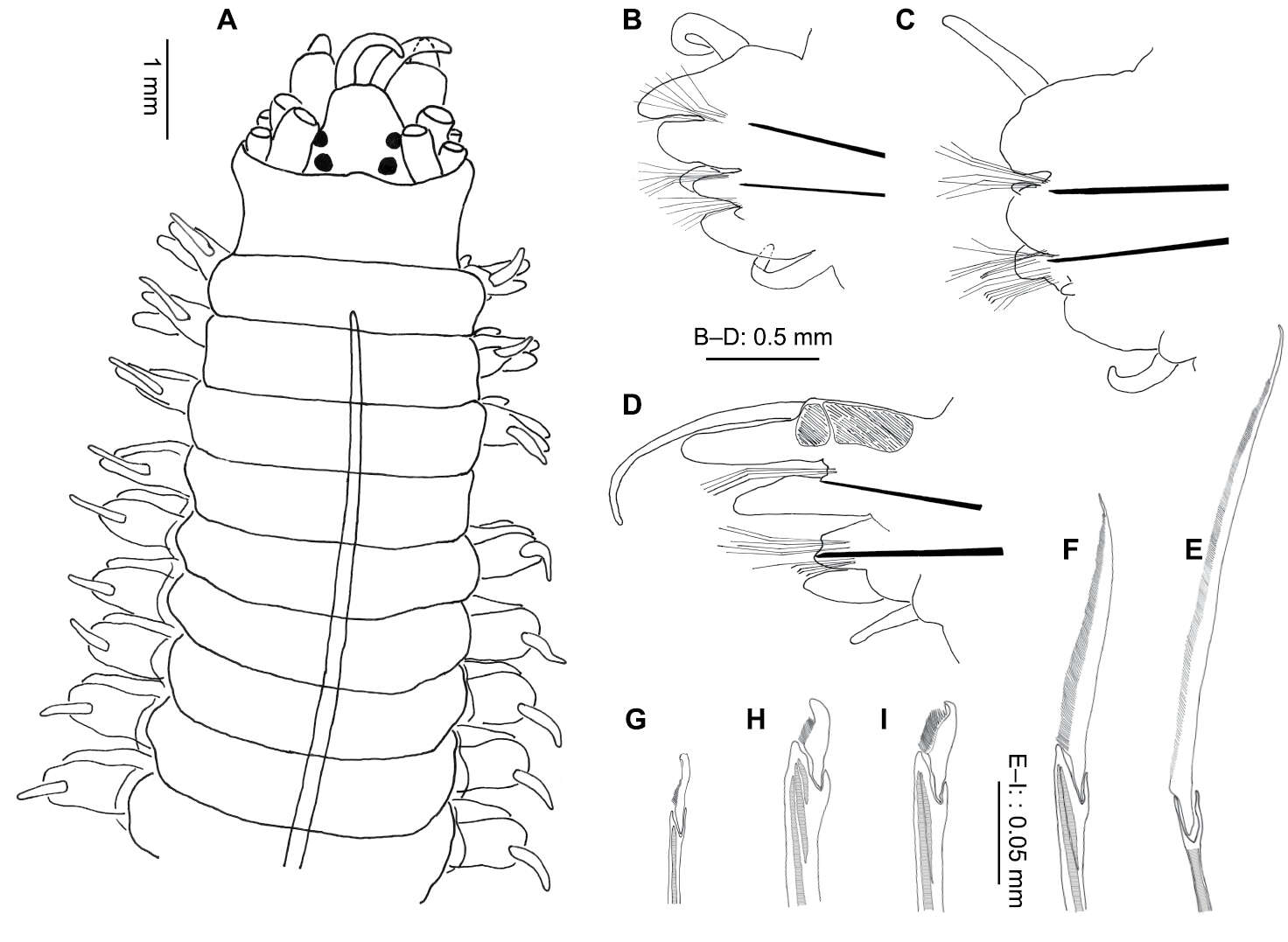
Platynereis is a genus of marine annelid worms that belongs to the Nereididae, a family of errant polychaete worms.
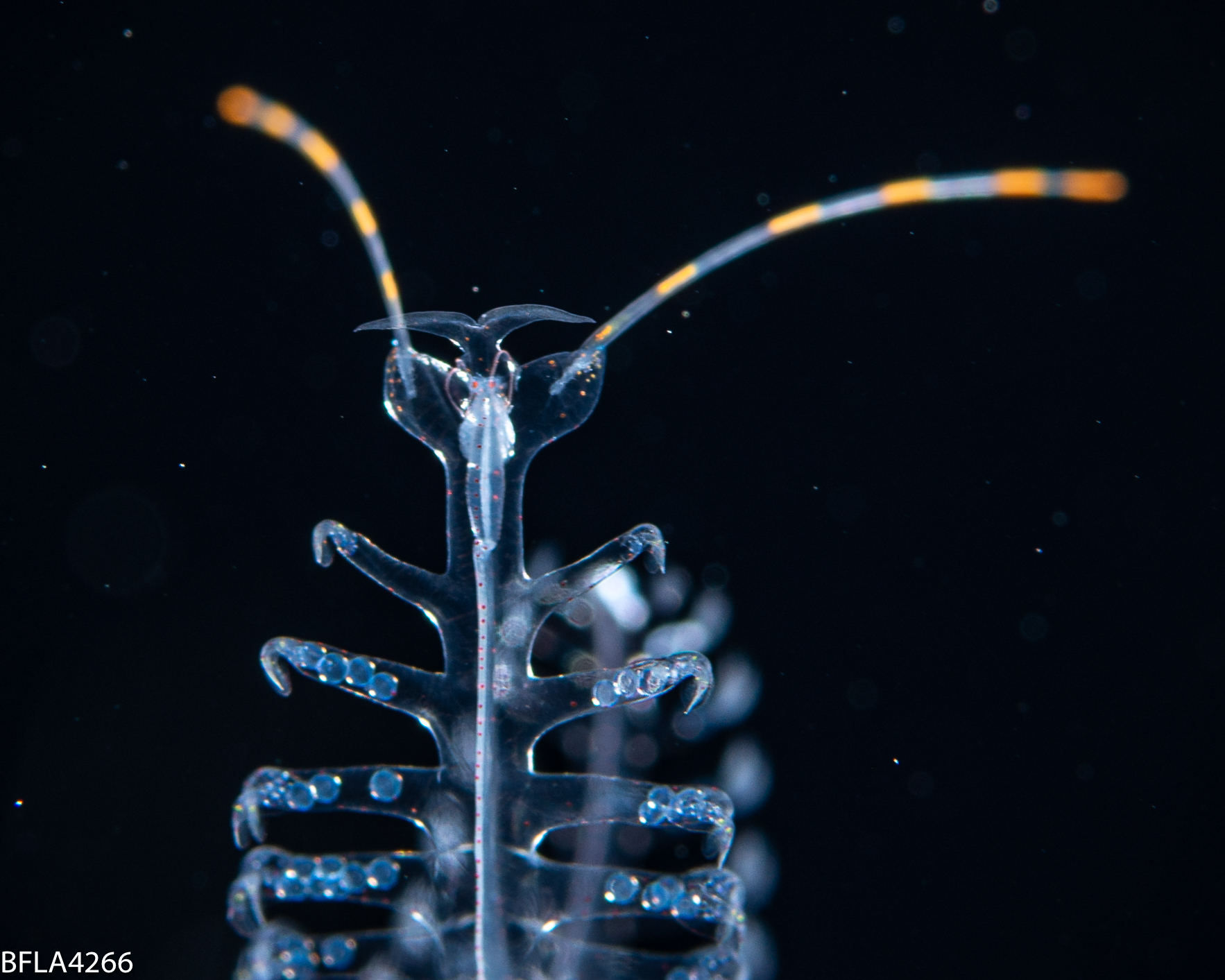
Tomopteris
The gossamer worm (scientific name Tomopteris, Neo-Latin from Greek meaning "a cut" + "wing" but taken to mean "fin") is a genus of marine planktonic polychaetes. All described species are known to be holoplanktic, meaning that they spend their entire life cycles in the water column.
Burgessochaeta
Burgessochaeta is an extinct genus of polychaete annelids from the Middle Cambrian. Its fossils have been found in the Burgess Shale in British Columbia, Canada. The genus was described by Conway Morris (1979) and re-examined by Eibye-Jacobsen (2004).

Serpula
Serpula (also known as calcareous tubeworm, serpulid tubeworm, fanworm, or plume worm) is a genus of sessile, marine annelid tube worms that belongs to the family Serpulidae. Serpulid worms are very similar to tube worms of the closely related sabellid family, except that the former possess a cartilaginous operculum that occludes the entrance to their protective tube after the animal has withdrawn into it. The most distinctive feature of worms of the genus Serpula is their colorful fan-shaped "crown". The crown, used by these animals for respiration and alimentation, is the structure that is m

Nephtys
Nephtys is a genus of marine catworms. Some species are halotolerant to a degree in that they can survive in estuaries and estuarine lagoons down to a salinity of 20 psu (Practical Salinity Units).

Hediste
Hediste is a genus of annelids belonging to the family Nereididae.

Phyllodoce
genus of annelids
Glycera
genus of bristle worms
Neanthes
genus of annelids
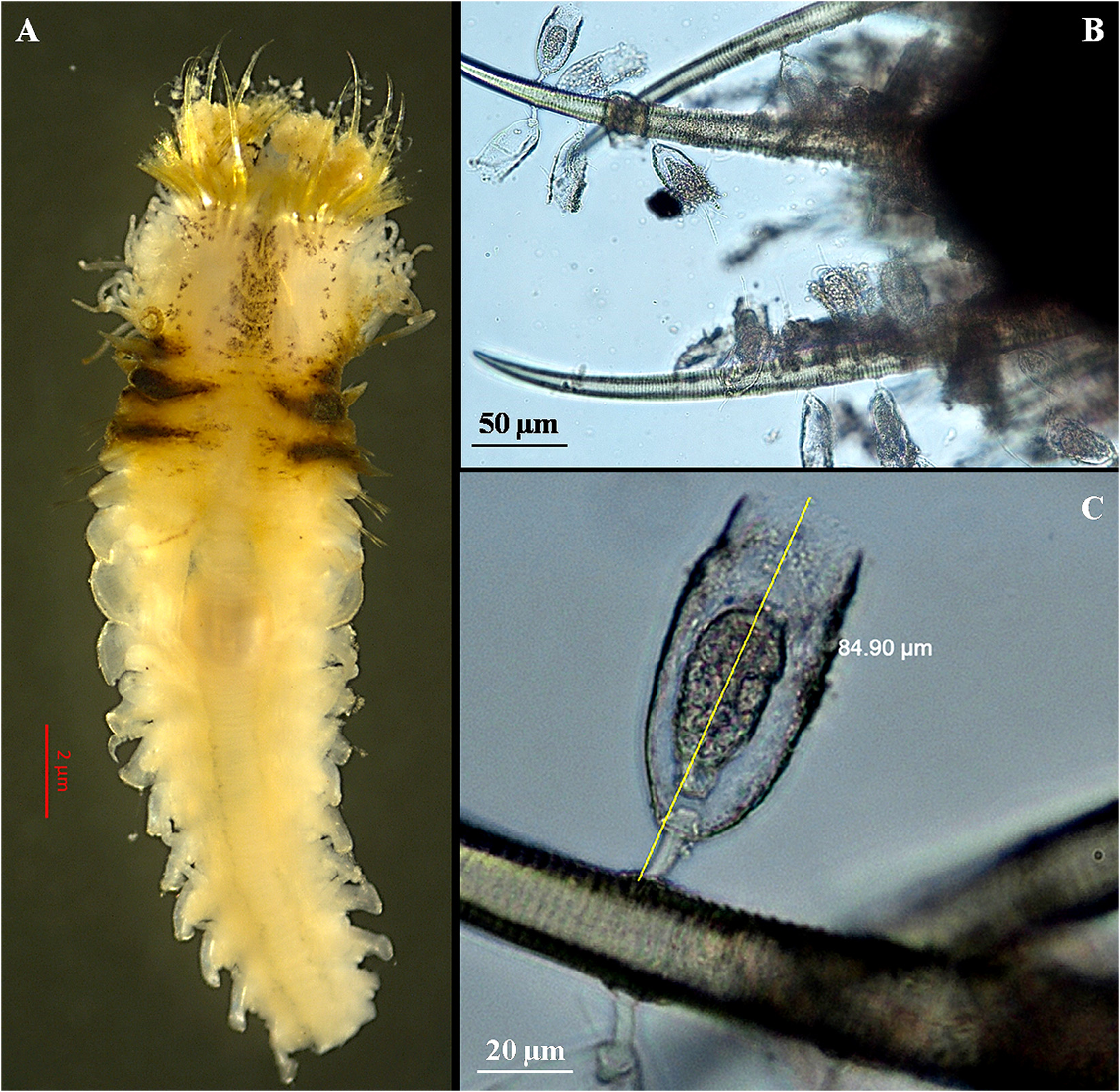
Sabellaria
Sabellaria is a genus of marine polychaete worms in the family Sabellariidae. The type species is Sabellaria alveolata (Linnaeus, 1767). These worms are sedentary and build tubes in which to live from sand and shell fragments. Some species are called honeycomb worms and when they occur in great numbers they can form reefs on rocks and other hard substrates. They are filter feeders, extending a plume-like fan of radioles from the end of the tube in order to catch plankton and detritus floating past. They have a distinctive operculum which is used to block the opening of the tube when the radiol
Spirobranchus
Spirobranchus is the second largest genus of tube-building annelid fanworms in the family Serpulidae.
Alitta
Alitta is a genus of marine annelids in Nereididae family (commonly known as sandworms or ragworms). There are three recognised species within the genus, Alitta grandis (Stimpson, 1853), Alitta succinea (Frey & Leuckart, 1847) and Alitta virens (M. Sars, 1835). Alitta brandti Malmgren, 1865 was originally considered part of the genus, but is now accepted as Neanthes brandti (Malmgren, 1865).
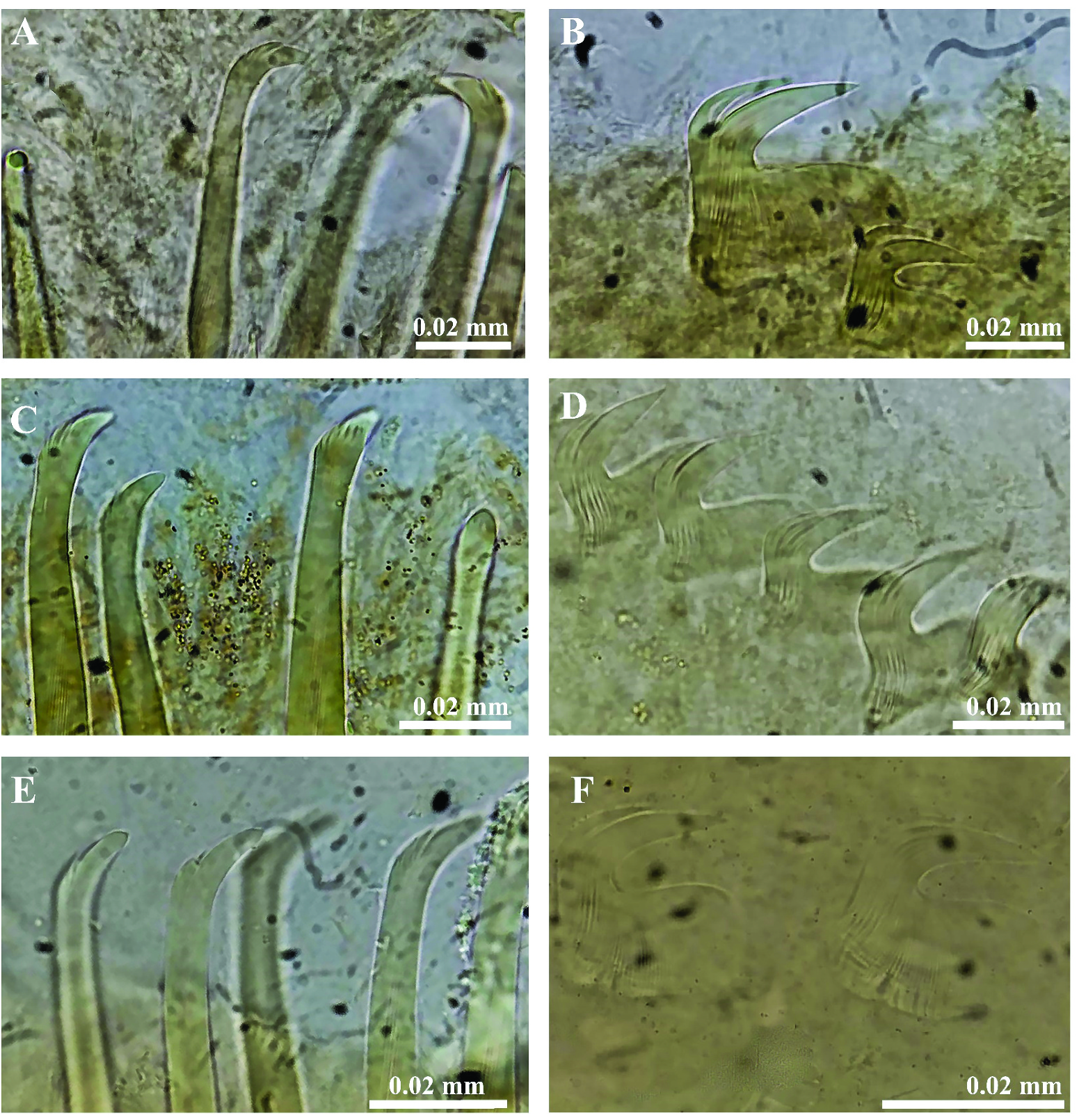
Myxicola
Myxicola is a genus of polychaetes belonging to the family Sabellidae.
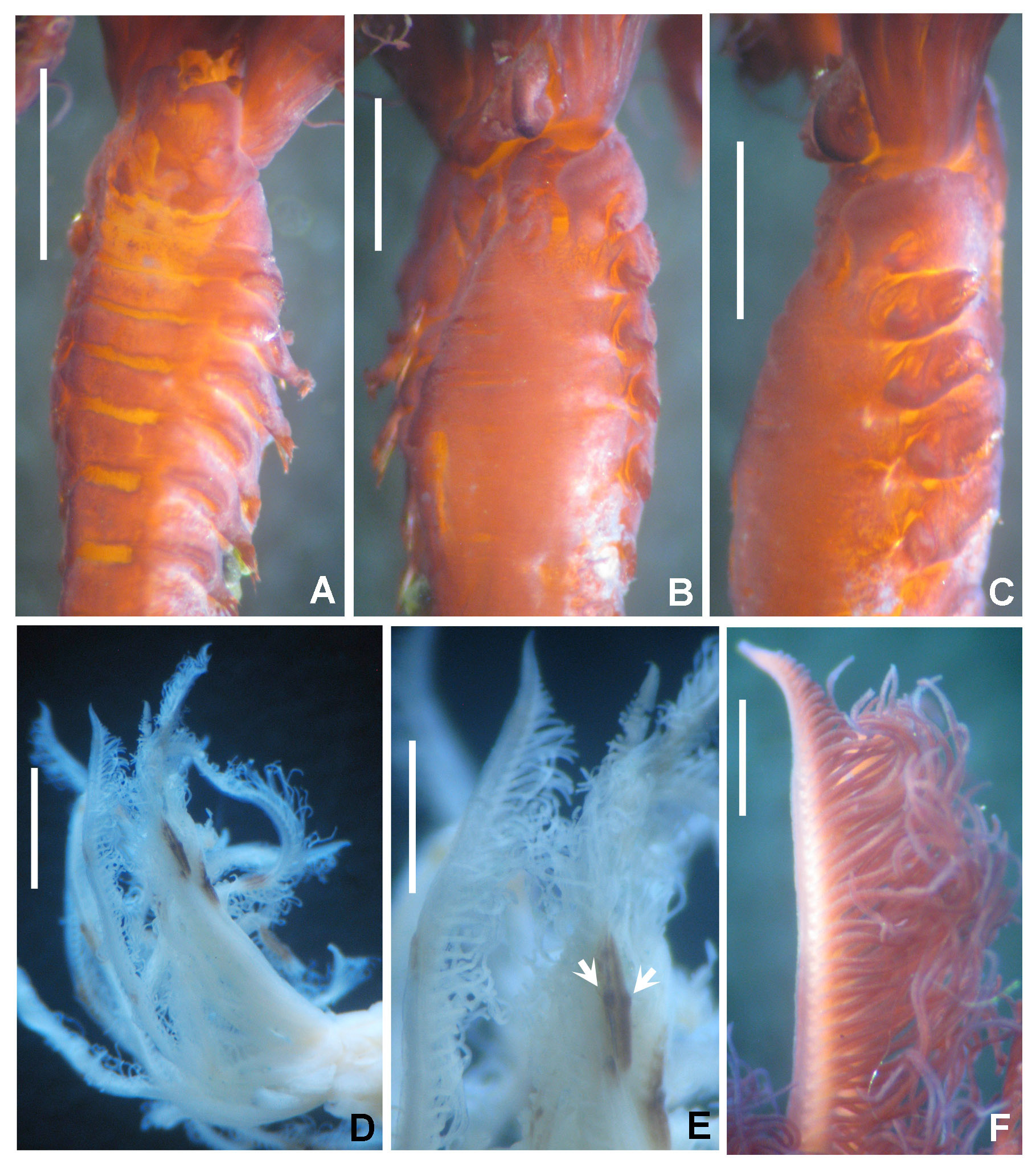
Bispira
Bispira is a genus of marine bristleworm in the family Sabellidae. Its members were initially included in genus Sabella by Grube in 1851. In 1856, Krøyer described Bispira as a separate genus. Members of Bispira are defined by spirally-coiled, equally-divided branchial lobes.
Polydora
genus of annelids

Cossuridae
family of annelids

Syllis
Syllis is a genus of marine bioluminescent polychaete worms.

Spirorbis
Spirorbis is a genus of very small () polychaete worms, usually with a white coiled shell. Members of the genus live in the lower littoral and sublittoral zones of rocky shores. Spirorbis worms usually live attached to seaweeds, but some species live directly on rocks, shells or other hard substrates. Spirorbis was once thought to have a fossil record extending back into the Early Paleozoic, but now all pre-Bathonian (Middle Jurassic) spirorbins are known to be microconchids. The earliest members of genus appeared in the Miocene, but Oligocene finds may
also be possible. The genus contains the
Escarpia
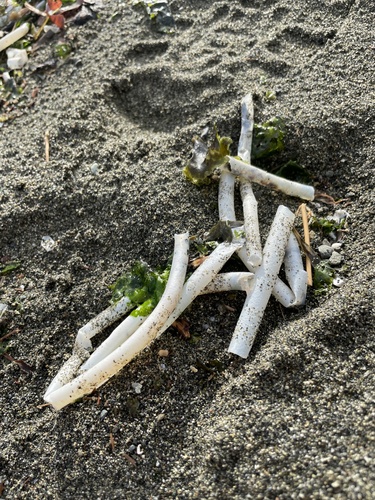
Escarpia is a genus of polychaetes belonging to the family Siboglinidae.
Ochetostoma
Ochetostoma is a genus of echiurans belonging to the family Thalassematidae.
Nicon
genus of annelids
Exogone
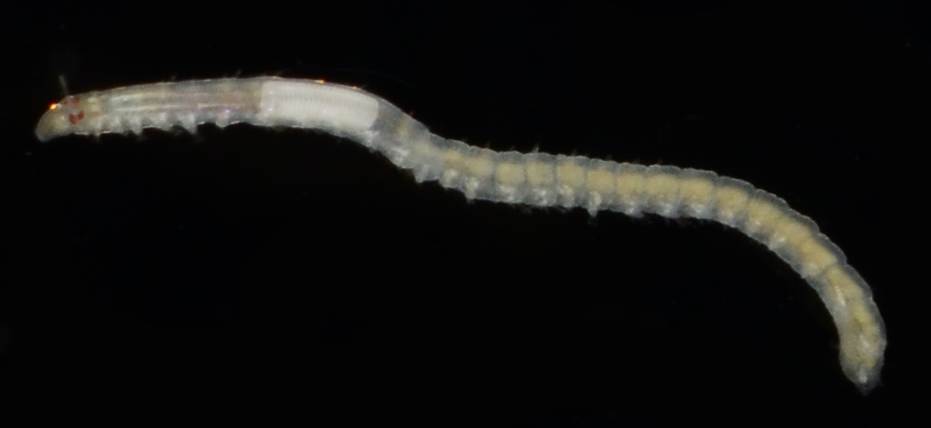
REDIRECT Syllidae
Owenia
genus of annelids
Eudistylia
Eudistylia is a genus of marine polychaete worms. The type species is Eudistylia gigantea, now accepted as Eudistylia vancouveri. This worm lives in a parchment-like tube with a single opening from which a crown of tentacles projects when the worm is submerged. It is a sessile filter feeder. Eudistylia vancouveri is unique because it has an operculum which makes it possible to fully retract into the tube when predators are sensed.
Harmothoe
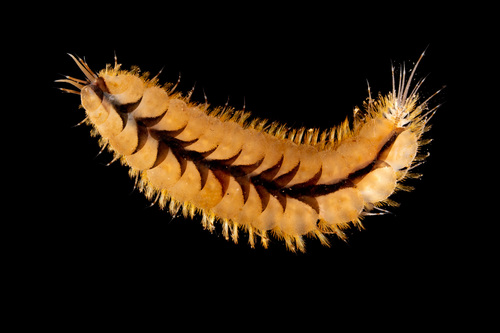
Harmothoe is a genus of marine Polychaete worms belonging to the family Polynoidae (scale worms). Species of Harmothoe are found world-wide to depths of at least 5,000 m but are more common in shallower water.

Aglaophamus
Aglaophamus is a genus of free-burrowing nephtyid worms.
Hermodice
Hermodice is a genus of annelids belonging to the family Amphinomidae.
Bhawania
Bhawania is a genus of polychaete worms in the family Chrysopetalidae.

Haplosyllis
Haplosyllis is a genus of annelids belonging to the family Syllidae. The genus has cosmopolitan distribution.
Chrysopetalum
Chrysopetalum is a genus of polychaete worms.
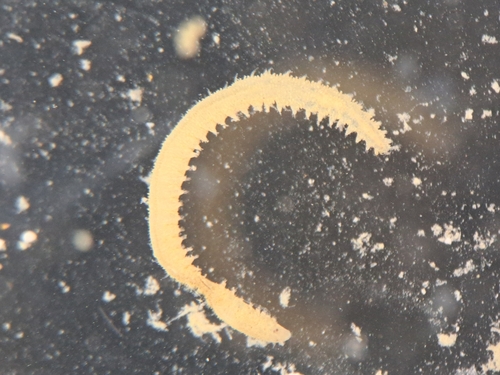
Sphaerosyllis
REDIRECT Syllidae

Vermiliopsis
Vermiliopsis is a genus of polychaetes belonging to the family Serpulidae.
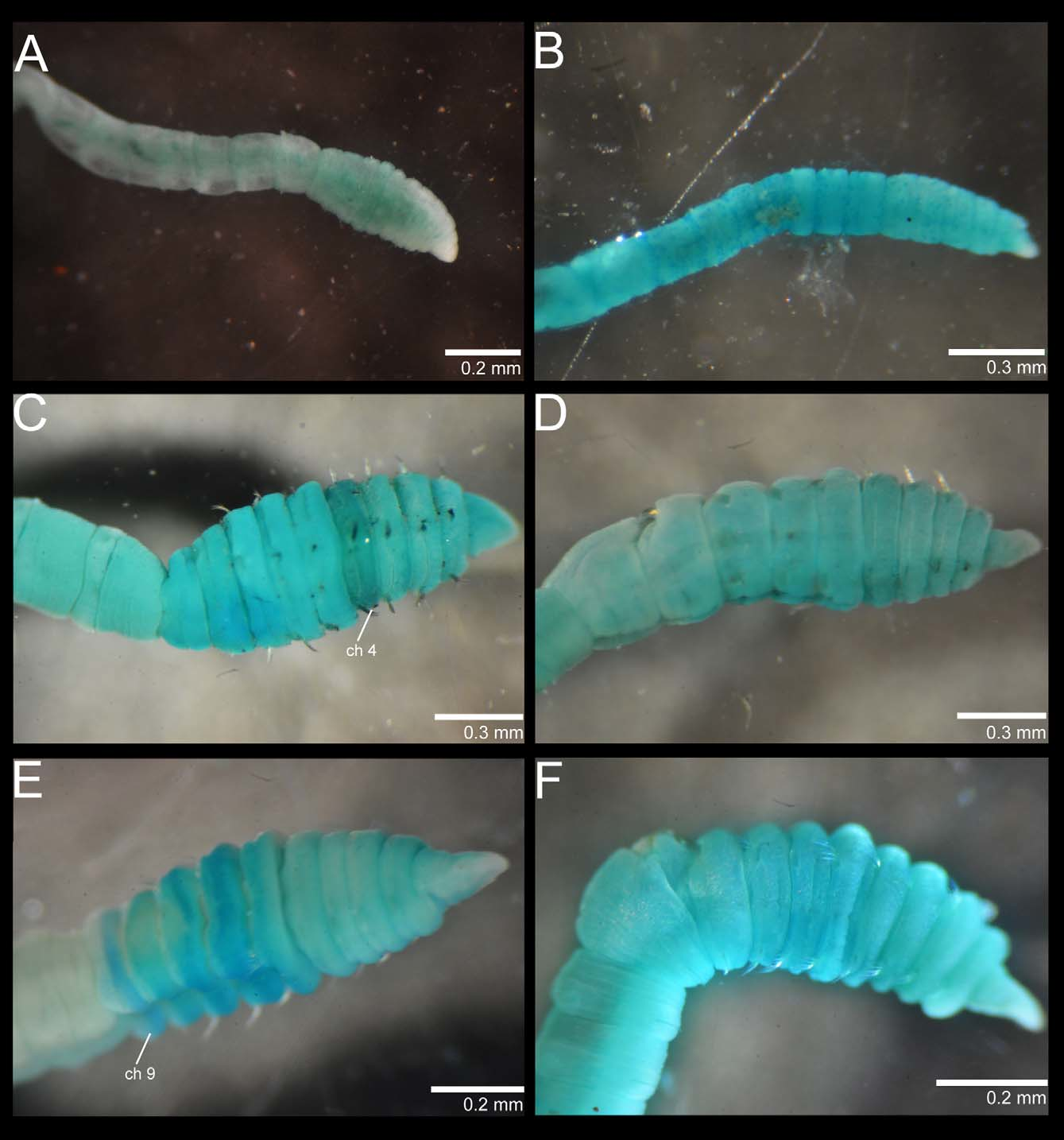
Capitella
Capitella is a polychaete worm genus in the family Capitellidae.
Chloeia
Chloeia is a genus of marine polychaete worms.

Eulalia
genus of annelids

Sabellastarte
Sabellastarte is a genus of marine polychaete worms in the family Sabellidae.
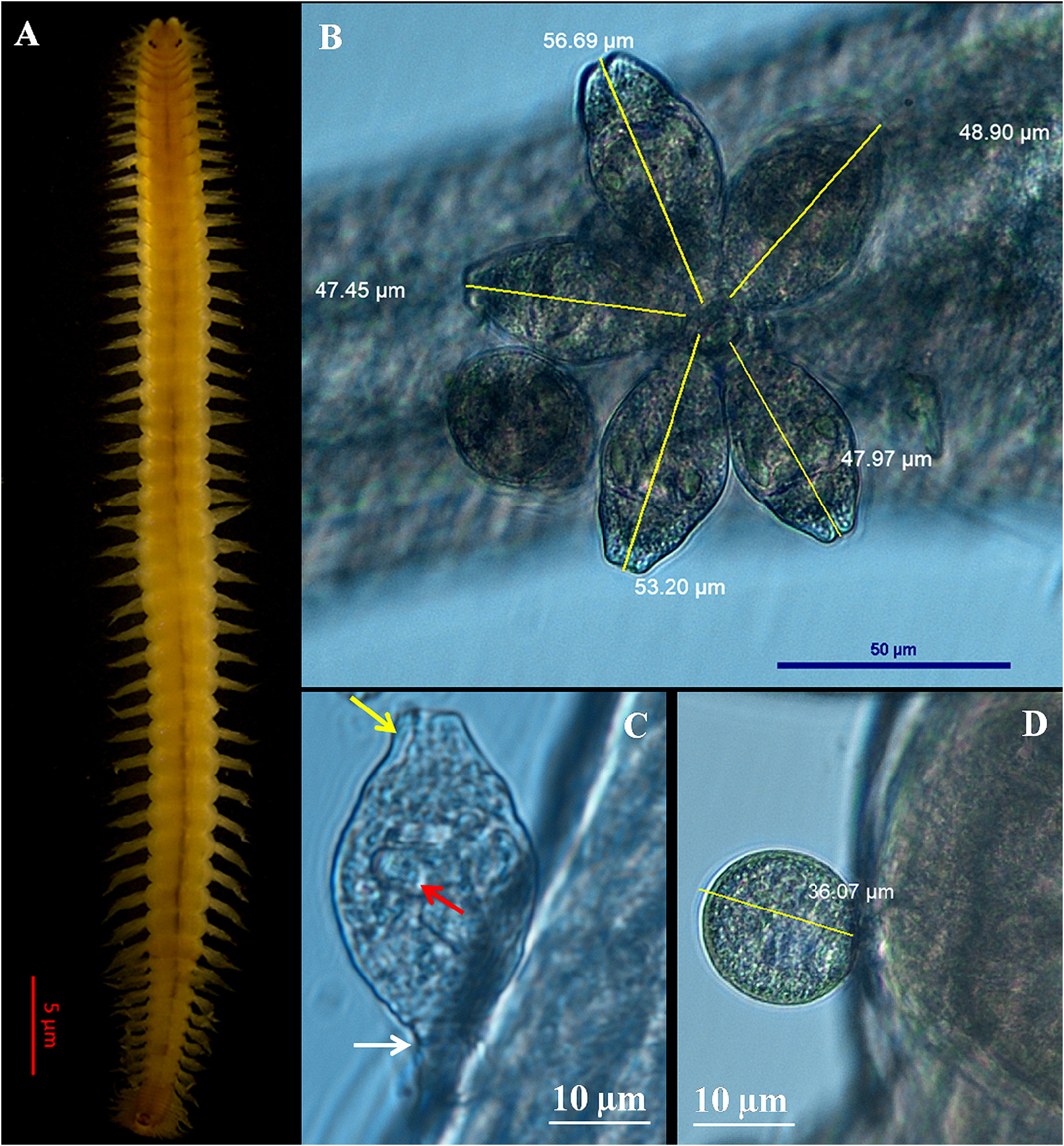
Namalycastis
Namalycastis is a genus of polychaetes belonging to the family Nereididae.
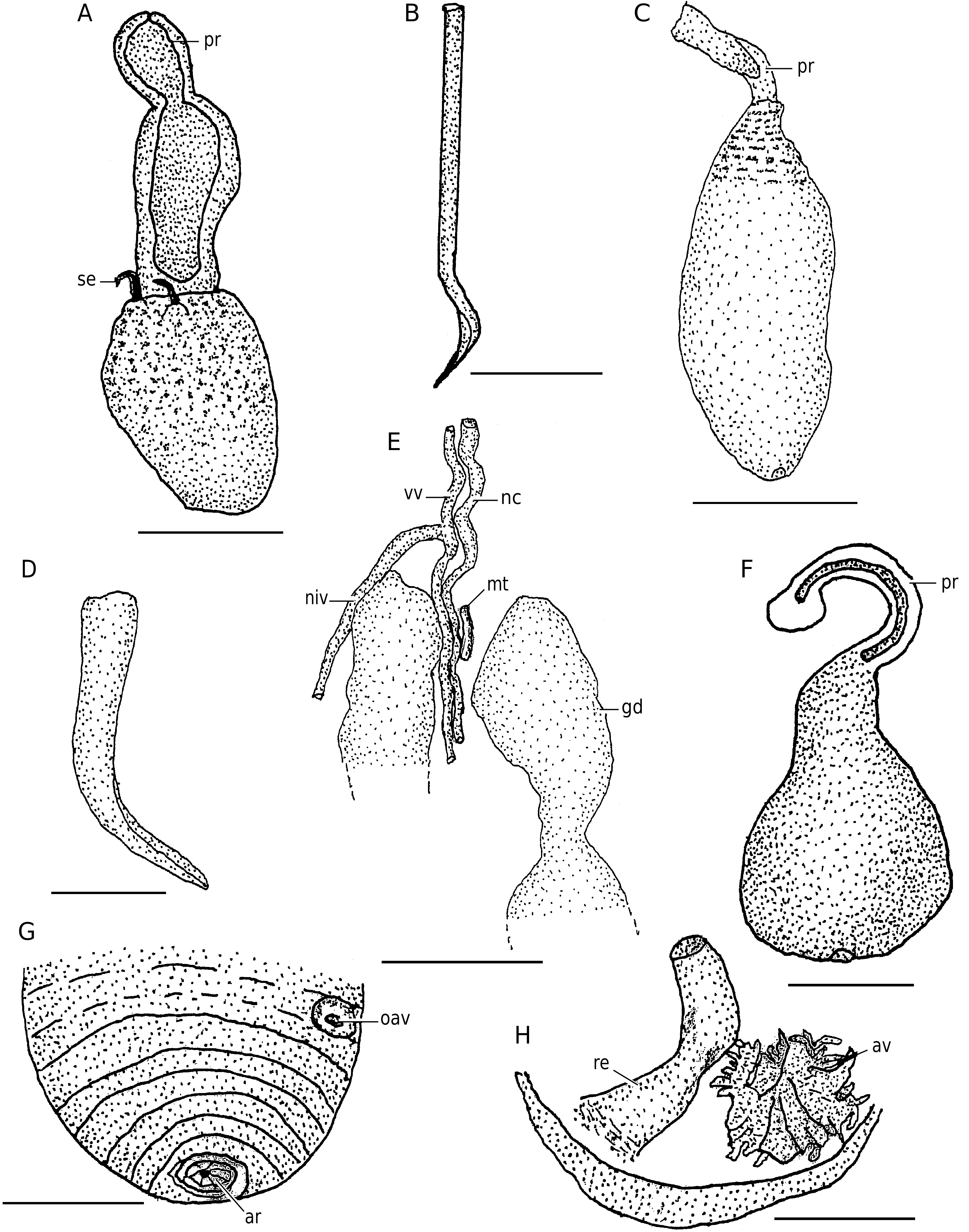
Pseudobonellia
Pseudobonellia is a genus of echiurans belonging to the family Bonelliidae.

Jasmineira
Jasmineira is a genus of polychaetes.

Prionospio
Prionospio is a genus of annelids belonging to the family Spionidae.
Scolelepis
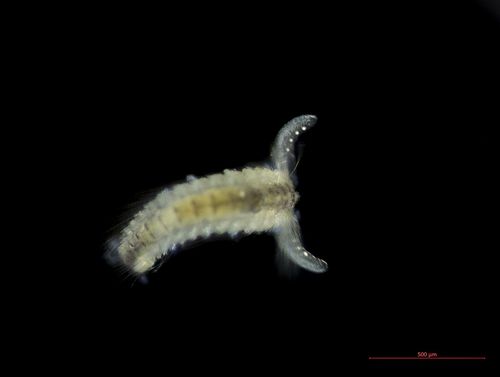
Scolelepis is a genus of annelids belonging to the family Spionidae.
Aberranta
Aberranta is a genus of polychaete thought to be related to the Nerillidae.

Fabricia
genus of annelids
Chone
genus of annelids
Protodriloides
Protodriloides is a genus of polychaetes belonging to the monotypic family Protodriloididae.

Lysidice
genus of annelids

Chaetacanthus
genus of annelids

Pectinaria
genus of annelids
Ceratonereis
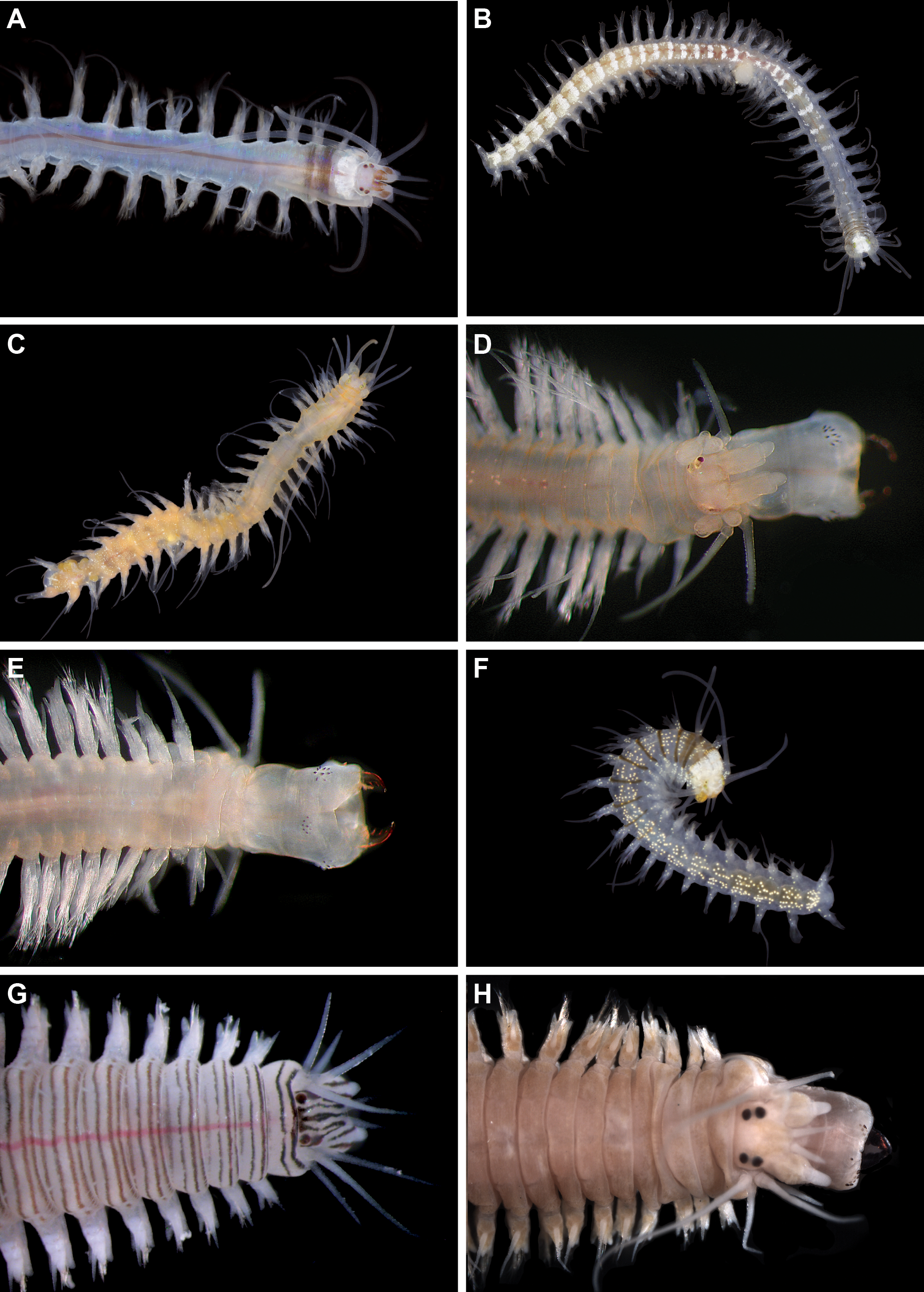
Ceratonereis is a genus of polychaete worms from the family Nereididae.
Hydroides
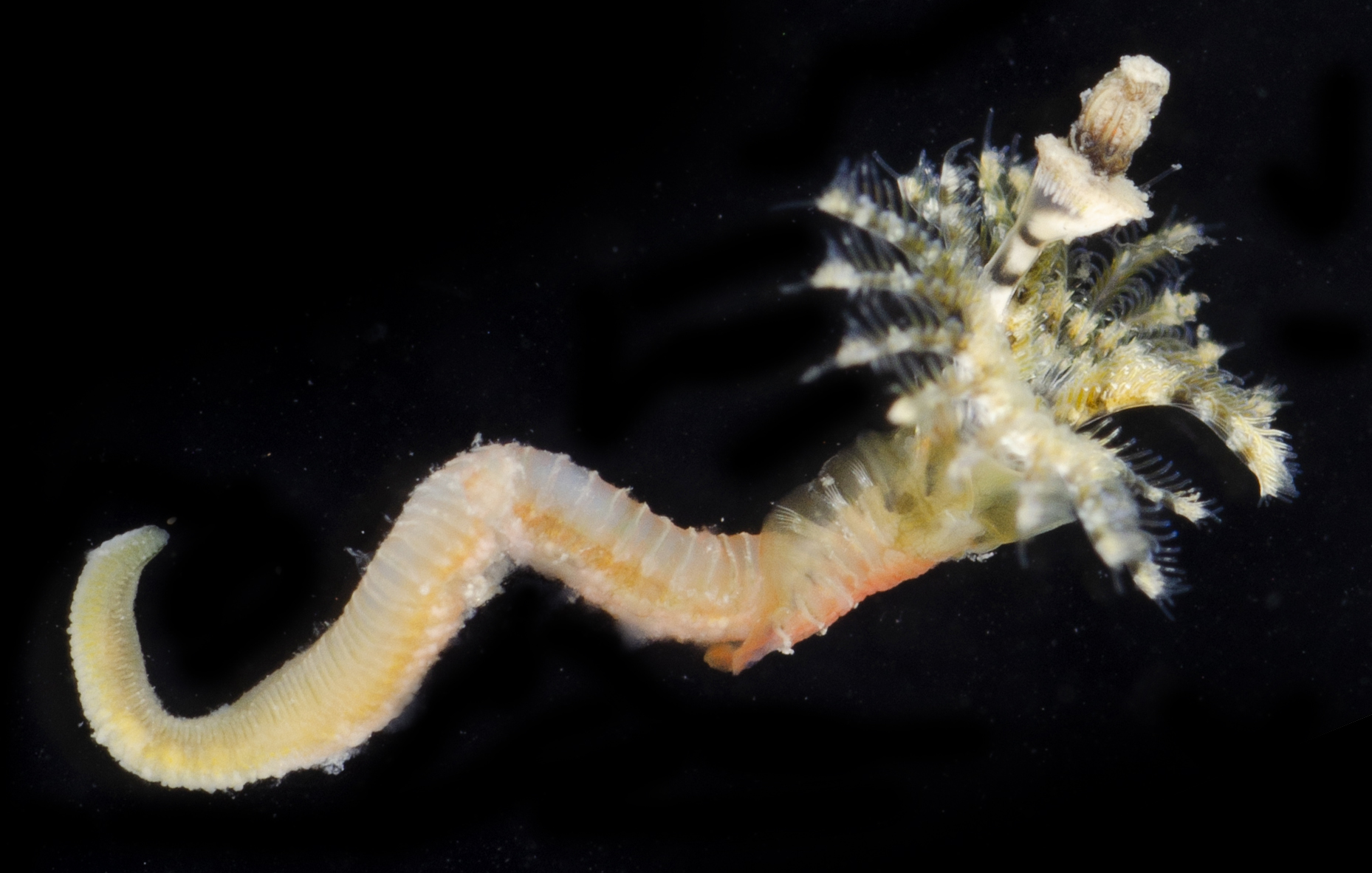
Hydroides is a genus of tube-forming serpulid worms found on submerged saltwater rocks, shells, and boats in many coastal areas around the world.
Peinaleopolynoe
Peinaleopolynoe, also known as the hungry scale worm, is a genus belonging to the family Polynoidae (scale worms). Members of this genus generally live in nutrient-rich environments in the deep sea, such as whale fall, which is the reason for their name (Greek plural , ; "famished").
Phylo
genus of annelids
Sternaspis
genus of annelids

Poeobius meseres
Poeobius is a genus of marine polychaete worm. It contains the single species Poeobius meseres, or balloon worm. This is a common and abundant resident in the midwater around the mesopelagic and bathypelagic zones, especially in Monterey Bay. They can be found at around 300-2,500 m (980-8,200 ft) depth from Japan to Alaska to the Gulf of California, and have also been reported in South America.

Scalibregma
Scalibregma is a genus of polychaetes belonging to the family Scalibregmatidae.