Category
page 1Polymorphism (biology)

phenotype
thumb|right|250px |The mollusc shell|shells of individuals within the [[bivalve mollusk species Donax variabilis show diverse coloration and patterning in their phenotypes.]]
thumb|right |Here the relation between genotype and phenotype is illustrated, using a [[Punnett square, for the character of petal color in pea plants. The letters B and b represent genes for color, and the pictures show the resultant phenotypes. This shows how multiple genotypes (BB and Bb) may yield the same phenotype (purple petals).]]
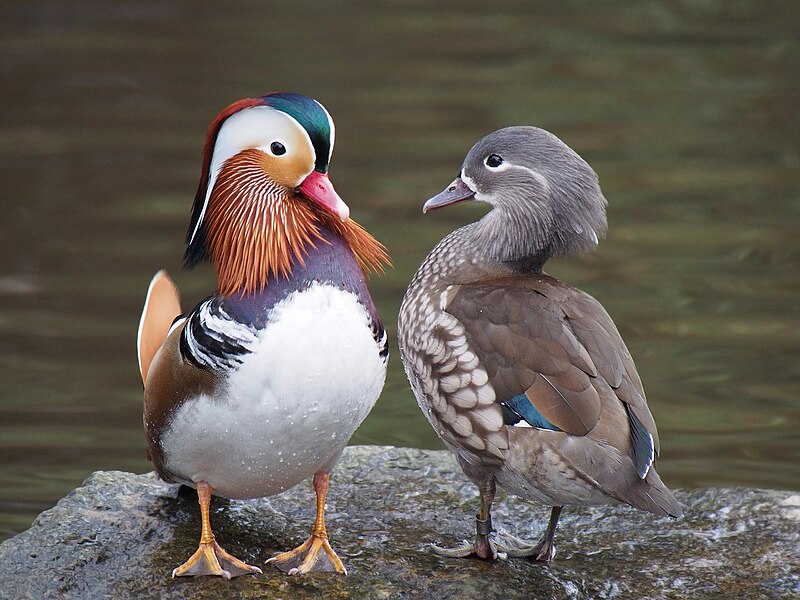
sexual dimorphism
condition where the two sexes of the same species exhibit different characteristics beyond the differences in their sexual organs

genotype
The genotype of an organism is its complete set of genetic material. Genotype can also be used to refer to the alleles or variants an individual carries in a particular gene or genetic location. The number of alleles an individual can have in a specific gene depends on the number of copies of each chromosome found in that species, also referred to as ploidy. In diploid species like humans, two full sets of chromosomes are present, meaning each individual has two alleles for any given gene. If both alleles are the same, the genotype is referred to as homozygous. If the alleles are different, th

mimicry
thumb|upright=1.2|Many insects including hoverfly|hoverflies (C, D, E) and the [[wasp beetle (F) are Batesian mimics of stinging wasps (A, B), which are Müllerian mimics of each other.]]

polymorphism
in biology, occurrence of two or more clearly different morphs or forms in the population of a species

Darwin's finches
group of related bird species in the Galápagos Islands

Cepaea
Cepaea is a genus of large air-breathing land snails, terrestrial pulmonate gastropod molluscs in the family Helicidae. The shells are often brightly coloured and patterned with brown stripes. The two living species in this genus, C. nemoralis and C. hortensis, are widespread and common in Western and Central Europe. In North America, C. hortensis is native on the northeast coast, but both species have been introduced elsewhere, and they are also spreading further east in Europe. Both have been influential model species for ongoing studies of genetics and natural selection. Like many Helicidae

Polyphenism
thumb|right|Biston betularia caterpillars on birch (left) and willow (right), demonstrating a color polyphenism.
A polyphenic trait is a trait for which multiple, discrete phenotypes can arise from a single genotype as a result of differing environmental conditions. It is therefore a special case of phenotypic plasticity.
genetic polymorphism
occurrence in an interbreeding population of two or more discontinuous genotypes
aggressive mimicry
form of mimicry in which an organism displays similar traits to others to avoid detection
Mimicry in plants
evolutionary mechanism