Category
page 1Polytheism

Buddhism
thumb|The Kamakura Daibutsu, a 13th-century bronze statue of the Buddha [[Amitābha in Kanagawa Prefecture, Japan]]

Hinduism
Hinduism () is an umbrella term for a range of Indian religious and spiritual traditions (sampradayas) that are unified by adherence to the concept of dharma, a cosmic order maintained by its followers through rituals and righteous living, as expounded in the Vedas. The word Hindu is an exonym, and while Hinduism has been called the oldest surviving religion in the world, it is also described by the 19th century term Sanātana Dharma (). Vaidika Dharma () and Arya Dharma are historical endonyms for Hinduism.

Taoism
Taoism or Daoism (, ) is a philosophical and religious tradition indigenous to China, emphasizing harmony with the Tao . With a range of meaning in Chinese philosophy, translations of Tao include 'way', 'road', 'path', or 'technique', generally understood in the Taoist sense as an enigmatic process of transforming ultimately underlying reality. Taoist thought has informed the development of various practices within the Taoist tradition, including forms of meditation, astrology, qigong, feng shui, and internal alchemy. A common goal of Taoist practice is self-cultivation, a deeper appreciation

Confucianism
thumb|upright=1.15|Temple of Confucius of [[Jiangyin, Wuxi, Jiangsu. It is a wenmiao (), a temple where Confucius is worshipped as Wendi, "God of Culture" ().]]
thumb|upright=1.15|Gates of the wenmiao of Datong, [[Shanxi]]
Confucianism, also known as Ruism or Ru classicism, is a system of thought and behavior originating in ancient China, and is variously described as a tradition, philosophy, religion, theory of government, or way of life. Founded by Confucius in the Hundred Schools of Thought era (c. 500 BCE), Confucianism integrates philosophy, ethics, and social governance, with a core focu

Shinto
The torii gateway to the [[Itsukushima Shrine in Hiroshima Prefecture, Japan, one of the most famous examples in the country. Torii mark the entrance to Shinto shrines and are recognizable symbols of the religion.|right|thumb|upright=1.1]]
, also called Shintoism, is the native religion and former ethnic cult of Japan. Classified as an East Asian religion by scholars of religion, it is often regarded by its practitioners as Japan's indigenous religion and as a nature religion. Scholars sometimes call its practitioners Shintoists, although adherents rarely use that term themselves. With no cent

polytheism
Polytheism is the belief in or worship of more than one god. Polytheistic belief is usually assembled into a pantheon of gods and goddesses, along with their own religious sects and rituals. Polytheism is a type of theism. Within theism, it contrasts with monotheism, the belief in a singular god who is, in most cases, transcendent.

animism
Animism (from meaning 'breath, spirit, life') is the belief that places, objects, and creatures all possess a distinct spiritual essence. Animism perceives all things—animals, plants, rocks, rivers, weather systems, human handiwork, and in some cases words—as being animated, having agency and free will. Animism is used in anthropology of religion as a term for the belief system of many indigenous peoples in contrast to the relatively more recent development of organized religions. Animism is a metaphysical belief which focuses on the supernatural universe: specifically, on the concept of the i

Mormonism
thumb|The Salt Lake Temple, a temple of the Church of Jesus Christ of Latter-day Saints in [[Salt Lake City, Utah]]

Tengrism
thumb|Peak of Khan Tengri at sunset

Nation of Islam
Black nationalist African-American new religious movement

shirk
polytheism in Islamic terminology
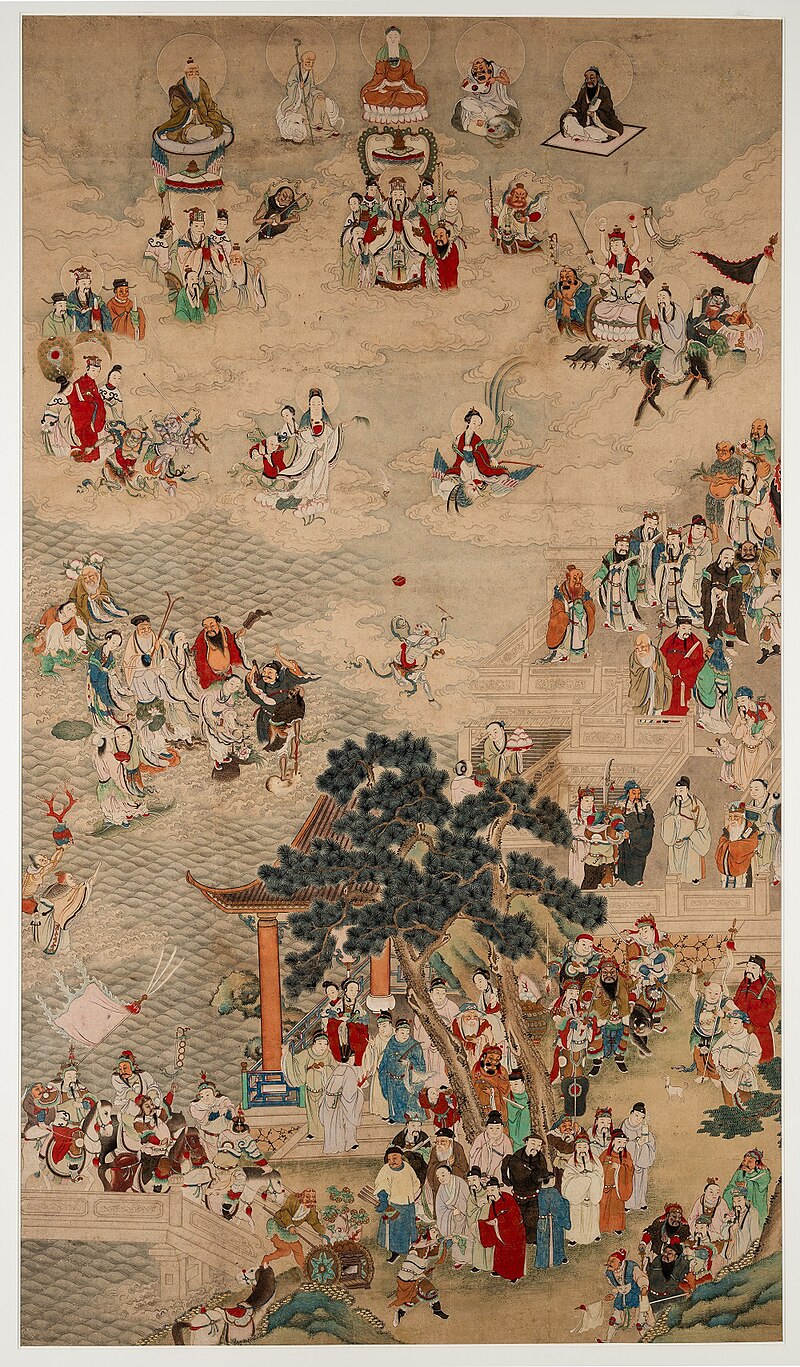
Chinese folk religion
traditional Han Chinese religious belief systems

pantheon
collection of gods of a particular religion or mythos

henotheism
Henotheism is the worship of a single, supreme god that does not deny the existence or possible existence of other deities that may be worshipped. Friedrich Schelling (1775–1854) coined the word, and Friedrich Welcker (1784–1868) used it to depict primitive monotheism among ancient Greeks.

Bon
thumb|The Bon monastery of Nangzhik Gompa in Ngawa, [[Sichuan, China]]

Thelema
thumb|right|alt=Crowley wearing the ceremonial garb of the Hermetic Order of the Golden Dawn, 1910|Aleister Crowley in 1910
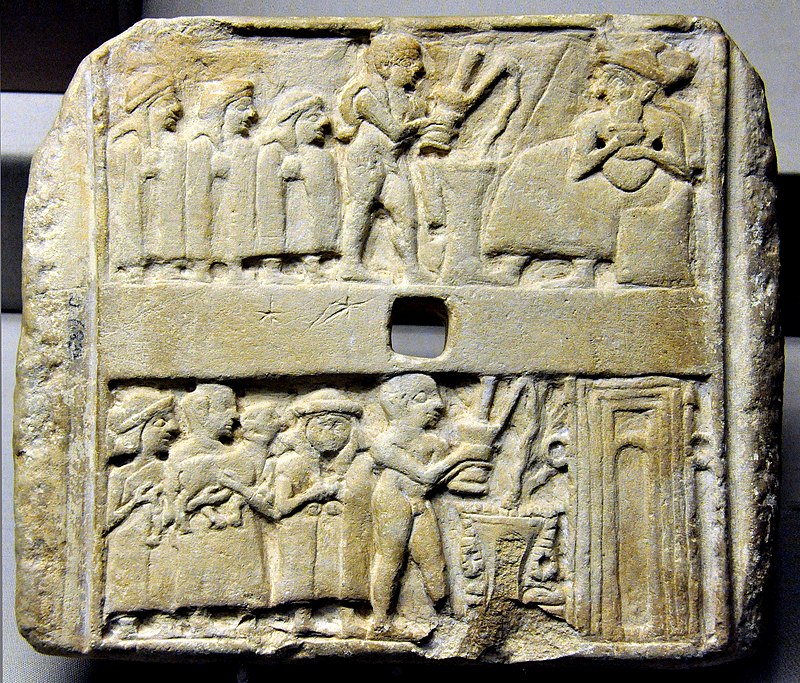
Sumerian religion
first religion of Mesopotamia region which is tangible by writing
Armenian mythology
body of myths and teachings of Armenians
%20(Mus%C3%A9e%20du%20Caire)%20(2076972086).jpg)
monolatrism
Monolatry (, and ) is the belief in the existence of many gods, but the insistence on the exclusive worship of only a single chosen deity. The term was possibly first used by Julius Wellhausen.
Proto-Indo-European mythology
myths attributed to the Proto-Indo-Europeans
Hellenism
Hellenic Polytheistic Reconstructionism
heathenry
modern Pagan religion modelled on pre-Christian Germanic traditions
%2C%20Kronvalda%20parks%2C%20R%C4%ABga%2C%20Latvia%20-%20panoramio%20(1).jpg)
Dievturība
Dievturība is a contemporary continuation of the ethnic religion of the Latvians from what it was before Christianization in the 13th century. Adherents call themselves Dievturi (singular: Dievturis), literally "Dievs' keepers", "people who live in harmony with Dievs". Dievturība is mainly rooted in Latvian folklore, folk songs and Latvian mythology.
Canaanite religion
group of ancient Semitic religions
Babylonian religion
religious practices of Babylonia
Joy of Satan Ministries
International organization dedicated to the religion of Satanism

Yahwism
Yahwism, also known as the Israelite religion, was the ancient Semitic religion of ancient Israel and Judah and the ethnic religion of the Israelites. The Israelite religion was a derivative of the Canaanite religion and a polytheistic religion that had a pantheon with various gods and goddesses. The primary deity of the religion and the head of the pantheon was Yahweh, the national god of the kingdoms of Judah and Israel. The majority of scholars hold that the goddess Asherah was the consort of Yahweh, though some scholars disagree. Below this divine pair were secondary gods and goddesses, su

Book of Abraham
religious text of some Latter Day Saint churches
Hawaiian religion
polytheistic, animistic Hawaiian religious beliefs

Sanamahism
Sanamahism , also known as Meiteism , or Lainingthouism is an ethnic religion of the Meitei people of Manipur, in Northeast India. It is a polytheistic religion and is named after Lainingthou Sanamahi, one of the most important deities of the Meitei faith. Sanamahi is the eldest son of the supreme god Sidaba Mapu and the supreme goddess Leimarel Sidabi. Traditionally every Meitei household, irrespective of the religion, worships Sanamahi and Leimarel Sidabi. Sanamahism does not have a religious head but has a body, the Maru Loishang, that oversees the main religious activities and governs all
King of the Gods
leading or primary god of a polytheistic pantheon
religion in the Inca Empire
Aztec religion
Mesoamerican religion of the Aztecs
national god
a guardian deity whose special concern is supposed to be the safety and well-being of an ethnic group
Thou shalt have no other gods before me
part of the Ten Commandments (Exodus 20:2)
God in Mormonism
god in Mormonism
Mo
religion of most Zhuang people
religious Confucianism
ethical and philosophical doctrine of Chinese civilization as a system of beliefs in the supernatural
Divine Council
assembly of deities over which a higher-level god presides
Muisca religion
indigenous religion of Columbia
Waaqeffanna
Waaqeffanna is an ethnic religion indigenous to the Oromo people in the Horn of Africa as well as other Cushitic speaking peoples. The word Waaqeffanna, deriving from the word Waaqa, is the ancient name for Creator in various Cushitic languages including the Oromo people and Somali people. The followers of the Waaqeffanna religion are called Waaqeffataa and they believe in the supreme being (the one God). It is estimated that about 23% of the Oromo population, which is 8,095,000 Oromos, in present-day Ethiopia actively practice this religion. Some put the number around 5,000,000, depending on