Category
page 1Popular psychology

fanaticism
thumb|The Fanatics of Tangier by Eugène Delacroix, [[Minneapolis Institute of Arts]]
Fanaticism is a belief or behavior involving uncritical zeal or an obsessive enthusiasm. The political theorist Zachary R. Goldsmith provides a "cluster account" of the concept of fanaticism, identifying ten main attributes that, in various combinations, constitute it: messianism, inappropriate relationship to reason (irrationality), an embrace of abstraction, a desire for novelty, the pursuit of perfection, an opposition to limits, the embrace of violence, absolute certitude, excessive passion, and an attract
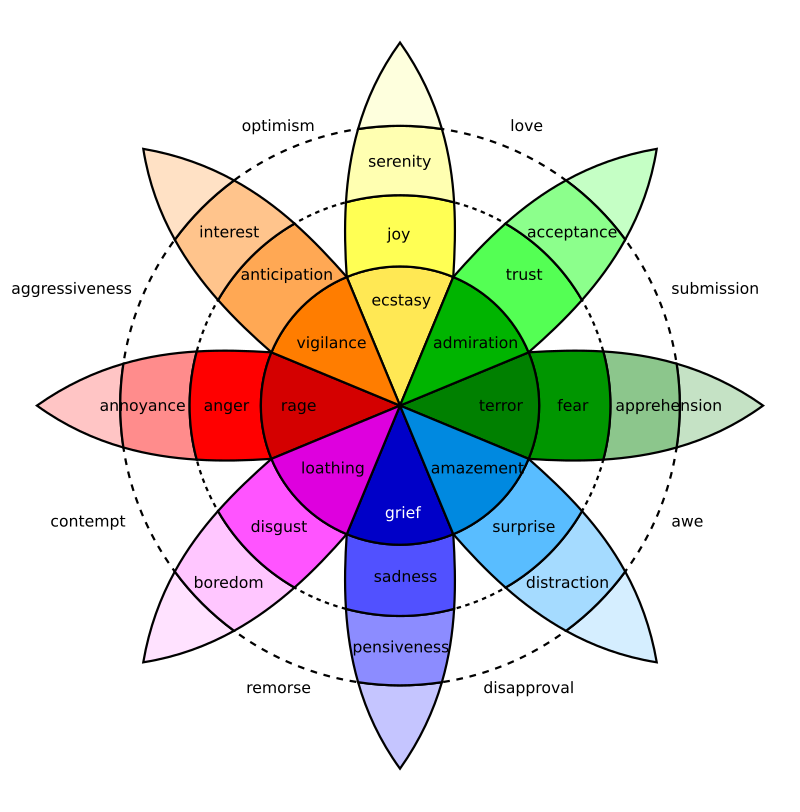
emotional intelligence
ability to identify, assess, and control the emotions of oneself, of others, and of groups

brainwashing
Brainwashing is the systematic effort to get someone to adopt a particular deception, loyalty, instruction, or doctrine, usually without being noticed. It is also a term that refers in general to psychological techniques that manipulate action or thought against a person's will, desire, or knowledge. It attempts to damage individual or group attitudes, frames of reference, beliefs, values or loyalties by demonstrating that current thinking patterns and attitudes are wrong and need change. It is said to reduce its subject's ability to think critically or independently, to allow the introduction
impostor syndrome
psychological pattern in which people doubt their accomplishments and have a persistent, often internalized fear of being exposed as a "fraud"
writer's block
condition in which an author loses the ability to produce or experiences creative slowdown
fear of missing out
anxiety to miss information, opportunities, events, experiences, or decisions improving life
peer pressure
influence that a peer group, observers or individual exerts that encourages others to change their attitudes, values, or behaviors to conform the group norms. A group trying to convince a person to do something they are unwilling to do.
existential crisis
moment when individuals question whether their lives have meaning, purpose, or value, and are negatively impacted by the contemplation
messiah complex
state of mind in which an individual holds a belief that they are, or are destined to become, a savior
Freudian slip
concept in classical psychoanalysis

sensationalism
thumb|upright=1.5|Causes of death in the US vs. media coverage. The percentage of media attention for terrorism, homicide, or suicide is much greater than the percentage of deaths caused by it. There is a null in numerical data concerning deaths per day on various bars in media charts.
In journalism and mass media, sensationalism is a type of editorial tactic. Events and topics in news stories are selected and worded to excite the greatest number of readers and viewers. This style of news reporting encourages biased or emotionally loaded impressions of events rather than journalistic objectivi
Mozart effect
psychological effects of listening to Mozart's music
herbivore men
term used in Japan to describe men who have no interest in getting married or finding a girlfriend
God complex
unshakable belief characterized by consistently inflated feelings of personal ability, privilege, or infallibility
reverse psychology
persuasive technique where the opposite of a desired reaction is suggested
viral phenomenon
objects or patterns that are able to replicate themselves or convert other objects into copies of themselves when these objects are exposed to them
motivational speaker
speaker intended to motivate the audience
emotional blackmail
negative form of psychological control over another
popular psychology
concepts and theories about human mental life and behavior that are purportedly based on psychology
color psychology
study of influence of color on human behaviour
quarter-life crisis
crisis involving anxiety over the direction and quality of one's life which is most commonly experienced in a period ranging from a person's twenties up to their mid-thirties
social desirability bias
response bias exhibited by survey respondents
empty nest syndrome
expression about parental feeling of grief and loneliness
folk psychology
explanation of people in terms of mental states
victim mentality
acquired personality trait in which a person tends to consider oneself as a victim of the negative actions of others, and to behave as if this were the case in the face of contrary evidence of such circumstances
famous for being famous
phrase to refer to someone who is famous for no particular reason
personal boundaries
limits that a person creates to identify permissible ways for other people to behave towards them
Cinderella complex
concept in developmental psychology
cabin fever
irritability and restlessness upon isolated confinement for a long period of time
inner child
In popular psychology and analytical psychology, a person's childlike aspect.
guilty pleasure
something that one enjoys despite understanding that it is not generally held in high regard

nice guy
popular psychology
Polyvagal Theory
unproven constructs pertaining to the vagus nerve
Martha Mitchell effect
labelling real experiences as delusional

spiritual intelligence
philosophical term
martyr complex
the feeling of being a martyr for their own sake, seeking out suffering or persecution because it either feeds a psychological need or a desire to avoid responsibility
emotional reasoning
a cognitive process by which one's own emotional reaction is used to prove something is true
Prairie madness
mental suffering among settlers of the North American plains
Bridey Murphy
purported example of a recalled past life (1923-1995)
attachment therapy
loosely identified category of mental health interventions
savior complex
individual undertaking rescuing
shock value
in popular psychology
Walter Mitty
protagonist of a James Thurber short story
Emotional literacy
the ability to understand your emotions, listen to others, empathise with their emotions, and express emotions productively
motivational speaking
methods of coaching to help clients increase their motivation