Category
page 1Pre-Columbian cultures

Mapuche
The Mapuche ( , ), also known as Araucanians, are a group of Indigenous inhabitants of south-central Chile and southwestern Argentina, including parts of Patagonia. The collective term refers to a wide-ranging ethnicity composed of various groups who share a common social, religious, and economic structure, as well as a common linguistic heritage as Mapudungun speakers. Their homelands once extended from Choapa Valley to the Chiloé Archipelago and later spread eastward to Puelmapu, a land comprising part of the Argentine pampa and Patagonia. Today, the Mapuche represent 77.16% of Chile’s indig

Tolteca
thumb|250px|right|A Toltec-style clay vessel (American Museum of Natural History).
The Toltec culture () was a pre-Columbian Mesoamerican culture that ruled a state centered in Tula, Hidalgo, Mexico, during the Epiclassic and the early Post-Classic period of Mesoamerican chronology, reaching prominence from 950 to 1150 CE. The later Aztec culture considered the Toltec to be their intellectual and cultural predecessors and described Toltec culture emanating from Tōllān (Nahuatl for Tula) as the epitome of civilization. In the Nahuatl language the word Tōltēkatl (singular) or Tōltēkah (plural) c

Taíno people
The Taíno were the Indigenous peoples in most of the West Indies, in the Caribbean region of the Americas. Their culture has been continued today by their descendants and by Taíno revivalist communities. They were the first New World peoples encountered by non-Norse Europeans. Part of the Arawak group of Indigenous peoples in the Americas, the Taíno are also referred to as Island Arawaks or Antillean Arawaks.
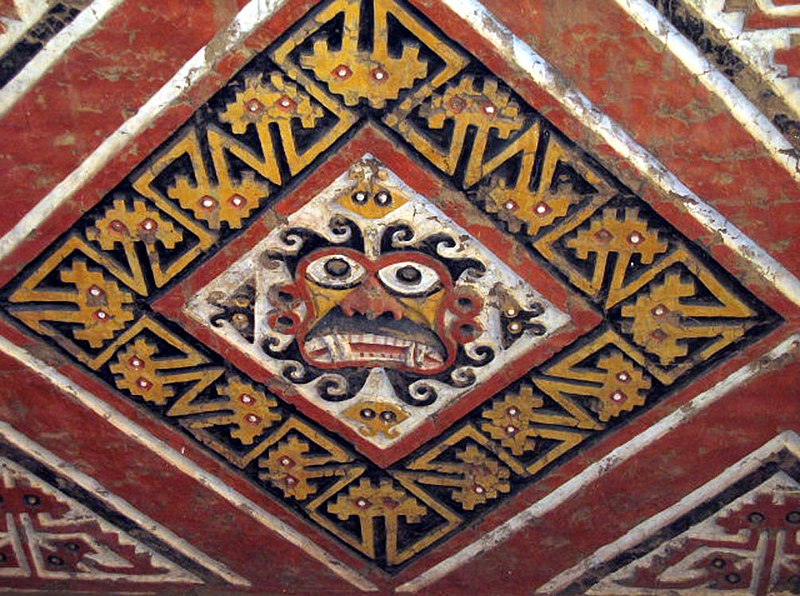
Moche culture
culture that flourished 100 to 700 during the Regional Development Epoch in modern Peru

Muisca people
right|thumb|260px|Location of Muisca in Colombia.
right|thumb|260px|View of the Eastern Ranges of the Andean natural region[[Lake Tota is clearly visible]]
right|thumb|260px|The Altiplano Cundiboyacense in the Eastern Ranges; territory of the Muisca
right|thumb|260px|Southwestern Altiplano; Bogotá savanna, territory of the southern mosca (zipa)
Chavín culture
pre-Columbian civilisation from Peru
Ancestral Puebloans
ancient Native American culture in Four Corners region of the United States

Paleo-Indians
Paleo-Indians (also spelled Paleoindians) were the first peoples who entered and subsequently inhabited the Americas towards the end of the Late Pleistocene period. The word comes from the prefix paleo-, taken from , and "Indian", which has been historically used to refer to Indigenous peoples of the Americas. The term Paleo-Indian applies specifically to the lithic period in the Western Hemisphere and is distinct from the term Paleolithic.
Caral–Supe civilization
complex pre-Columbian era society that included as many as 30 major population centers in what is now the Norte Chico region of north-central coastal Peru

Clovis culture
prehistoric culture in the Americas c. 13,000 – 11,000 BP
Chimú culture
civilization
Tehuelche
indigenous people from Patagonia

Hohokam
thumb|upright=1.4|The Great House at the Casa Grande Ruins National Monument
Folsom tradition
Paleo-Indian archaeological culture that occupied much of central North America

Monte Verde
archaeological site in Llanquihue Province, Chile
Chinchorro culture
archaeological culture of South America
Adena culture
Pre-Columbian Native American culture
Mound Builders
pre-Columbian cultures of North America that constructed various styles of earthen mounds

Quiché' Kingdom of Q'umarkaj
capital city of the pre-Columbian K'iche' Maya of highland Guatemala.
Tarascan State
state in present-day central Mexico (c. 1300-1530)

Cañari
thumb|right|200px|Cañari musicians
thumb|right|200px|A Cañari weaver at his loom

Tairona
thumb|upright=1.3|Map showing ancient pre-Columbian cultures in northern South America
Tairona or Tayrona was a Pre-Columbian culture of Colombia, which consisted of a group of chiefdoms in the region of Sierra Nevada de Santa Marta in present-day Cesar, Magdalena and La Guajira Departments of Colombia, South America, which goes back at least to the 1st century AD and had significant demographic growth around the 11th century.
Valdivia culture
archaeological culture in modern-day Ecuador

mound
thumb|230px|Grave Creek Mound, in [[Moundsville, West Virginia]]
thumb|230px|Kościuszko Mound, [[Kraków, Poland]]
thumb|230px|Oseberg Ship#Burial mound|Oseberg Mound, [[Tønsberg, Norway]]
Chancay culture
Civilization on the central coast of Peru between the yearS 1200 and 1470

Zenúes
The Zenú, Sinú or Cenú is a pre-Columbian culture and Indigenous people in Colombia, whose ancestral territory comprises the valleys of the Sinú and San Jorge rivers as well as the coast of the Caribbean around the Gulf of Morrosquillo. These lands lie within the departments of Córdoba and Sucre.
Woodland period
period of North American pre-Columbian cultures
Piaroa
Indigenous pre-columbian ethnic group and Amerindian nation maintaining their indigeneity
Cultural periods of Peru
system for dating cultural periods in the Andean Region
San Agustan culture
from Huila, Colombia

Picunche
The Picunche (a Mapudungun word meaning "North People"), also referred to as picones by the Spanish, were a Mapudungun-speaking people living to the north of the Mapuches or Araucanians (a name given to those Mapuche living between the Itata and Toltén rivers) and south of the Choapa River and the Diaguitas. Until the Conquest of Chile the Itata was the natural limit between the Mapuche, located to the south, and Picunche, to the north. During the Inca attempt to conquer Chile the southern Picunche peoples that successfully resisted them were later known as the Promaucaes.
Recuay culture
pre-Columbian culture in northwestern central Peru
Cueva Fell
cave and archaeological site in Patagonia
Las Vegas culture
large number of Holocene settlements which flourished between 8000 BCE and 4600 BCE, near the coast of present-day Ecuador

Pehuenche
thumb|Flag
Saladoid
The Saladoid culture is a pre-Columbian Indigenous culture of territory in present-day Venezuela and the Caribbean that flourished from 500 BCE to 545 CE. Concentrated along the lowlands of the Orinoco River, the people migrated by sea to the Lesser Antilles, and then to Puerto Rico.
Archaic period in North America
second period of human occupation in the Americas

Vicús culture
Culture of Peru

Tumaco-La Tolita culture
Archaeological culture from Colombia and Ecuador

Patayan
thumb | right | alt=Location of the Patayan culture, in western Oasisamerica | Location of the Patayan culture, in western Oasisamerica
Patayan refers to a group of precontact and historical Native American cultures residing in parts of modern-day Arizona, extending west to Lake Cahuilla in California, and in Baja California.
Marajoara culture
indigenous Amazon-river society
Chango people
ethnic group
classic stage
America

Puruhá
thumb|Picture of Fernando Daquilema (Puruhá), a rebel in the 1871 uprising
Diquis culture
The Diquis culture (sometimes spelled Diquís) was a pre-Columbian indigenous culture of Costa Rica that flourished from AD 700 to 1530. The word "diquís" means "great waters" or "great river" in the Boruca language. The Diquis formed part of the Greater Chiriqui culture that spanned from southern Costa Rica to western Panama.
Mokaná
The Mokaná (also Mocaná) are an indigenous people living in the Atlántico Department of Colombia. They are the only indigenous community in the department. The Mokaná language, part of the Malibu family of languages, is extinct; only 500 words have been preserved.
Machalilla culture
neolithic culture in Ecuador
Quitu culture
pre-columbian Native Ecuadorians
Otavalo people
indigenous people of northern Ecuador
Chimilas
indigenous people in the Andes of north-eastern Colombia
Manteño civilization
archaeological culture
Chorrera culture
archaeological culture
Post-Classic stage
America
formative stage
period in the archaeology of the Americas (1000 BCE – 500 CE)
Cunco people
ethnic subgroup native to southern Chile
Huarpe people
The Huarpes or Warpes are an Indigenous people of Argentina, living in the Cuyo region. Some scholars assume that in the Huarpe language, this word means "sandy ground", but according to Arte y Vocabulario de la lengua general del Reino de Chile, written by Andrés Febrés in Lima in 1765, the word Cuyo comes from Araucanian cuyum puulli, meaning "sandy land" or "desert country".
Llanos de Moxos
As an archeological region
Plano cultures
the Late Paleo-Indian hunter-gatherer societies of the Great Plains of North America
Ortoiroid people
angostura site
Capayán
The Capayán were an Indigenous people, now extinct, that lived in Argentine territory.