Category
page 1Pre-Indo-Europeans
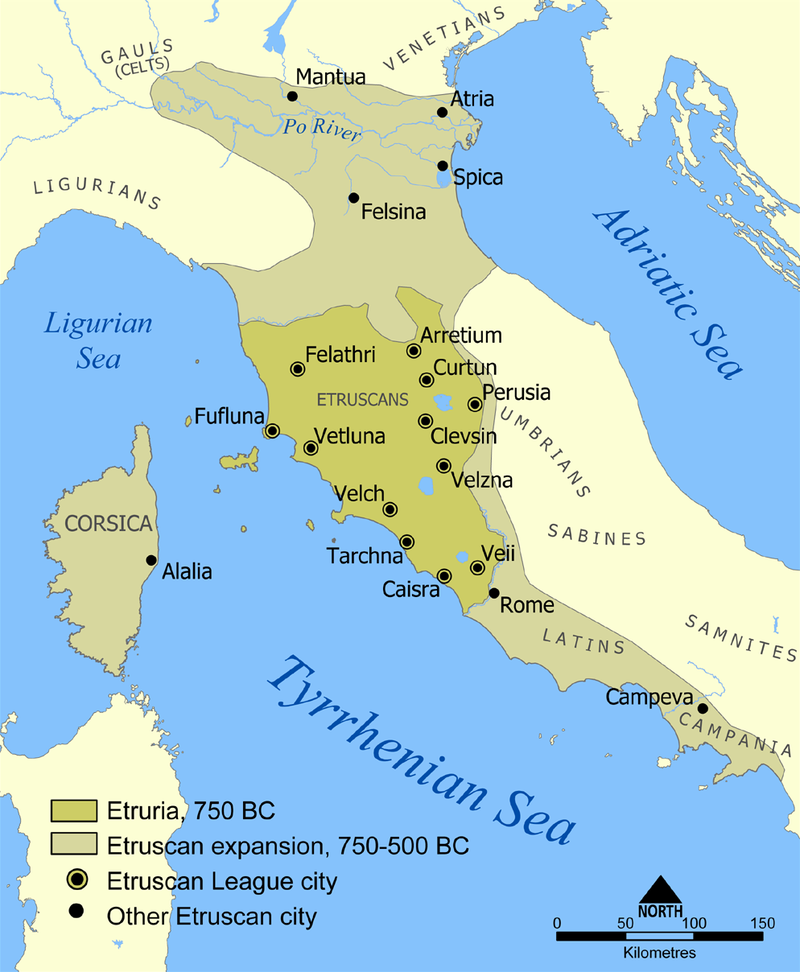
Etruscans
ancient civilization on the Appenine Peninsula

Minoan civilization
Bronze Age civilization flourishing on Crete and other Aegean islands from c. 2600 to 1100 BC
.jpg)
Iberians
thumb|220px|The famous bust of the "Lady of Elche", probably a priestess.
thumb|220px|"Warrior of Moixent" Iberian (Edetan) ex-voto statuette, 2nd to 4th centuries BC, found in [[Edeta.]]
.svg)
Pelasgians
The name Pelasgians (, ) was used by Classical Greek writers to refer either to the predecessors of the Greeks, or to all the inhabitants of Greece before the emergence of the Greeks. In general, "Pelasgian" has come to mean more broadly all the indigenous inhabitants of the Aegean Sea region and their cultures, and British historian Peter Green comments on it as "a hold-all term for any ancient, primitive and presumably indigenous people in the Greek world".

Cucuteni–Trypillia culture
neolithic culture in Romania and Ukraine
Vinča culture
archaeological culture
Nuragic civilization
archaeological culture

Elymians
right|thumb|250px|Approximate locations of the Elymians and their neighbors, the Sicani and the [[Sicels, in Sicily around 11th century BC (before the arrival of the Phoenicians and the Greeks).]]
The Elymians () were an ancient tribal people who inhabited the western part of Sicily during the Bronze Age and Classical antiquity.
Sicani
right|thumb|250px|Approximate locations of the Elymians and their neighbors, the Sicani and the Sicels, in [[Sicily around 11th century BC (before the arrival of the Phoenicians and the Greeks).]]
The Sicani or Sicanians were one of three ancient peoples of Sicily present at the time of Phoenician and Greek colonization. The Sicani dwelt east of the Elymians and west of the Sicels, having, according to Diodorus Siculus, the boundary with the last in the ancient Himera river (Salso) after a series of battles between these tribes.
Haplogroup R1b
most frequently occurring paternal lineage in Western Europe and Chadic people
Vinča symbols
set of symbols found upon Neolithic era (6th to 5th millennia BC) artifacts from the Vinča culture of Central Europe and Southeastern Europe

Leleges
The Leleges (; ) were an aboriginal people of the Aegean region, before the Greeks arrived. They were distinct from another pre-Hellenic people of the region, the Pelasgians. The exact areas to which they were native are uncertain, since they were apparently pre-literate and the only references to them are in ancient Greek sources. These references are casual and (it is alleged) sometimes fictitious. Likewise, little is known about the language of the Leleges.
Tărtăria tablets
archaeological artifact
Old Europe
Term for a hypothetical homogeneous pre-Indo-European culture
Dispilio Tablet
wooden tablet bearing inscribed markings, discovered in Dispilio, Greece

Tyrrhenians
Tyrrhenians (Attic Greek: Turrhēnoi) or Tyrsenians (Ionic: Tursēnoi; Doric: Tursānoi) was the name used by the ancient Greeks to refer, in a generic sense, to non-Greek people, in particular pirates. While ancient sources have been interpreted in a variety of ways, the Greeks always called the Etruscans Tyrsenoi, although not all Tyrsenians were Etruscans. The term "Tyrrhenians" was sometimes used by ancient writers to refer to other ethnic groups in central-western Italy, such as the Latins. Dionysius of Halicarnassus stated that the Greeks once called Latins, Umbrians, Ausonians, and others

Dispilio
Dispilio (, before 1926: Δουπιάκοι – Doupiakoi) is a village near Lake Orestiada, in the Kastoria regional unit of Western Macedonia, Greece. Near the village is an archaeological site containing remains of a Neolithic lakeshore settlement that occupied an artificial island.
Neolithic Europe
period when Neolithic technology was present in Europe
Minoan palaces
ancient Minoan buildings in Crete