Category
page 1Prehistoric elephants

Mammuthus
A mammoth is a member of the extinct elephantid genus Mammuthus. They lived from the late Miocene epoch (from around 6.2 million years ago) into the Holocene until about 4,000 years ago, with mammoth species at various times inhabiting Africa, Asia, Europe, and North America. Mammoths are distinguished from living elephants by their (typically large) spirally twisted tusks and in some later species, the development of numerous adaptions to living in cold environments, including a thick layer of fur.
straight-tusked elephant
extinct species of Elephantidae

Palaeoloxodon
Palaeoloxodon is an extinct genus of elephant. It originated in Africa during the Early Pleistocene, and expanded into Eurasia at the beginning of the Middle Pleistocene. Palaeoloxodon contains the largest known species of elephants, with mature bulls over tall at the shoulders and over in weight, representing among the largest land mammals ever, including the African Palaeoloxodon recki, the European straight-tusked elephant (Palaeoloxodon antiquus) and the South Asian Palaeoloxodon namadicus. P. namadicus has been suggested to be the largest known land mammal by some authors based on extrapo
Sicilian dwarf elephant
extinct species of elephants (Elephantidae)
Syrian elephant
extinct subspecies of the Asian elephant
Asian straight-tusked elephant
species of mammal
Primelephas
Primelephas is a genus of Elephantinae that existed during the Miocene and Pliocene epochs. The name of the genus suggests 'first elephant'. These primitive elephantids are thought to be the common ancestor of Mammuthus, the mammoths, and the closely allied genera Elephas and Loxodonta, the Asian and African elephants, diverging some 4-6 million years ago. It had four tusks, which is a trait not shared with its descendants, but common in earlier proboscideans. The type species, Primelephas gomphotheroides, was described by Vincent Maglio in 1970, with the specific epithet indicating the fossil
dwarf elephant
prehistoric species of small elephants descended from large ancestors
Palaeoloxodon naumanni
species of mammal (fossil)
Stegotetrabelodon
Stegotetrabelodon (from Ancient Greek στέγος (stégos), meaning "roof", τετρα- (tetra-), meaning "four", βέλος (bélos), meaning "arrow", and ὀδούς (odoús), meaning "tooth") is an extinct genus of primitive elephantid from the Late Miocene to Early Pliocene of Africa, the Arabian Peninsula, and Italy. It is the earliest and most primitive member of the family, notably retaining long lower tusks, which are the longest known of any proboscidean.
Loxodonta atlantica
species of mammal
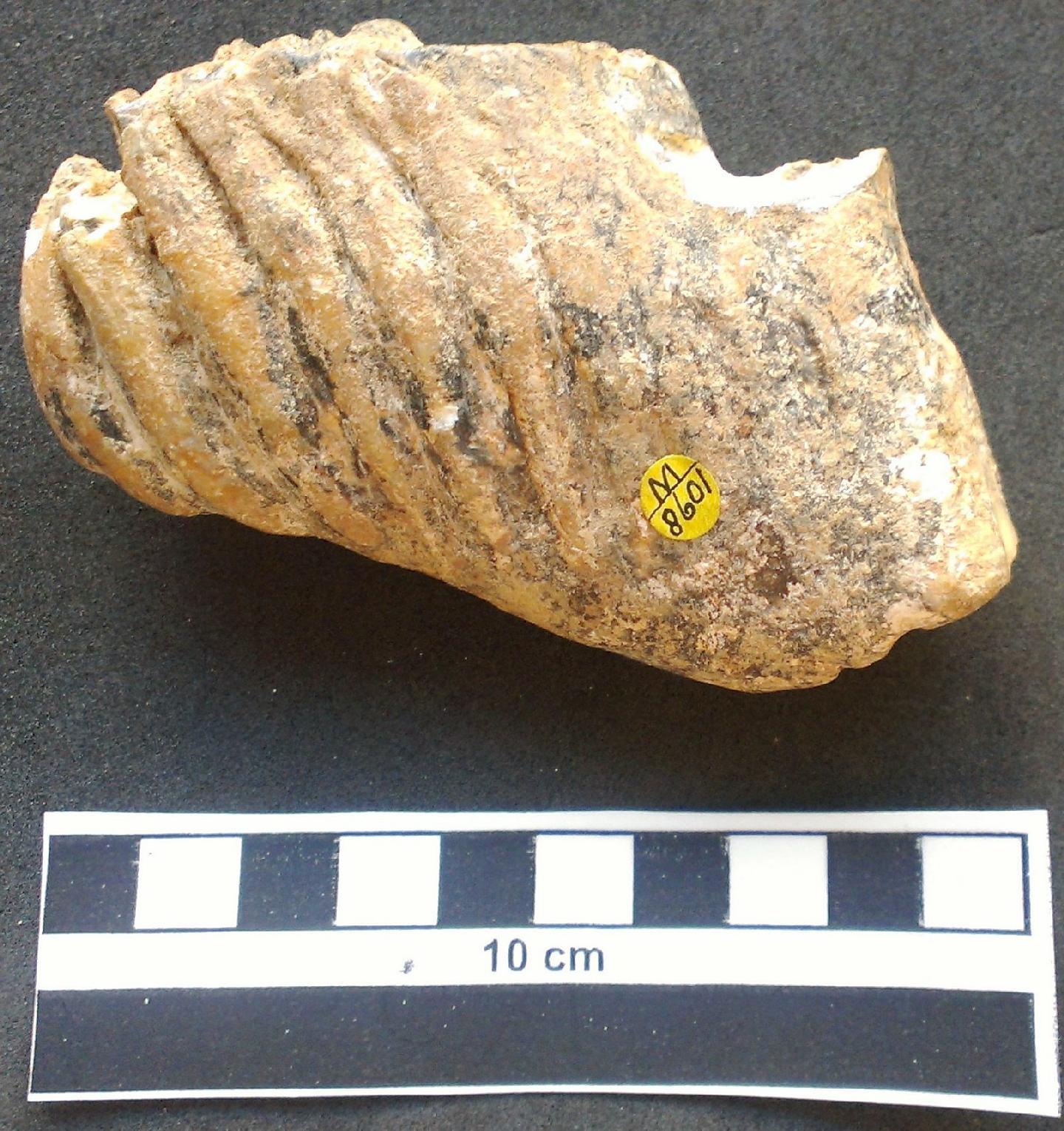
Palaeoloxodon cypriotes
species of mammal (fossil)
Stegodibelodon
Stegodibelodon is an extinct genus of primitive elephantid known from the Early Pliocene of Africa. It is known only from the Djourab region of northern Chad, where it was discovered in 1964 by the hydrogeologist Jean-Louis Schneider. It differs from the most primitive elephantid Stegotetrabelodon by the absence of lower tusks and a shortened mandibular symphysis, and the more pronounced nature of the lamellae on the molars (with the median sulcus being absent), with each molar possessing at least seven lamellae, though the number of lamellae is low compared to modern elephant teeth, and the t
Elephas hysudricus
species of mammal
Loxodonta adaurora
species of mammal
Elephas planifrons
species of mammal
Elephas hysudrindicus
species of mammal
Loxodonta exoptata
species of mammal