Category
page 1Priabonian extinctions

Q132156
Pantodonta is an extinct order (or, according to some, an suborder) of eutherian mammals. These herbivorous mammals were one of the first groups of large mammals to evolve (around 66 million years ago) after the end of the Cretaceous. The last pantodonts died out at the end of the Eocene (around 34 million years ago).
.jpg)
Taeniodonta
Taeniodonta ("banded teeth") is an extinct order of eutherian mammals, that lived in North America and Europe from the late Cretaceous (Maastrichtian) to the middle Eocene. They were among the first mammals to evolve large body sizes (comparable to a modern wild boar or American black bear), as well as ever-growing teeth for eating tough plants.
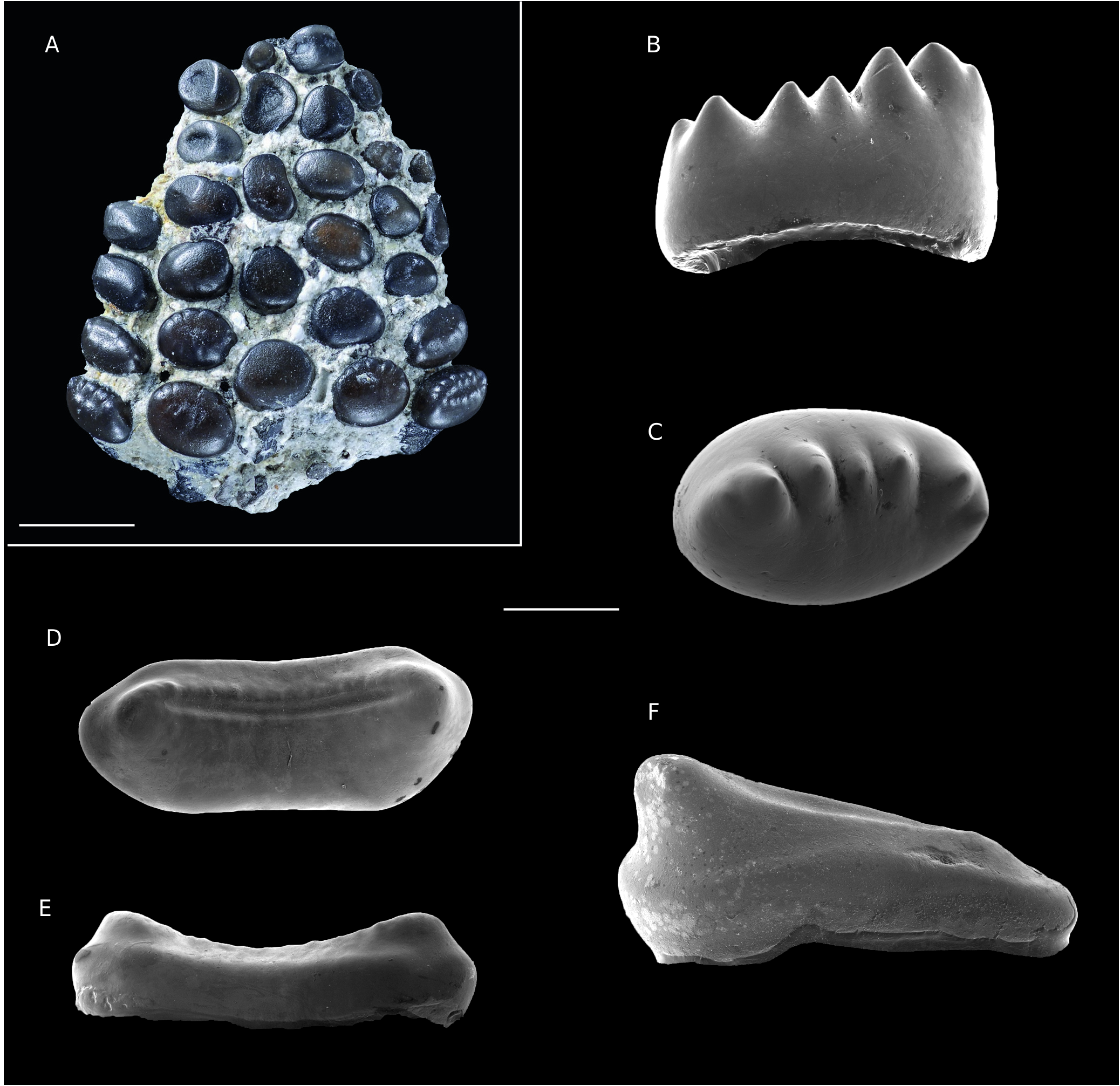
Pycnodontidae
Pycnodontidae is an extinct family of ray-finned fishes, ranging from the Jurassic period until the Late Eocene. It was the largest and most derived family of the successful Mesozoic fish order Pycnodontiformes, and one of only two families (alongside the Serrasalmimidae) to survive into the Cenozoic.
Coniophis
alt=Coniophis sp. snake vertebra|thumb|Coniophis sp. vertebra
Coniophis is an extinct genus of snakes from the late Cretaceous period. The type species, Coniophis precedes, was about 7 cm long and had snake-like teeth and body form, with a skull and a largely lizard-like bone structure. It probably ate small vertebrates, such as lizards and salamanders. The fossil remains of Coniophis were first discovered at the end of the 19th century in the Lance Formation of the US state of Wyoming, and were described in 1892 by Othniel Charles Marsh. For the genus Coniophis, a number of other species
Henricosborniidae
Henricosborniidae is a family of extinct notoungulate mammals known from the Late Paleocene to Middle Eocene of Argentina, Bolivia and Brazil. The name honors U.S. paleontologist Henry Fairfield Osborn.