Category
page 1Primate families

Hominidae
The Hominidae (; hominids ), whose members are known as the great apes, are a taxonomic family of primates that includes eight extant species in four genera: Pongo (the Bornean, Sumatran and Tapanuli orangutan); Gorilla (the eastern and western gorilla); Pan (the chimpanzee and the bonobo); and Homo, of which only modern humans (Homo sapiens) remain.
gibbon
thumb|Gibbon Rehabilitation Project, 2013
Gibbons () are apes in the family Hylobatidae (; hylobatids). The family historically contained one genus, but now is split into four extant genera and 20 species. Gibbons live in subtropical and tropical forests from eastern Bangladesh and Northeast India to Southeast Asia and Indonesia (including the islands of Sumatra, Borneo and Java).

Lemuridae
Lemuridae is a family of strepsirrhine primates native to Madagascar and the Comoros. They are represented by the Lemuriformes in Madagascar with one of the highest concentration of the lemurs. One of five families commonly known as lemurs, these animals were once thought to be the evolutionary predecessors of monkeys and apes, but this is no longer considered correct. They are formally referred to as lemurids.
Cheirogaleidae
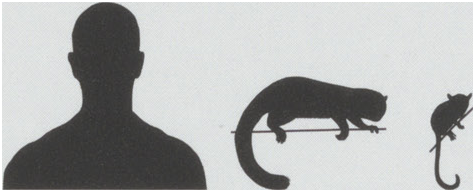
The Cheirogaleidae are the family of strepsirrhine primates containing the various dwarf and mouse lemurs. Like all other lemurs, cheirogaleids live exclusively on the island of Madagascar.
Lorisidae
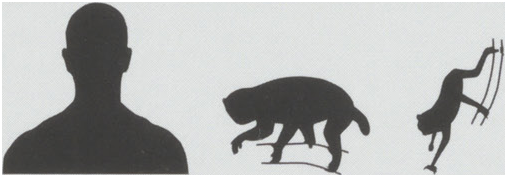
Lorisidae (or sometimes Loridae) is a family of strepsirrhine primates. The lorisids are all slim arboreal animals and comprise the lorises, pottos, and angwantibos. Lorisids live in tropical, central Africa as well as in south and southeast Asia.

Indriidae
The Indriidae (sometimes incorrectly spelled Indridae) are a family of strepsirrhine primates. They are medium- to large-sized lemurs, with only four teeth in the toothcomb instead of the usual six. Indriids, like all lemurs, live exclusively on the island of Madagascar.
Atelidae
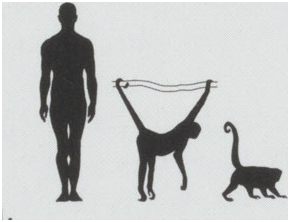
The Atelidae are one of the five families of New World monkeys now recognised. It was formerly included in the family Cebidae. Atelids are generally larger monkeys; the family includes the howler, spider, woolly, and woolly spider monkeys (the latter being the largest of the New World monkeys). They are found throughout the forested regions of Central and South America, from Mexico to northern Argentina.

Callitrichidae
The Callitrichidae (also called Arctopitheci or Hapalidae) are a family of New World monkeys, including marmosets, tamarins, and lion tamarins. At times, this group of animals has been regarded as a subfamily, called the Callitrichinae, of the family Cebidae.

Cebidae
The Cebidae are one of the five families of New World monkeys now recognised. Extant members are the capuchin and squirrel monkeys. These species are found throughout tropical and subtropical South and Central America.

Saimiri
genus of New World monkeys
Pitheciidae
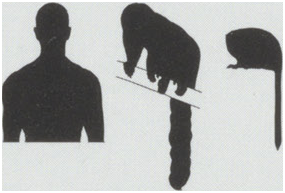
The Pitheciidae () are one of the five families of New World monkeys now recognised. Formerly, they were included in the family Atelidae. The family includes the titis, saki monkeys and uakaris. Most species are native to the Amazon region of Brazil, with some being found from Colombia in the north to Bolivia in the south.

Omomyidae
Omomyidae is a group of early primates that radiated during the Eocene epoch between about (mya). Fossil omomyids are found in North America, Europe & Asia, making it one of two groups of Eocene primates with a geographic distribution spanning holarctic continents, the other being the adapids (family Adapidae). Early representatives of the Omomyidae and Adapidae appear suddenly at the beginning of the Eocene (56 mya) in North America, Europe, and Asia, and are the earliest known crown primates.
Adapidae
Adapidae is a family of extinct primates that primarily radiated during the Eocene epoch between about 55 and 34 million years ago.

Proconsulidae
Proconsulidae is an early family of primates that lived during the Miocene epoch in Kenya, and was restricted to Africa. Members of the family have a mixture of Old World monkey and ape characteristics, so the placement in the ape superfamily Hominoidea is tentative; some scientists place Proconsulidae outside of Hominoidea in a separate superfamily Proconsuloidea, before the split of the apes and Old World monkeys.
Notharctidae
Notharctidae is an extinct family of adapiform primates found primarily in North America and Europe.
%20(white%20background)%20(1).jpg)
Eosimiidae
Eosimiidae is the possible family of extinct primates believed to be the earliest simians.
Pongid
Pongidae , or the pongids is an obsolete primate taxon containing chimpanzees, gorillas and orangutans. By this definition pongids were also called "great apes". This taxon is not used today but is of historical significance. The great apes are currently classified as Hominidae. This entry addresses the old usage of pongid.
Sivaladapidae
Sivaladapidae is an extinct family of adapiform primates from Asia. They survived longer than any other adapiform primate because they were able to shift south as the climate cooled. Their remains date from the Eocene through the Miocene.
Dendropithecidae
The family Dendropithecidae is an extinct family of catarrhine apes. They date from the Early Miocene, around 20-12 million years ago.
Parapithecidae
Parapithecidae is an now extinct family of primates which lived in the Eocene and Oligocene periods in Egypt. Eocene fossils from Myanmar are sometimes included in the family in addition. They showed certain similarities in dentition to Condylarthra, but had short faces and jaws shaped like those of tarsiers. They are part of the superfamily Parapithecoidea, perhaps equally related to Ceboidea and Cercopithecoidea plus Hominoidea - but the placement of Parapithecoidea is substantially uncertain.
Pliopithecidae
The family Pliopithecidae is an extinct family of fossil catarrhines and members of the Pliopithecoidea superfamily.
Oligopithecidae
Oligopithecidae is an extinct basal Catarrhine family from the late Eocene of Egypt (about 37 million years ago) as sister of the rest of the Catarrhines. Its members were probably insectivorous, due to their simple molars and cusp arrangement.
Amphipithecidae
The Amphipithecidae were simian primates that lived in Late Eocene and Early Oligocene. Fossils have been found in Myanmar, Thailand, and Pakistan. The limited fossil evidence is consistent with, but not exclusive to, arboreal quadrupedalism. In other words, the species may have moved about in trees on four legs, but not with regular leaping as seen in later simians.
Djebelemuridae
Djebelemuridae is an extinct family of early strepsirrhine primates from Africa. It consists of five genera. The organisms in this family were exceptionally small, and were insectivores. This family dates to the early to late Eocene. Although they gave rise to the crown strepsirrhines, which includes today's lemurs and lorisoids, they lacked the toothcomb that identifies that group.