Category
page 1Primate genera

Gorilla
Gorillas are large, primarily herbivorous, great apes that live in the tropical forests of equatorial Africa. The genus Gorilla is divided into two species: the eastern gorilla and the western gorilla, and either four or five subspecies. The DNA of gorillas is highly similar to that of humans, from 96 to 99% depending on what is included, and they are the next closest living relatives to humans after the bonobos and chimpanzees.

Pan
genus of mammals, includes 2 species: common chimpanzee and bonobo

Homo
Homo () is a genus of great ape (family Hominidae) that emerged from the early homininian genus Australopithecus, encompassing a single extant species, Homo sapiens (modern humans), along with a number of extinct species (e.g. Homo erectus and Homo neanderthalensis) classified as either ancestral or closely related to modern humans, collectively called archaic humans. Homo, together with the genus Paranthropus, is probably most closely related to the species Australopithecus africanus within Australopithecus.'' The closest living relatives of Homo are of the hominin genus Pan (chimpanzees and

Tarsius
Tarsius is a genus of tarsiers, small primates native to islands of Maritime Southeast Asia, with almost all of its species found on Sulawesi Island. Until 2010, all tarsier species were typically assigned to this genus, but a revision of the family Tarsiidae restored the generic status of Cephalopachus and created a new genus Carlito.

Semnopithecus
Semnopithecus is a genus of Old World monkeys native to the Indian subcontinent, with all species with the exception of two being commonly known as gray langurs. Traditionally only the species Semnopithecus entellus was recognized, but since about 2001 additional species have been recognized. The taxonomy has been in flux, but currently eight species are recognized.

Hylobates
The genus Hylobates () is one of the four genera of gibbons. Its name means "forest walker", from the Greek (, "forest") and (, "one who treads").

Mandrillus
Mandrillus is a genus of large Old World monkeys distributed throughout central and southern Africa, consisting of two species: M. sphinx and M. leucophaeus, the mandrill and drill, respectively. Mandrillus, originally placed under the genus Papio as a type of baboon, is closely related to the genus Cercocebus. They are characterised by their large builds, elongated snouts with furrows on each side, and stub tails. Both species occupy the west central region of Africa and live primarily on the ground. They are frugivores, consuming both meat and plants, with a preference for plants. M. sphinx

Surili
Presbytis is a genus of Old World monkeys also known as langurs, leaf monkeys, or surilis. Members of the genus live in the Thai-Malay Peninsula, on Sumatra, Borneo, Java and smaller nearby islands.

Trachypithecus
Trachypithecus is a genus of Old World monkeys containing species known as lutungs, langurs, or leaf monkeys. Their range is much of Southeast Asia (northeast India, Vietnam, southern China, Borneo, Thailand, Java, and Bali).
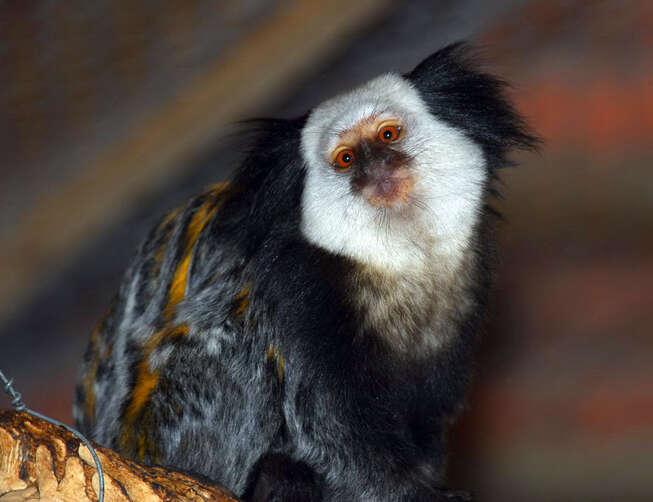
Callithrix
Callithrix is a genus of New World monkeys of the family Callitrichidae, the family containing marmosets and tamarins. The genus contains the Atlantic Forest marmosets. The name Callithrix is derived from the Greek words kallos, meaning beautiful, and thrix, meaning hair.

Callicebus
Callicebus is a genus of monkeys known as titi monkeys.
%2C%20Pretoria-dieretuin.jpg)
Nomascus
Nomascus is the second-most speciose genus of the gibbon family, Hylobatidae. Originally, this genus was a subgenus of Hylobates, with all individuals considered to be one species, H. concolor.

Chlorocebus
Chlorocebus is a genus of medium-sized primates from the family of Old World monkeys. Six species are currently recognized, although some people classify them all as a single species with numerous subspecies. Either way, they make up the entirety of the genus Chlorocebus.

Mico
genus of mammals
Theropithecus
Theropithecus is a genus of primates in the family Cercopithecidae. It contains a single living species, the gelada (Theropithecus gelada), native to the Ethiopian Highlands.

Plecturocebus
Plecturocebus is one of three genera of titi monkeys.

Cheracebus
Cheracebus is one of three genera of titi monkeys. Monkeys in this genus, particularly the type species Cheracebus lugens, are sometimes referred to as widow titi monkeys.
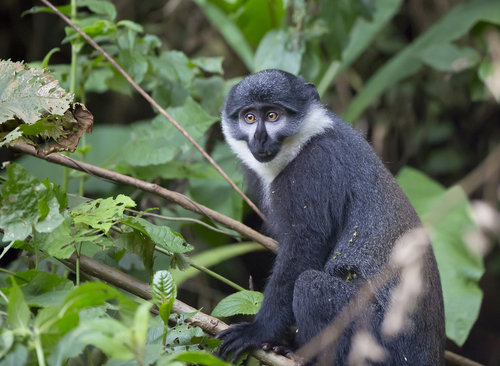
Allochrocebus
Allochrocebus is a primate genus including the terrestrial guenons: the L'Hoest's monkey, the Preuss's monkey, and the sun-tailed monkey.
Simia Linnaeus, 1758
In his Systema Naturae of 1758, Carl Linnaeus divided the Order Primates within Mammalia into four genera: Homo, Simia, Lemur, and Vespertilio. His Vespertilio included all bats, and has since been moved from Primates to Chiroptera. Homo contained humans, Lemur contained four lemurs and a colugo, and Simia contained the other Primates. Linnaeus did not think that Homo should form a distinct group from Simia, classifying them separately mainly to avoid conflict with religious authorities. If this is taken into account, Simia (including Homo) would be roughly equivalent to the Suborder Haplorhin
Symphalangus
REDIRECT Siamang