Category
page 1Prime ministers of India

Jawaharlal Nehru
Jawaharlal Nehru was an Indian anti-colonial nationalist, secular humanist, social democrat, and statesman who was a central figure in India during the middle of the 20th century. Nehru was a principal leader of the Indian nationalist movement in the 1930s and 1940s. Upon India's independence in 1947, he served as the country's first prime minister for 16 years. Nehru promoted parliamentary democracy, secularism, and science and technology during the 1950s, powerfully influencing India's arc as a modern nation. In international affairs, he steered India clear of the two blocs of the Cold War. A well-regarded author, he wrote books such as Letters from a Father to His Daughter (1929), An Autobiography (1936) and The Discovery of India (1946), that have been read around the world.

Narendra Modi
Narendra Damodardas Modi is an Indian politician who has served as the prime minister of India since 2014. Modi was the chief minister of Gujarat from 2001 to 2014 and is the member of parliament (MP) for Varanasi. He is a member of the Bharatiya Janata Party (BJP) and of the Rashtriya Swayamsevak Sangh (RSS), a right-wing Hindutva paramilitary volunteer organisation. He is the longest-serving prime minister outside the Indian National Congress.

Indira Gandhi
Prime Minister of India (1966-1977; 1980-1984)

Manmohan Singh
Indian economist, bureaucrat, academician and politician

Rajiv Gandhi
Prime Minister of India (1984-1989)
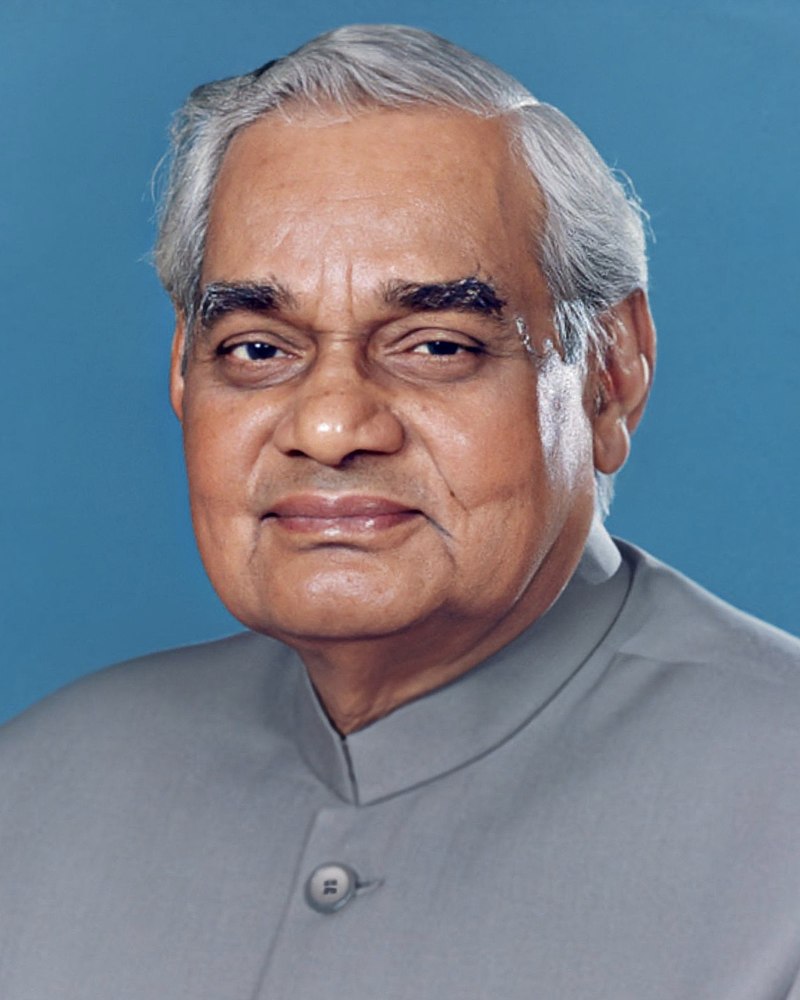
Atal Bihari Vajpayee
Prime Minister of India (1996, 1988-2004)

Lal Bahadur Shastri
Prime Minister of India (1964-1966)

Morarji Desai
Prime Minister of India (1977-1979)

P. V. Narasimha Rao
Prime Minister of India (1991-1996)

Charan Singh
Prime Minister of India (1979-1980)

Prime Minister of India
Head of the Government of India

Chandra Shekhar
Prime Minister of India (1990-1991)

Inder Kumar Gujral
Prime Minister of India (1997-1998)

V. P. Singh
Prime Minister of India (1989-1990)

List of prime ministers of India
The prime minister of India is the chief executive of the Government of India and chair of the Union Council of Ministers. Although the president of India is the constitutional, nominal, and ceremonial head of state, in practice and ordinarily, the executive authority is vested in the prime minister and their chosen Council of Ministers. The prime minister is the leader elected by the party with a majority in the lower house of the Indian parliament, the Lok Sabha, which is the main legislative body in the Republic of India. The prime minister and their cabinet are at all times responsible to the Lok Sabha. The prime minister can be a member of the Lok Sabha or of the Rajya Sabha, the upper house of the parliament. The prime minister ranks third in the order of precedence.

H. D. Deve Gowda
Prime Minister of India (1996-1997)
Prime Minister's Office
Office of the Prime Minister of India
Prime Ministers Museum & Library
museum & library