Category
page 1Problem solving

Occam's razor
philosophical principle used to judge credibility of statements

puzzle
thumb|upright=1.2|Various physical puzzles

problem solving
using generic or ad hoc methods in an orderly manner to find solutions to problems

flow
mental state

theory of inventive problem solving
TRIZ (; ) is a methodology which combines an organized, systematic method of problem-solving with analysis and forecasting techniques derived from the study of patterns of invention in global patent literature. The development and improvement of products and technologies in accordance with TRIZ are guided by the laws of technical systems evolution. In English, TRIZ is typically rendered as the theory of inventive problem solving.
working memory
cognitive system with a limited capacity that is responsible for temporarily holding information available for processing
Project Euler
site of problems to be solved using programming knowledge
root cause analysis
method of problem solving used for identifying the original causes of faults or problems
task force
group or formation established to work on a single defined task or activity
wicked problem
problem that is difficult or impossible to solve because of incomplete, contradictory, and changing requirements that are often difficult to recognize
troubleshooting
Troubleshooting is a form of problem solving, often applied to repair failed products or processes on a machine or a system. It is a logical, systematic search for the source of a problem in order to solve it and make the product or process operational again. Troubleshooting is needed to identify the symptoms. Determining the most likely cause often involves a process of elimination to systematically rule out potential issues. Finally, troubleshooting requires confirmation that the solution restores the product or process to its working state. A strategy is an organized set of activities expre
synectics
Synectics is a problem solving methodology that stimulates thought processes of which the subject may be unaware. This method was developed by George M. Prince (1918–2009) and William J.J. Gordon (1919–2003), originating in the Arthur D. Little Invention Design Unit in the 1950s.
XY problem
problem of communication when asking for help
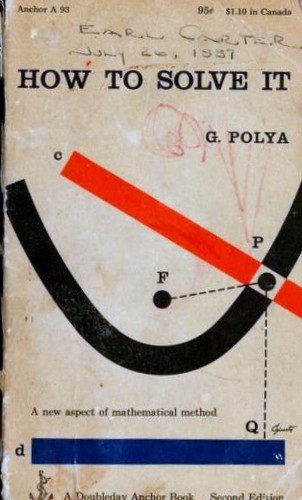
How to Solve It
book about problem solving
functional fixedness
cognitive bias
problem statement
concise description of the issues that need to be addressed by a problem solving team
Einstellung effect
predisposition to solve a given problem in a specific manner even though more appropriate methods of solving the problem exist
Programme for the International Assessment of Adult Competencies
worldwide study by the Organisation for Economic Co-operation and Development
candle problem
cognitive performance test
S.C.A.M.P.E.R
SCAMPER ("substitute, combine, adjust, modify, put to other uses, eliminate, reverse") is an acronym that provides a structured way of assisting students to think out of the box and enhance their knowledge.
cognitive closure
the proposition that human minds are constitutionally incapable of solving certain perennial philosophical problems
somebody else's problem
dismissive figure of speech
tiger team
group of experts assigned to investigate and/or solve technical or systemic problems