Category
page 1Programming languages

C
general-purpose programming language

PHP
PHP is a general-purpose scripting language geared towards web development. It was created by Danish-Canadian programmer Rasmus Lerdorf in 1993 and released in 1995. The PHP reference implementation is now produced by the PHP Group. PHP was originally an abbreviation of Personal Home Page, but it now stands for the recursive backronym PHP: Hypertext Preprocessor.

programming language
language for communicating instructions to a machine

JavaScript
JavaScript (JS) is a programming language and core technology of the Web, alongside HTML and CSS. It was created by Brendan Eich in 1995. As of 2025, the overwhelming majority of websites (98.9%) uses JavaScript for client side webpage behavior.
Python
general-purpose programming language

Java
object-oriented programming language
C#
multi-paradigm (object-oriented) programming language

Perl
Perl is a high-level, general-purpose, interpreted, dynamic programming language. Though Perl is not officially an acronym, there are various backronyms in use, including "Practical Extraction and Reporting Language".

Lua
Lua is a lightweight, high-level, multi-paradigm programming language designed mainly for embedded use in applications. Lua is cross-platform software, since the interpreter of compiled bytecode is written in ANSI C, and Lua has a relatively simple C application programming interface (API) to embed it into applications.

BASIC
BASIC ('''Beginner's All-purpose Symbolic Instruction Code''') is a family of general-purpose, high-level programming languages designed for ease of use. The original version was created by John G. Kemeny and Thomas E. Kurtz at Dartmouth College in 1964. They wanted to enable students in non-scientific fields to use computers. At the time, nearly all computers required writing custom software, which only scientists and mathematicians tended to learn.

Visual Basic
legacy programming language by Microsoft
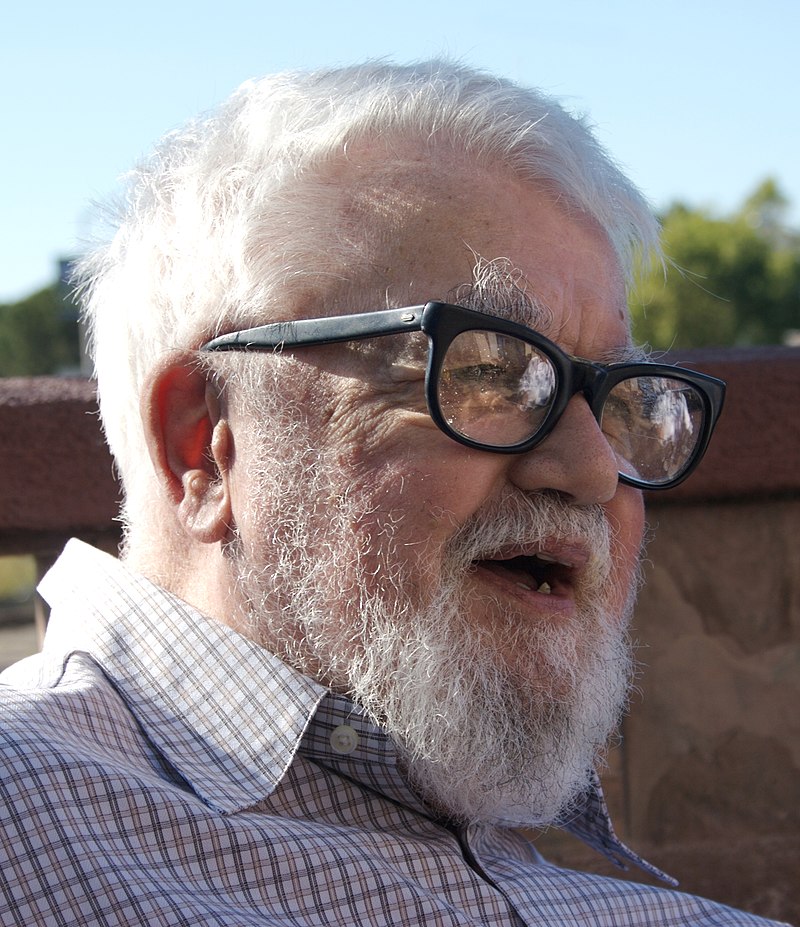
Lisp
functional programming language based on the lambda calculus

R
programming language for statistical analysis

Ada
programming language

Go
programming language developed by Google and the open-source community

Kotlin
Kotlin () is a cross-platform, statically typed, general-purpose high-level programming language with type inference. Kotlin is designed to interoperate fully with Java, and the Java virtual machine (JVM) version of Kotlin's standard library depends on the Java Class Library.
However, type inference allows for more concise syntax. Kotlin mainly targets the JVM, but also compiles to JavaScript (e.g., for frontend web applications using React) or native code via LLVM (e.g., for native iOS apps sharing business logic with Android apps). JetBrains bears language development costs, while the Kotlin

Swift
general-purpose, multi-paradigm, compiled programming language

Smalltalk
Smalltalk is a purely object-oriented programming language that was originally created in the 1970s for educational use, specifically for constructionist learning, but later found use in business. It was created at Xerox PARC by Learning Research Group (LRG) scientists, including Alan Kay, Dan Ingalls, Adele Goldberg, Ted Kaehler, Diana Merry, and Scott Wallace.
Scala
general-purpose programming language

Brainfuck
Brainfuck is an esoteric programming language created in 1993 by Swiss student . Designed to be extremely minimalistic, the language consists of only eight simple commands, a data pointer, and an instruction pointer.

Logo
computer programming language

APL
functional, symbolic programming language for operating on multidimensional arrays

D
multi-paradigm system programming language

XSLT
XSLT (Extensible Stylesheet Language Transformations) is a language originally designed for transforming XML documents into other XML documents, or other formats such as HTML for web pages, plain text, or XSL Formatting Objects. These formats can be subsequently converted to formats such as PDF, PostScript, and PNG. Support for JSON and plain-text transformation was added in later updates to the XSLT 1.0 specification.

TypeScript
TypeScript (TS) is a high-level programming language that adds static typing with optional type annotations to JavaScript. It is designed for developing large applications. It transpiles to JavaScript. It is developed by Microsoft as free and open-source software released under an Apache License 2.0.

Clojure
Clojure (, like closure) is a dynamic and functional dialect of the programming language Lisp on the Java platform.

Erlang
programming language

Forth
programming language

ABAP
ABAP (Advanced Business Application Programming, originally Allgemeiner Berichts-Aufbereitungs-Prozessor, German for "general report preparation processor") is a high-level programming language created by the German software company SAP SE. It is currently positioned, alongside Java, as the language for programming the SAP NetWeaver Application Server, which is part of the SAP NetWeaver platform for building business applications.
Apache Groovy
programming language
Julia
high-performance dynamic programming language
B
procedural programming language

Simula
Simula is the name of two simulation programming languages, Simula I and Simula 67, developed in the 1960s at the Norwegian Computing Center in Oslo, by Ole-Johan Dahl and Kristen Nygaard. Syntactically, it is an approximate superset of ALGOL 60,
Processing
Processing is a free graphics library and integrated development environment (IDE) built for the electronic arts, new media art, and visual design communities with the purpose of teaching non-programmers the fundamentals of computer programming in a visual context.
Elixir
programming language
FreeBASIC
AppleScript
AppleScript is a scripting language created by Apple Inc. that facilitates automated control of Mac applications. First introduced in System 7, it is currently included in macOS in a package of automation tools. The term AppleScript may refer to the scripting language, to a script written in the language, or to the macOS Open Scripting Architecture that underlies the language.
Vala
programming language
Visual FoxPro
programming language
Zig
programming language
Boo
programming language

The C Programming Language
authoritative programming book by Brian Kernighan and Dennis Ritchie, the developers of the C programming language
A+
programming language
general-purpose programming language
programming language designed to be used in the widest variety of application domains
SNOBOL
SNOBOL (StriNg Oriented and symBOlic Language) is a series of programming languages developed between 1962 and 1967 at AT&T Bell Laboratories by David J. Farber, Ralph Griswold and Ivan P. Polonsky, culminating in SNOBOL4. It was one of a number of text-string-oriented languages developed during the 1950s and 1960s; others included COMIT and TRAC. Despite the similar name, it is entirely unlike COBOL.
Clipper
programming language
Haxe
Haxe is a high-level cross-platform programming language and compiler that can produce applications and source code for many different computing platforms from one code-base. It is free and open-source software, released under an MIT License. The compiler is written in OCaml. It can be run in server-mode to provide code completion for integrated development environments (IDEs).
Squeak
Squeak is an object-oriented, class-based, and reflective programming language. It was derived from Smalltalk-80 by a group that included some of Smalltalk-80's original developers, initially at Apple Computer, then at Walt Disney Imagineering, where it was intended for use in internal Disney projects. The group later was supported by HP Labs and SAP.

REBOL
Rebol ( ; historically REBOL) is a cross-platform data exchange language and a multi-paradigm dynamic programming language designed by Carl Sassenrath for network communications and distributed computing. It introduces the concept of dialecting: small, optimized, domain-specific languages for code and data, which is also the most notable property of the language according to its designer Carl Sassenrath:
ALGOL 68
programming language
Raku
member of the Perl family of programming languages
AspectJ
AspectJ is an aspect-oriented programming (AOP) extension for the Java programming language, created at PARC. It is available in Eclipse Foundation open-source projects, both stand-alone and integrated into Eclipse. AspectJ has become a widely used de facto standard for AOP by emphasizing simplicity and usability for end users. It uses Java-like syntax, and included IDE integrations for displaying crosscutting structure since its initial public release in 2001.
Carbon
programming language
Nim
programming language
J
programming language
Self
programming language
Io
programming language
Caml
Caml (originally an acronym for Categorical Abstract Machine Language) is a multi-paradigm, general-purpose, high-level, functional programming language which is a dialect of the ML programming language family. Caml was developed in France at French Institute for Research in Computer Science and Automation (INRIA) and École normale supérieure (Paris) (ENS).
S
statistical programming language
Crystal
programming language