Category
page 1Pronghorns
.jpg)
pronghorn
The pronghorn (, ) (Antilocapra americana) is a species of artiodactyl (even-toed, hoofed) mammal indigenous to interior western and central North America. Though not an antelope, it is known colloquially in North America as the American antelope, prong buck, pronghorn antelope, and prairie antelope, because it closely resembles the antelopes of the Old World and fills a similar ecological niche due to parallel evolution. It is the only surviving member of the family Antilocapridae.
.jpg)
Antilocapridae
The Antilocapridae are a family of ruminant artiodactyls endemic to North America. Their closest extant relatives are the giraffids. Only one species, the pronghorn (Antilocapra americana), is living today; all other members of the family are extinct. The living pronghorn is a small ruminant mammal resembling an antelope.
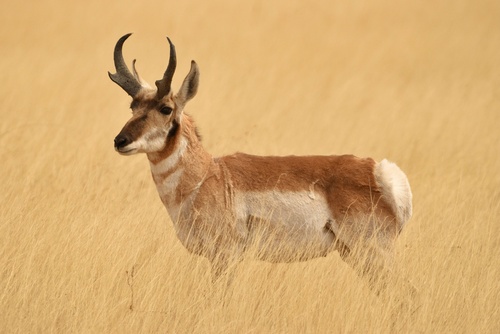
Antilocapra
Antilocapra is a genus of the family Antilocapridae, which contains only a single living species, the pronghorn (Antilocapra americana). Another species, the Pacific pronghorn, lived in California during the Late Pleistocene and survived as recently as 12,000 BP. The name means "antelope-goat".
Baja California pronghorn
subspecies of mammal
Mexican pronghorn
subspecies of mammal
Sonoran pronghorn
subspecies of mammal
Antilocapra pacifica
extinct species of pronghorn