Category
page 1Propaganda in the Soviet Union

Pravda
Pravda (, 'Truth') is a Russian broadsheet newspaper, and was the official newspaper of the Central Committee of the Communist Party of the Soviet Union, when it was one of the most influential papers in the country with a circulation of 11 million. The newspaper began publication on 5 May 1912 in the Russian Empire but was already extant abroad in January 1911. It emerged as the leading government newspaper of the Soviet Union after the October Revolution. The newspaper was an organ of the Central Committee of the CPSU between 1912 and 1991.
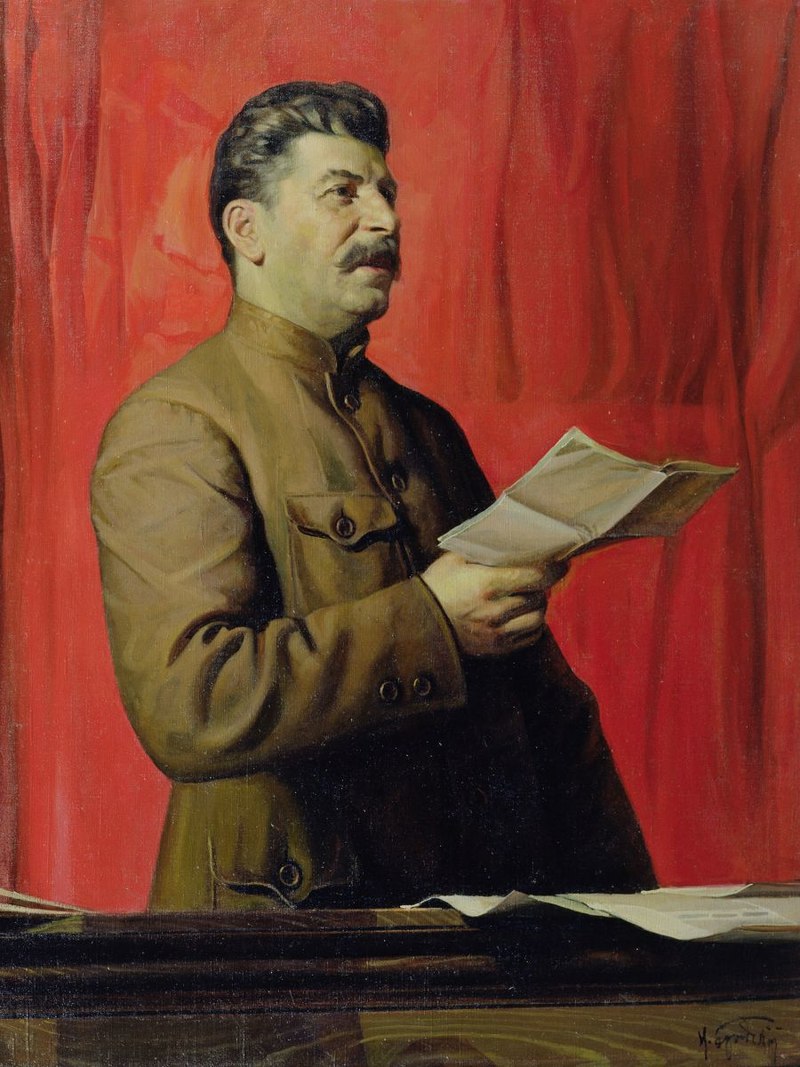
socialist realism
Art style depicting communist values
Great Soviet Encyclopedia
1926–1990 encyclopedia published in the Soviet Union

Great Patriotic War
term used in some of the former Soviet republics for the Eastern front in World War II

Alexey Stakhanov
Soviet miner, namesake of Stakhanovite movement (1906-1977)
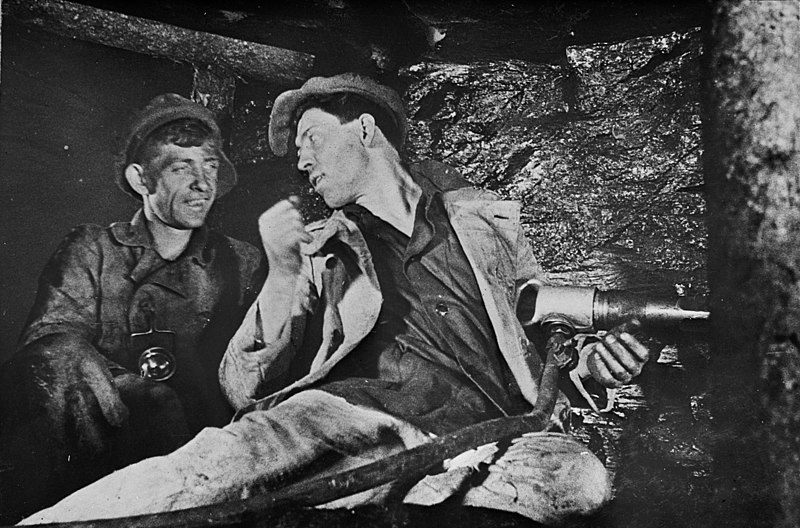
Stakhanovite movement
Soviet work ethos equating labor with heroism

Izvestia
Izvestia (, "The News") is a daily broadsheet newspaper in Russia. Founded in February 1917, Izvestia, which covered foreign relations, was the organ of the Supreme Soviet of the Soviet Union, disseminating official state propaganda. It is now described as a "national newspaper" of Russia.

Pavlik Morozov
Soviet murder victim (1918-1932)
whataboutism
"Whataboutism" or "whataboutery" (as in, "but what about X?") refers to the propaganda strategy of responding to an accusation with a counter-accusation instead of offering an explanation or defense against the original accusation. It is an informal fallacy that the accused party uses to avoid accountability—whether attempting to distract by shifting the conversation's focus away from their behaviour or attempting to justify themselves by pointing to the similar behaviour (which may be true or false, but irrelevant) of their opponent or another party who is not the current subject of discussio
World Federation of Democratic Youth
international youth organisation

agitprop
thumb|right|Agitprop poster by Vladimir Mayakovsky titled: "Want it? Join" "1. You want to overcome cold?2. You want to overcome hunger?3. You want to eat?4. You want to drink?Hasten to join shock brigades of exemplary labor!"
Agitprop (; from , portmanteau of agitatsiya, "agitation" and propaganda, "propaganda") refers to an intentional, vigorous promulgation of ideas. The term originated in the Soviet Union where it referred to popular media, such as literature, plays, pamphlets, films, and other art forms, with an explicitly political message in favor of communism.
Shelling of Mainila
military incident staged by the Soviet Union used to justify the Winter War
Anthem of the Ukrainian Soviet Socialist Republic
national anthem
The Death Match
1942 association football match in Kyiv
Soviet people
Citizens of the Soviet Union
Nurkhon Yuldashkhojayeva
Uzbek dancer and honor killing victim
propaganda in the Soviet Union
communist propaganda of the former Soviet Union
active measures
term for the actions of political warfare conducted by the Soviet and Russian security services
Immortal Regiment
non-governmental organization

Likbez
thumb|"- Woman, learn to read and write! - Oh, mother! If you were literate, you could help me!" A poster by Elizaveta Kruglikova advocating female literacy, 1923.
Panfilov's Twenty-Eight Guardsmen
group of soldiers, a cliche of Soviet propaganda
Pasha Angelina
Soviet tractor driver (1913-1959)
Stalin's ten blows
phrase in Soviet historiography
Bezbozhnik
anti-religious weekly newspaper "The ungodly"
bourgeois nationalism
nationalism of the ruling class under capitalism

Banderivtsi
upright|thumb|Stepan Bandera
And you are lynching Negroes
Soviet catchphrase

Viktor Deni
Russian artist (1893–1946)
New Soviet man
Archetype of the ideal Soviet citizen
Holodomor denial
claim that the 1932–1933 Holodomor, a man-made famine in Soviet Ukraine, was not a genocide, or diminishment of the scale or significance of the famine
Engelsina Markizova
Buryat historian (1928–2004)
Moscow-Peking
thumb|220px|alt=A Chinese postage stamp, printed with red-tinted ink, depicting Stalin (left) and Mao (right) shaking hands with a map showing both the Soviet Union and China, as well as both countries' flags and iconic buildings in the background.|A 1950 Chinese postage stamp depicting Joseph Stalin|Stalin and Mao shaking hands, representing friendly [[Sino-Soviet relations at the time the song was written.]]
"Moscow–Peking" () or "Moscow–Beijing", also known as "The Russian and the Chinese are brothers forever" (), is a Soviet mass song composed in 1949 by Vano Muradeli to lyrics by Mikhail
Life Has Become Better
song composed by Alexander Alexandrov
Russian Life
Magazine
Monumental propaganda
Soviet Union propaganda ideology
Campaign on granting Nizami the status of the national poet of Azerbaijan
politically and ideologically motivated distortion of the historical record of the national-cultural origin of one of the classics of Persian poetry, Nizami Ganjavi
Dizzy with Success
1930 newspaper article by I. Stalin
Statue of Ivan Konev
former public statue in Prague
Sbratření
1950 sculpture by Karel Pokorný
Bezbozhnik
Russian Marxist magazine (1925–1941)
Names of Soviet origin
named created in the USSR
Mamlakat Nakhangova
Soviet Tajik teacher
Workers' Youth Theatre
Soviet theatre type
Shock construction project
Ateist
Ateist (; lit. «Atheist») was an antireligious monthly journal in Russian, which was published from 1922 to 1930 in the RSFSR and the USSR.
Furvin Kryakutnoy
thumb|1956 Soviet stamp presenting Kryakutnoy as a real person
Kryakutnoy () or Furtzel () was a fictional early 18th-century Russian inventor, who allegedly invented the hot air balloon fifty years before the Montgolfier brothers.
Der Emes
newspaper
26 Commissars Memorial
Seat 12
Soviet disinformation campaign to discredit the Vatican
Bezbozhnik u Stanka
antireligious magazine of the Moscow Committee of the AUCP(b)
Skidal uprising
1939 revolt in Nowogródek Voivodeship, Second Polish Republic (now Belarus)
14 Minutes Until Start
Soviet and Russian Cosmonaut Song
Blue Blouse
avant-garde propagandist theatre

Nikita Izotov
Soviet miner (1902–1951)