Category
page 1Proserpina

Proserpina
Proserpina ( ; ) or Proserpine ( ) is an ancient Roman goddess whose iconography, functions and myths are virtually identical to those of the Greek Persephone. Proserpina replaced or was combined with the ancient Roman fertility goddess Libera, whose principal cult was housed in a temple atop Rome's Aventine Hill, which she shared with the grain-goddess Ceres and the wine god Liber (Liber Pater).

26 Proserpina
main-belt asteroid

L'Orfeo
'''''L'Orfeo (SV 318) (), or La favola d'Orfeo''' , is a late Renaissance/early Baroque favola in musica'', or opera, by Claudio Monteverdi, with a libretto by Alessandro Striggio. It is based on the Greek legend of Orpheus, and tells the story of his descent to Hades and his fruitless attempt to bring his dead bride Eurydice back to the living world. It was written in 1607 for a court performance during the annual Carnival at Mantua. While Jacopo Peri's Dafne is generally recognised as the first work in the opera genre, and the earliest surviving opera is Peri's Euridice, ''L'Orfeo'' is the e
The Rape of Proserpina
sculpture by Gian Lorenzo Bernini

Erecura
right|thumb|220px|Map showing the location of inscriptions to this goddess, under various spellings.
thumb|Figurine dating from the 2nd or 3rd century A. D. found in Stuttgart, Germany
Erecura or Aerecura (also found as Herecura or Eracura) was a goddess worshipped in ancient times, often thought to be Celtic in origin, mostly represented with the attributes of Proserpina and associated with the Roman underworld god Dis Pater, as on an altar from Sulzbach. She appears with Dis Pater in a statue found at Oberseebach, Switzerland, and in several magical texts from Austria, once in the company of
Alceste
opera by Jean-Baptiste Lully
Monasterio de Santa María de la Rábida
cultural property in Palos de la Frontera, Spain
Proserpine
painting by Dante Gabriel Rossetti

Liberalia
thumb|300px|Denarius with Liber and Libera
In ancient Roman religion, the Liberalia (March 17) was the festival of Liber Pater and his consort Libera. The Romans celebrated Liberalia with sacrifices, processions, ribald and gauche songs, and masks which were hung on trees.
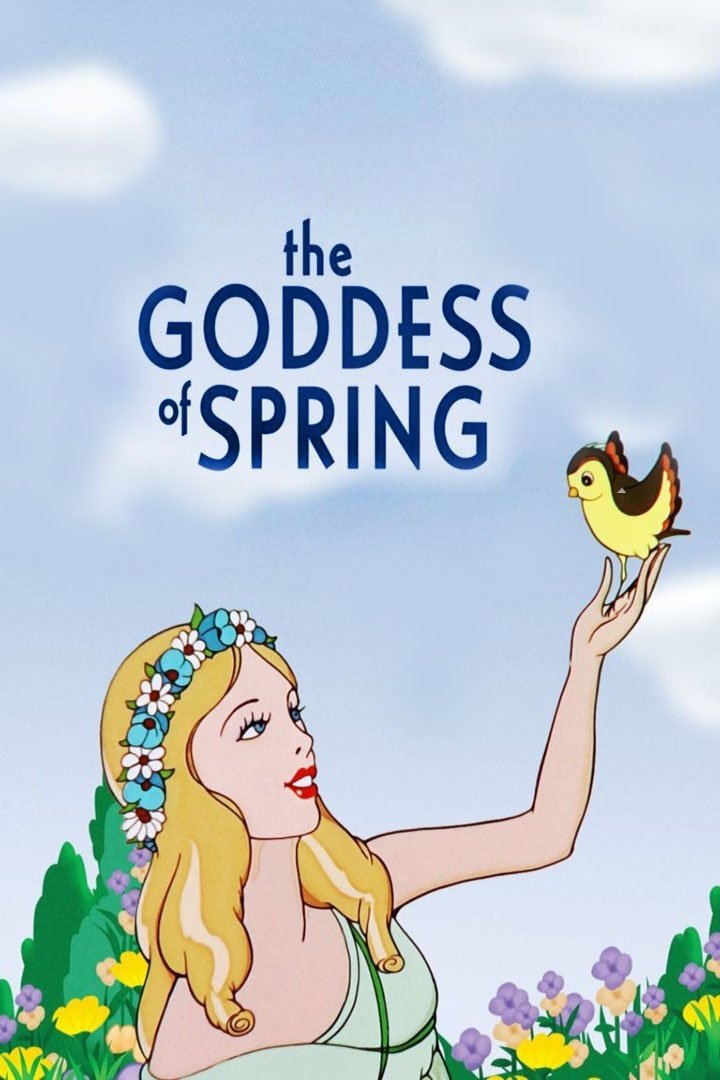
The Goddess of Spring
1934 film by Wilfred Jackson

Proserpine
play by Mary Shelley
Combat of Love and Chastity
painting by Pietro Perugino, Louvre
Proserpine
opera by Jean-Baptiste Lully
The Merchant's Tale
one of Geoffrey Chaucer's Canterbury Tales
Temple of Ceres
building in Rome, Italy
Temple of Proserpina
Roman temple in Mtarfa, Malta