Category
page 1Psychological warfare techniques

disinformation
Disinformation is false or misleading information deliberately spread to deceive people, or to secure economic or political gain and which may cause public harm. Disinformation is an orchestrated adversarial activity in which actors employ strategic deceptions and media manipulation tactics to advance political, military, or commercial goals. Disinformation is implemented through coordinated campaigns that "weaponize multiple rhetorical strategies and forms of knowing—including not only falsehoods but also truths, half-truths, and value judgements—to exploit and amplify culture wars and other
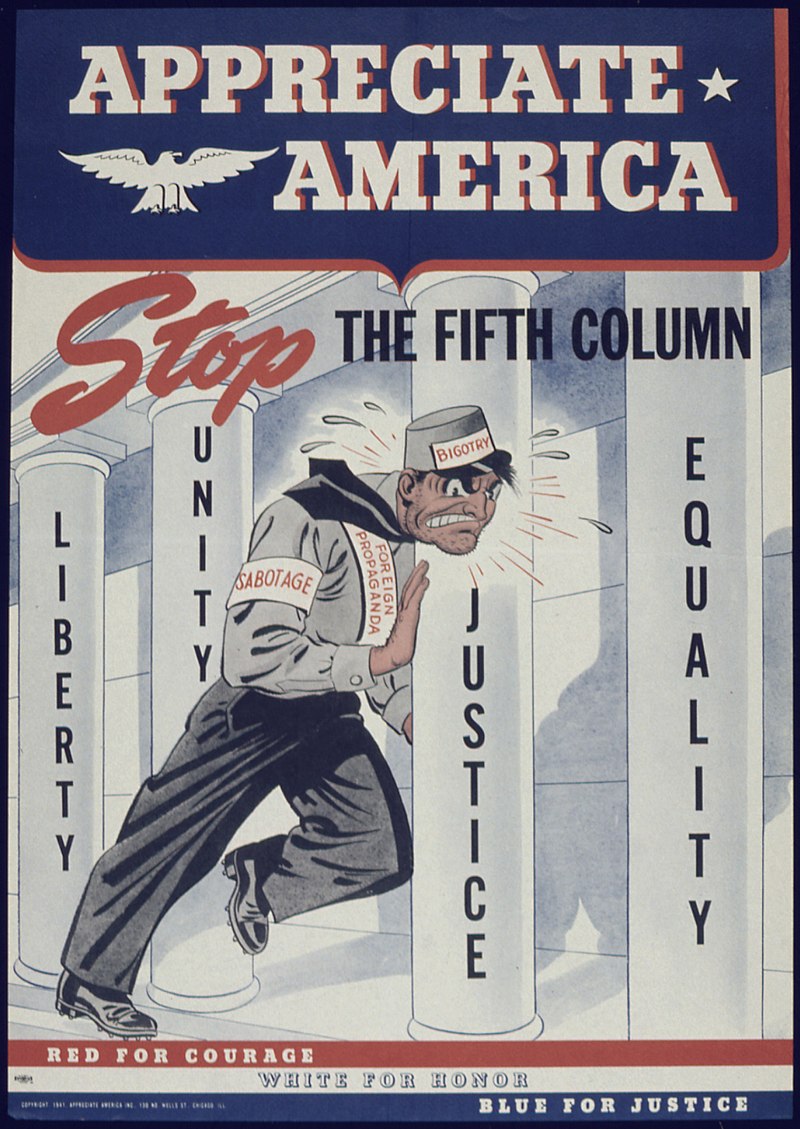
fifth column
group of people who undermine a larger group

psychological warfare
military information operations aimed at promoting behaviour to assist military objectives

information warfare
form of indirect warfare

false flag
act with the intent of disguising the actual source of responsibility and pinning blame on a second party

misinformation
thumb|A sign for the successful Vote Leave|campaign to leave in the [[2016 United Kingdom European Union membership referendum. The claim made by the sign was widely considered to have been an example of misinformation.|alt=Sign reading: We send the EU £50 MILLION EVERY DAY / Let's spend it on our NHS instead / [heartbeat graphic] / Vote Leave on 23 June]]
spin
form of propaganda in public relations
framing
set of concepts and theoretical perspectives in social sciences on how individuals, groups, and societies, organize, perceive, and communicate about reality
Russian web brigades
Russian state-sponsored Internet commentators
stay-behind
A stay-behind operation is one where a country places secret operatives or organizations in its own territory, for use in case of a later enemy occupation. The stay-behind operatives would then form the basis of a resistance movement, and act as spies from behind enemy lines. Small-scale operations may cover discrete areas, but larger stay-behind operations envisage reacting to the conquest of whole countries.
active measures
term for the actions of political warfare conducted by the Soviet and Russian security services
shock and awe
military tactic
political warfare
use of political means to compel an opponent with hostile intent
strategy of tension
policy wherein governments or groups within a government allow or encourage extremist groups to perform attacks, e.g. allegedly in Italy during 1968–1982, when far-left and far-right groups performed bombings
information pollution
contamination of information supply with irrelevant, redundant, unsolicited and low-value information
sleeper effect
hypothesis
atrocity propaganda
the spreading of deliberate fabrications or exaggerations about the crimes committed by an enemy
agent of influence
type of secret agent

Russian disinformation
Russian state-sponsored disinformation campaigns
demoralization
damaging an enemy's fighting spirit
Memetic warfare
modern type of information warfare and psychological warfare
airborne leaflet propaganda
form of psychological warfare in which leaflets are scattered in the air
Team Jorge
Hacker team specialized on political manipulations such as election
double tap strike
bombing the same location a second time
music in psychological operations
psychological warfare and torture technique
new generation warfare
Russian psychosocial military approach
Chinese salami slicing theory
Chinese foreign strategy using small provocations to cumulatively produce a much larger result, e.g. in the South China Sea
cyberwarfare by Russia
various types of cyberwarfare used by Russia against many nations