Category
page 1Public-domain software with source code

Unicode
Unicode (also known as The Unicode Standard and TUS) is a character encoding standard maintained by the Unicode Consortium designed to support the use of text in all of the world's writing systems that can be digitized. Version 17.0 defines 159,801 characters and 172 scripts used in various ordinary, literary, academic and technical contexts.

PubChem
PubChem is a database of chemical molecules and their activities against biological assays. The system is maintained by the National Center for Biotechnology Information (NCBI), a component of the National Library of Medicine, which is part of the United States National Institutes of Health (NIH). PubChem can be accessed for free through a web user interface. Millions of compound structures and descriptive datasets can be freely downloaded via FTP. PubChem contains multiple substance descriptions and small molecules with fewer than 100 atoms and 1,000 bonds. More than 80 database vendors contr

Advanced Encryption Standard
block cipher standard

Spacewar!
Spacewar! is a space combat video game developed in 1962 by Steve Russell in collaboration with Martin Graetz, Wayne Wiitanen, Bob Saunders, Steve Piner, and others. It was written for the newly installed DEC PDP-1 minicomputer at the Massachusetts Institute of Technology. After its initial creation, Spacewar! was expanded further by other students and employees of universities in the area, including Dan Edwards and Peter Samson. It was also spread to many of the few dozen installations of the PDP-1 computer, making Spacewar! the first known video game to be played at multiple computer install

SQLite
SQLite ( "S-Q-L-ite", "sequel-ite") is a free and open-source relational database engine written in the C programming language. It is not a standalone application; rather, it is a library that software developers embed in their applications. As such, it belongs to the family of embedded databases. According to its developers, SQLite is the most widely deployed database engine, as it is used by several of the top web browsers, operating systems, mobile phones, and other embedded systems.
WorldWideWeb
WorldWideWeb (later renamed Nexus to avoid confusion between the software and the World Wide Web) is the first web browser and web page editor. It was discontinued in 1994. It was the first WYSIWYG HTML editor.

SHA-1
In cryptography, SHA-1 (Secure Hash Algorithm 1) is a hash function which takes an input and produces a 160-bit (20-byte) hash value known as a message digest – typically rendered as 40 hexadecimal digits. It was designed by the United States National Security Agency, and is a U.S. Federal Information Processing Standard. The algorithm has been cryptographically broken but is still widely used.
.jpg)
ELIZA
ELIZA is an early natural language processing computer program developed from 1964 to 1967 at MIT by Joseph Weizenbaum. Created to explore communication between humans and machines, ELIZA simulated conversation by using a pattern matching and substitution methodology that gave users an illusion of understanding on the part of the program, but gave no response that could be considered really understanding what was being said by either party. Whereas the ELIZA program itself was written (originally) in MAD-SLIP, the pattern matching directives that contained most of its language capability were
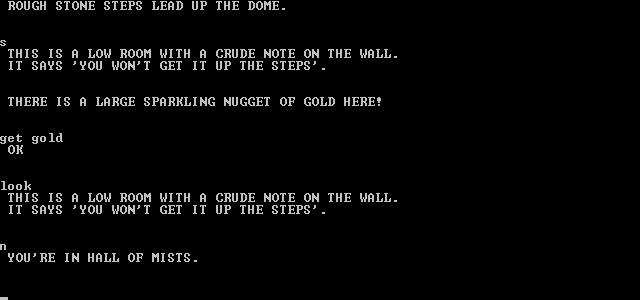
Colossal Cave Adventure
1976 video game
.jpg)
TempleOS
TempleOS (formerly J Operating System, LoseThos, and SparrowOS) is a biblical-themed lightweight operating system (OS) designed to be the Third Temple from the Hebrew Bible. It was created by American computer programmer Terry A. Davis, who developed it alone over the course of a decade after a series of manic episodes that he later described as a revelation from God. TempleOS could be considered as an example of coding as an art form, with the nature of his psychological instability and its influence over the project lending to comparisons to similar outsider art (see also Creativity and ment

SHA-2
SHA-2 (Secure Hash Algorithm 2) is a set of cryptographic hash functions designed by the United States National Security Agency (NSA) and first published in 2001. They are built using the Merkle–Damgård construction, from a one-way compression function itself built using the Davies–Meyer structure from a specialized block cipher.
Low Orbit Ion Cannon
open source network stress testing and denial-of-service attack application
SPICE
SPICE (Simulation Program with Integrated Circuit Emphasis) is a general-purpose, open-source analog electronic circuit simulator.
It is a program used in integrated circuit and board-level design to check the integrity of circuit designs and to predict circuit behavior.

SHA-3
SHA-3 (Secure Hash Algorithm 3) is the latest member of the Secure Hash Algorithm family of standards, released by NIST on August 5, 2015. Although part of the same series of standards, SHA-3 is internally different from the MD5-like structure of SHA-1 and SHA-2.

Star Trek
1971 command line computer game
qmail
qmail is a mail transfer agent (MTA) that runs on Unix. It was written, starting December 1995, by Daniel J. Bernstein as a more secure alternative to the popular Sendmail program. Originally license-free software, qmail's source code was later dedicated to the public domain by the author.
youtube-dl

Salsa20 and ChaCha20
Salsa20 (formerly known as Snuffle 2005) and the closely related ChaCha are stream ciphers developed by Daniel J. Bernstein. Salsa20, the original cipher, was designed in 2005, then later submitted to the eSTREAM European Union cryptographic validation process by Bernstein. ChaCha is a modification of Salsa20 published in 2008. It uses a new round function that increases diffusion and increases performance on some architectures.
CLIPS
CLIPS (C Language Integrated Production System) is a public-domain software tool for building expert systems. The syntax and name were inspired by Charles Forgy's OPS5. The first versions of CLIPS were developed starting in 1985 at the NASA Johnson Space Center (as an alternative for existing system ART*Inference) until 1996, when the development group's responsibilities ceased to focus on expert system technology. The original name of the project was ''NASA's AI Language'' (NAIL).
Maze War
1973 video game
Hunt the Wumpus
1973 text-based adventure game

Liero
Liero is a video game for MS-DOS, first released by Finnish programmer Joosa Riekkinen in 1998. The game has been described as a real-time version of Worms (a turn-based artillery game). Liero is Finnish for 'earthworm'. Inspired itself by the earlier game MoleZ, Liero provided inspiration for the later games Soldat and Noita.
Mersenne twister
pseudorandom number generator whose period is a Mersenne prime
Maclisp
Maclisp (or MACLISP, sometimes styled MacLisp or MacLISP) is a programming language, a dialect of the language Lisp. It originated at the Massachusetts Institute of Technology's (MIT) Project MAC (from which it derived its prefix) in the late 1960s and was based on Lisp 1.5. Richard Greenblatt was the main developer of the original codebase for the PDP-6; Jon L. White was responsible for its later maintenance and development. The name Maclisp began being used in the early 1970s to distinguish it from other forks of PDP-6 Lisp, notably BBN Lisp.
Xming
Xming is an X11 display server for Microsoft Windows operating systems, including Windows XP and later.
Basic Linear Algebra Subprograms
routines for performing common linear algebra operations
ImageJ
ImageJ is a Java-based image processing program developed at the National Institutes of Health and the Laboratory for Optical and Computational Instrumentation (LOCI, University of Wisconsin). Its first version, ImageJ 1.x, is developed in the public domain, while ImageJ2 and the related projects SciJava, ImgLib2, and SCIFIO are licensed with a permissive BSD-2 license. ImageJ was designed with an open architecture that provides extensibility via Java plugins and recordable macros. Custom acquisition, analysis and processing plugins can be developed using ImageJ's built-in editor and a Java co
GeoTIFF
GeoTIFF is a public domain metadata standard which allows georeferencing information to be embedded within a TIFF file. The potential additional information includes map projection, coordinate systems, ellipsoids, datums, and everything else necessary to establish the exact spatial reference for the file. The GeoTIFF format is fully compliant with TIFF 6.0, so software incapable of reading and interpreting the specialized metadata will still be able to open a GeoTIFF format file.
Edwards-curve Digital Signature Algorithm
In public-key cryptography, Edwards-curve Digital Signature Algorithm (EdDSA) is a digital signature scheme using a variant of Schnorr signature based on twisted Edwards curves.
It is designed to be faster than existing digital signature schemes without sacrificing security. It was developed by a team including Daniel J. Bernstein, Niels Duif, Tanja Lange, Peter Schwabe, and Bo-Yin Yang.
The reference implementation is public-domain software.
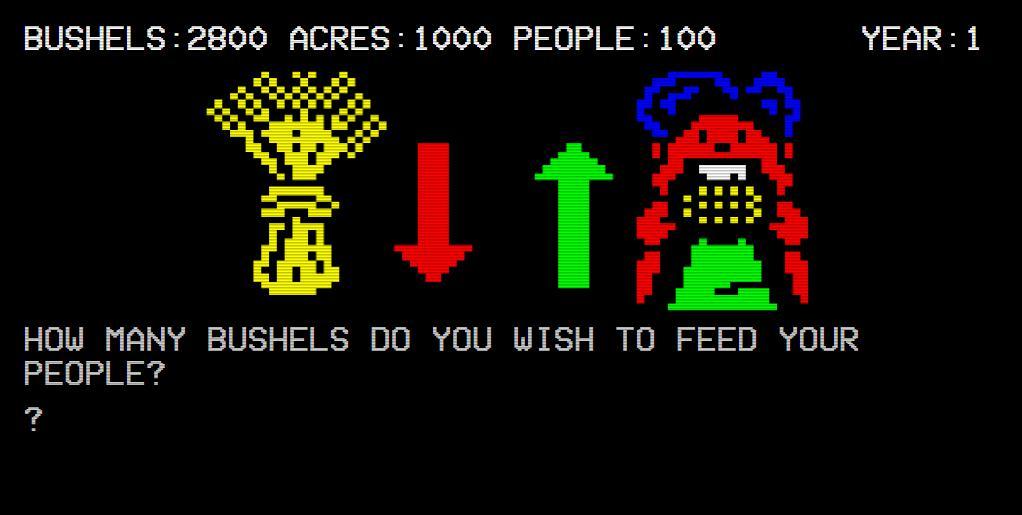
Hamurabi
1968 video game
BLAKE
Wikipedia article covering the BLAKE series of cryptographic hash functions
CERN httpd
early web server
LZ77 and LZ78
lossless data compression algorithms
Abuse
1996 run and gun video game
MPICH
MPICH, formerly known as MPICH2, is a freely available, portable implementation of MPI, a standard for message-passing for distributed-memory applications used in parallel computing. MPICH is Free and open source software with some public domain components that were developed by a US governmental organisation, and is available for most flavours of Unix-like OS (including Linux and Mac OS X).
Expect
Expect is an extension to the Tcl scripting language written by Don Libes. The program automates interactions with programs that expose a text terminal interface. Expect, originally written in 1990 for the Unix platform, has since become available for Microsoft Windows and other systems.
SLIME
SLIME, the Superior Lisp Interaction Mode for Emacs, is an Emacs mode for developing Common Lisp applications. SLIME originates in an Emacs mode called SLIM written by Eric Marsden. It is developed as an open-source public domain software project by Luke Gorrie and Helmut Eller. Over 100 Lisp developers have contributed code to SLIME since the project was started in 2003.
XZ Utils
open source file compression software
EPANET
EPANET (Environmental Protection Agency Network Evaluation Tool) is a public domain, water distribution system modeling software package developed by the United States Environmental Protection Agency's (EPA) Water Supply and Water Resources Division. It performs extended-period simulation of hydraulic and water-quality behavior within pressurized pipe networks and is designed to be "a research tool that improves our understanding of the movement and fate of drinking-water constituents within distribution systems". EPANET first appeared in 1993.
C-evo
C-evo is a free turn-based strategy computer game whose source code is in the public domain by German programmer and designer Steffen Gerlach. It was written in Delphi and later ported to Lazarus instead.
Erwise
Erwise is an early discontinued web browser, and the first that was available for the X Window System.
LS-DYNA
LS-DYNA is an advanced general-purpose multiphysics simulation software package developed by the former Livermore Software Technology Corporation (LSTC), which was acquired by Ansys in 2019. While the package continues to contain more and more possibilities for the calculation of many complex, real world problems, its origins and core-competency lie in highly nonlinear transient dynamic finite element analysis (FEA) using explicit time integration. LS-DYNA is used by the automobile, aerospace, construction and civil engineering, military, manufacturing, and bioengineering industries.
Poly1305
Poly1305 is a universal hash family designed by Daniel J. Bernstein in 2002 for use in cryptography.
Second Reality
demo by Future Crew
ProTracker
Protracker is a music tracker for the Amiga platform. A free software tool that required no additional equipment, it became popular in the early 1990s with both amateurs and professionals, allowing for sample-based music in the MOD file format.

Ultimate Soundtracker
music tracker program for the Commodore Amiga
Empire
1972 video game
High Orbit Ion Cannon
open-source network stress testing and denial-of-service attack application
Steel Bank Common Lisp
Free implementation Common Lisp (programming language)
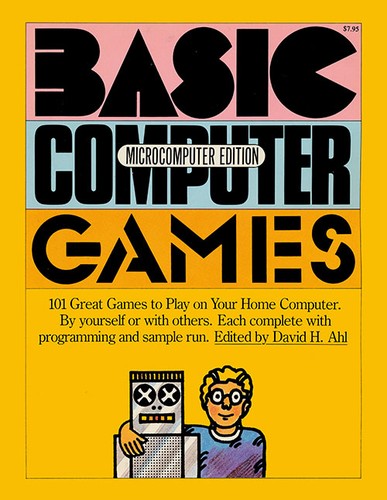
BASIC Computer Games
essay by David H. Ahl
Rabbit
stream cipher
Storm Water Management Model
rainfall-runoff-subsurface runoff simulation model
daemontools
daemontools is a process supervision toolkit written by Daniel J. Bernstein as an alternative to other system initialization and process supervision tools, such as Init.

Passage
2007 video game created by Jason Rohrer
Turbo Vision
text user interface
CMU Common Lisp
free Common Lisp implementation
SQRL
SQRL (pronounced "squirrel") or Secure, Quick, Reliable Login (formerly Secure Login) is a draft open standard for secure website login and authentication. The software typically uses a link of the scheme or optionally a QR code, where a user identifies via a pseudonymous zero-knowledge proof rather than providing a user ID and password. This method is thought to be impervious to a brute-force password attack or data breach. It shifts the burden of security away from the party requesting the authentication and closer to the operating-system implementation of what is possible on the hardware, a
kiki the nano bot
video game
djbdns
The djbdns software package is a DNS implementation. It was created by Daniel J. Bernstein in response to his frustrations with repeated security holes in the widely used BIND DNS software. As a challenge, Bernstein offered a $1000 prize for the first person to find a security hole in djbdns, which was awarded in March 2009 to Matthew Dempsky.
lunar lander
video game genre, where the player must portion a limited amount of fuel to land on the moon without crashing