Category
page 1Pulmonology

pulmonology
Pulmonology (, , from Latin pulmō, -ōnis "lung" and the Greek suffix "study of"), pneumology (, built on Greek πνεύμων "lung") or pneumonology () is a medical specialty that deals with diseases involving the respiratory tract. It is also known as respirology, respiratory medicine, or chest medicine in some countries and areas.
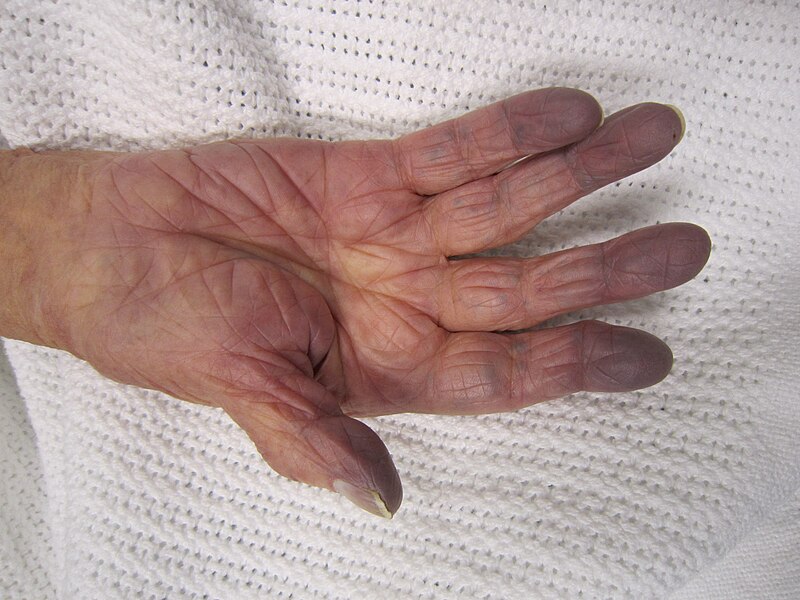
hypoxia
condition in which the body or a region of the body is deprived of adequate oxygen supply at the tissue level
mucokinetic
agent that aids in the clearance of mucus from the airways, lungs, bronchi, and trachea
chest tube
type of surgical drain, plastic tubing used for drainage of air or fluid from the pleural space
respiratory sound
specific sound generated by the movement of air through the respiratory system

phthisiology
thumb|Plaque honouring Robert W. Philip, phthisiologist in Edinburgh
Phthisiology is the care, treatment, and study of tuberculosis of the lung. It is therefore considered a specialisation within the area of pulmonology.

lobectomy
thumb|Vascular, bronchial and parenchymal margins of a lobectomy, showing staple line of bronchial margin being removed with scissors.
Lobectomy means surgical excision of a lobe. This may refer to a lobe of the lung (also simply called a lobectomy), a lobe of the thyroid (hemithyroidectomy), a lobe of the brain (as in anterior temporal lobectomy), or a lobe of the liver (hepatectomy).
__TOC__
smoke inhalation injury
primary cause of death for victims of fires
fraction of inspired oxygen
volumetric proportion of oxygen to other constituents in a breathing gas
baritosis
Baritosis is a benign type of pneumoconiosis, which is caused by long-term exposure to the dust of insoluble compounds of barium, such as ground baryte ore.
Apnea–hypopnea index
number of apnea and hypopnea events per hour of sleep
Blood gas tension
partial pressure of blood gases
Biotrauma
Although the term has occasionally been used in other ways, in medical literature biotrauma is usually defined as a severe inflammatory response produced in the lungs of patients who breathe by means of a mechanical ventilator for a long period of time. The term was coined in a 1998 paper by L. N. Tremblay and A. S. Slutsky, titled Ventilator-induced injury: from barotrauma to biotrauma. The message of that paper was that barotrauma caused by pressure differentials is only one of several types of lung damage that a ventilator can produce.
blood gas test
test which tests blood to measure blood gas tension values
Curschmann's spirals
microscopic finding in the sputum of asthmatics
functional residual capacity
volume of air in the lungs at the end of passive expiration
flutter valve
valve used in respiratory medicine
high-frequency ventilation
medical intervention