Category
page 1Punk rock genres
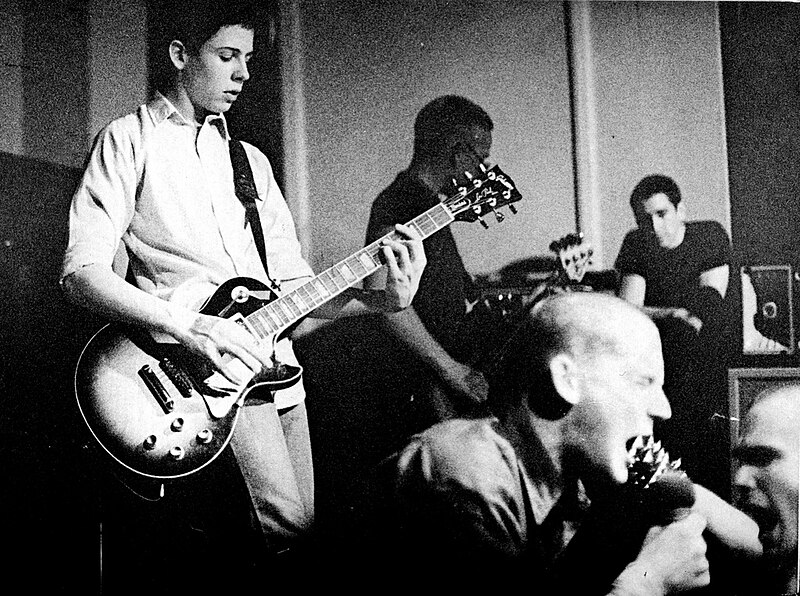
hardcore punk
aggressive and fast subgenre of punk rock

post-punk
Post-punk (or postpunk) is a loosely defined music genre and period that emerged in late 1977 in the wake of punk rock. The concept was originally outlined by Jon Savage in his "New Musick" editorial for Sounds magazine in November 1977. The term has been noted for lacking a universally agreed-upon definition. Post-punk musicians departed from punk's fundamental elements and raw simplicity, adopting instead a broader, more experimental approach that incorporated a variety of avant-garde sensibilities and non-rock influences. Inspired by punk's energy and DIY ethic but determined to move beyond

new wave
music genre that encompasses pop-oriented styles from the late 1970s through the 1980s

pop-punk
Pop-punk (also punk pop, alternatively spelled without the hyphen) is a rock music genre that combines elements of punk rock and pop. It is defined by its fast-paced, energetic tempos, and emphasis on classic pop songcraft, as well as adolescent and anti-suburbia themes. It is distinguished from other punk-variant genres by drawing more heavily from 1960s bands such as the Beatles, the Kinks, and the Beach Boys. The genre has evolved throughout its history, absorbing elements from new wave, college rock, ska, hip hop, emo, boy band pop and even hardcore punk and metalcore. It is sometimes cons

visual kei
movement among Japanese musicians defined by a strong focus on visual expression through outrageous costumes, makeup, and hairstyles

noise rock
experimental rock music mixed with noise

post-hardcore
Post-hardcore is a punk rock music genre that maintains the aggression and intensity of hardcore punk but emphasizes a greater degree of creative expression. Like the term "post-punk", the term "post-hardcore" has been applied to a broad constellation of groups. Initially taking inspiration from post-punk and noise rock, post-hardcore began in the 1980s with bands like Hüsker Dü and Minutemen. The genre expanded in the 1980s and 1990s with releases by bands from cities which had established hardcore scenes, such as Fugazi from Washington, D.C. as well as groups such as Big Black, Jawbox, Quick
oi!
Oi! (originally known as new punk or real punk) is a subgenre of punk rock that emerged in the United Kingdom, particularly the East End of London in the late 1970s and early 1980s. The term was coined by Sounds magazine writer Garry Bushell in August 1979. The music and its associated subculture aimed to unite punks, skinheads, and generally disaffected working-class youth.
riot grrrl
underground feminist punk rock movement; music genre
crust punk
music genre
ska punk
fusion music genre
horror punk
music genre that mixes proto-gothic and punk rock sounds with morbid and violent imagery and lyrics which are often influenced by horror films and science fiction B-movies

anarcho-punk
Anarcho-punk (also known as anarchist punk) is an ideological subgenre of punk rock that promotes anarchism. The term has been broadly applied to refer to any punk music with anarchist lyrical content, which may figure in crust punk, hardcore punk, folk punk, and other styles.
.jpg)
proto-punk
Proto-punk (or protopunk) is music that foreshadowed the punk rock genre, particularly rock music artists during the 1960s and early-to mid 1970s. A retrospective label, the musicians involved were generally not originally associated with each other and came from a variety of backgrounds and styles; together, they anticipated many of punk's musical and thematic attributes.
folk punk
fusion of folk music and punk rock
dance-punk

psychobilly
Psychobilly (also known as punkabilly) is a rock music fusion genre that fuses elements of rockabilly and punk rock. It has been defined as "loud frantic rockabilly music", it has also been said that it "takes the traditional countrified rock style known as rockabilly, ramp[ing] up its speed to a sweaty pace, and combin[ing] it with punk rock and imagery lifted from horror films and late-night sci-fi schlock,... [creating a] gritty honky tonk punk rock."
skate punk
subgenre of punk rock

deathrock
Deathrock (or death rock) is a subgenre of rock music that merges punk rock with gothic and glam rock visuals, alongside elements of horror film scores. Often overlapping with, and sometimes considered a subgenre of, gothic rock, the genre was pioneered by bands from the early 1980s Los Angeles punk scene, including Christian Death, Kommunity FK, 45 Grave and the Super Heroines.
Celtic punk
punk rock mixed with traditional Celtic music

D-beat
thumb|right|the 'D-Beat' in musical notation
D-beat (also known as Discore, kängpunk, Discrust, and crust-beat) is a style of hardcore punk, developed in the early 1980s by imitators of Discharge, after whom the genre is named, as well as a drum beat characteristic of this subgenre. D-beat is known for its "grinding, distorted and brutally political" sound. Discharge may have themselves inherited the beat from Motörhead and the Buzzcocks. D-beat is closely associated with crust punk, which is a heavier, more complex variation. The style was particularly popular in Sweden, and developed there b
2 tone
British popular music of the late 1970s and early 1980s
art punk
subgenre of punk music
Gypsy punk
hybrid music genre that crosses traditional Romani music with punk rock
glam punk
subgenre of punk rock
anti-folk
Anti-folk (sometimes spelled antifolk) is a genre of folk music that emerged in the 1980s in New York City. It was founded by the musician, author, and comedian Lach, as a reaction to the commercialization of folk music. It is characterized by its amateur sound, DIY ethos, and often humorous, rebellious, or satirical lyrics. Antifolk music was made to diverge from, and sometimes mock, the perceived seriousness of the era's mainstream music scene, while often still being protest music aimed at social change. The latter element especially overlaps with folk punk.
street punk
subgenre of punk
.jpg)
queercore
Queercore (or homocore) is a cultural/social movement that began in the mid-1980s as an offshoot of the punk subculture and a music genre that comes from punk rock. It is distinguished by its discontent with society in general, and specifically society's disapproval of the LGBTQ community. Queercore expresses itself in a DIY style through magazines, music, writing and film.
synth-punk
REDIRECT Electronic rock#Synth-punk

taqwacore
Taqwacore is a subgenre of punk music dealing with Islam, its culture, and interpretation. Originally conceived in Michael Muhammad Knight's 2003 novel, The Taqwacores, the name is a portmanteau of "hardcore" and the Arabic word "taqwa" (تقوى), which is usually translated as "piety" or the quality of being "God-fearing", and thus roughly denotes reverence and love of the divine. The scene is composed mainly of young Muslim artists living in the US and other Western countries, many of whom openly reject traditionalist interpretations of Islam, and thus live their own lifestyle within the religi

cowpunk
Cowpunk (or country punk) is a subgenre of country music and punk rock that began in the United Kingdom and Southern California in the late 1970s and early 1980s. It combines punk rock or new wave with country, folk, and blues in its sound, lyrical subject matter, attitude, and style. Examples include Social Distortion, the Gun Club, the Long Ryders, Dash Rip Rock, Violent Femmes, the Blasters, Mojo Nixon, Meat Puppets, the Beat Farmers, Rubber Rodeo, Rank and File, and Jason and the Scorchers. Many of the musicians in this scene subsequently became associated with alternative country, roots r
punk blues
music genre
Christian punk
subgenre of punk rock

nazi punk
music genre

punk jazz
music genre
mod revival
music genre; rebirth of the mod subculture in the late 1970s
grebo
short-lived subgenre of alternative rock that incorporated influences from punk rock, electronic dance music, hip hop and psychedelia
trallpunk
Trallpunk (Swedish; roughly translates to 'ditty punk' — see the Wiktionary entry) is a subgenre of punk music developed in Sweden. It is known for its two-beat, fast drum tempos, a melodic sound with harmonized vocals, and politically oriented lyrics in Swedish.
Generally, trallpunk music advocates for left wing political causes. Asta Kask is considered to be one of the first trallpunk bands. During the 1990s, trallpunk saw increased popularity, particularly due to the club Kafé 44 in Stockholm and the band De Lyckliga Kompisarna (The Happy Friends).
biker metal
fusion genre that combines elements of heavy metal, occult rock, hard rock, freakbeat and electric blues
Basque radical rock
music genre
Nagoya kei
music genre
emo pop
fusion genre combining emo with pop-punk, pop music, or both
punk pathetique
music genre
punk rap
genre of hip-hop
Afro-punk
Afro-punk (sometimes spelled Afro Punk, Afropunk or AfroPunk) refers to the participation of black people in punk music and the punk subculture. Black people's participation in punk music has existed since the genre's origins in 1969 with the ska movement of Boss Skinhead Laurel Aitken and his song "Skinhead Train" from 1969. Afro Punk has persisted to the present day, & it has played a key role in punk scenes throughout the world, especially in the United States and the United Kingdom. Notable bands that can be linked to the Afro-punk community and/or bands that include Afro-Punk members are
Scottish Gaelic punk
genre of Celtic music