Category
page 1Qing dynasty
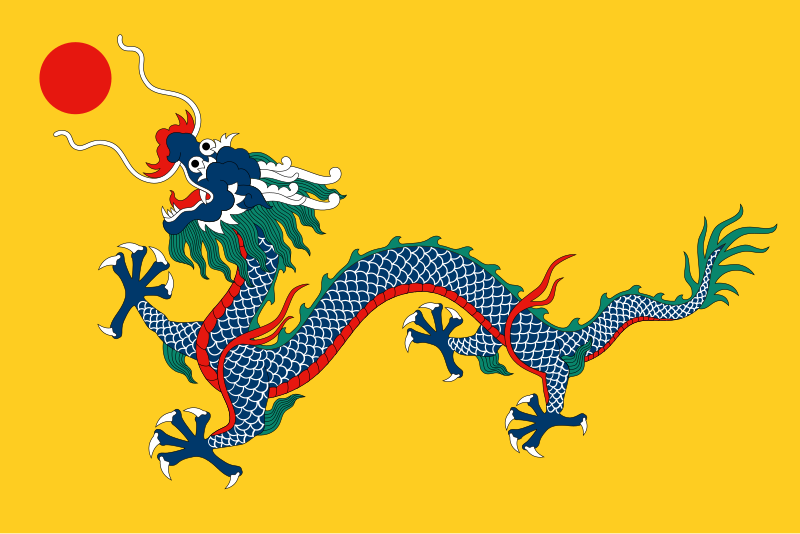
Qing dynasty
Manchu-led dynasty of China (1644–1912)

Kingdom of Tungning
former country
Century of Humiliation
Historiographical concept for a period of intervention and subjugation of China by foreign powers
Aisin Gioro
Jianzhou Jurchen and Manchu Surname, family name of the emperors of the Qing dynasty

Noyan
Noyan (from Classical Mongolian 'lord, master') was a title of authority, which was used to refer to civil-military leaders of noble ancestry in the Central Asian khanates. The title was originally used as a title of authority in the Mongol Empire. In modern times, it is used as a given name or surname in Asia.
Gong Jin'ou
national anthem of the Qing Empire
Later Jin (1616-1636)
Jurchen-led dynasty in Manchuria
stinky tofu
Chinese fermented tofu with a strong odor; usually sold at night markets or roadside stands as a snack, or in lunch bars as a side dish, rather than in restaurants
Southern Ming dynasty
dynasty
Shun dynasty
17th-century Chinese dynasty
transition from Ming to Qing
transition between two major dynasties in Chinese history between 1618 and 1683
Self-Strengthening Movement
reform movement
Tannu Uriankhai
historic region of the Mongol Empire
Lanfang Republic
one of the early modern republics in the world, it was a kongsi federation and one of many tributary states of Qing China, in Western Borneo
Manchurian plague
pneumonic plague outbreak in 1910–1911
120 martyrs of China
group of Catholic martyrs canonized by John Paul II in 2000
Sick man of Asia
geopolitical designation
Manchu Restoration
attempt to restore the monarchy in China by Zhang Xun
Seven Grievances
1618 manifesto by Nurhaci declaring war against the Ming dynasty
Willow Palisade
former 1000 km long barrier separating Manchuria from both Mongolia and Liaoning
literary inquisition
official persecution of intellectuals for their writings
Imperial Edict of the Abdication of the Qing Emperor
decree ending imperial rule in China

karayuki-san
thumb|right|Karayuki-san in Saigon, [[French Indochina]]
Karayuki-san () was the name given to Japanese girls and women in the late 19th and early 20th centuries who were trafficked from poverty-stricken agricultural prefectures in Japan to destinations in East Asia, Southeast Asia, Siberia (Russian Far East), Manchuria, British India, and Australia, to serve as prostitutes.

Hanjian
thumb|200px|Nanking residents with armbands of the Japanese flag
thumb|200px|Chinese civilians assisting Japanese soldiers
Gelaohui
The Gelaohui, usually translated as the Elder Brothers Society, was a secret society and underground resistance movement against the Qing dynasty. Although it was not associated with Sun Yat-sen's Tongmenghui, they both participated in the Xinhai Revolution. It was also known as Futaubang, or Hatchet Gang, as every member allegedly carried a small hatchet inside the sleeve.

Ming revivalism
a sentiment principally held in China against Manchu rule during the Qing dynasty
Tongzhi Restoration
Attempted reform in China, 1860–1874
Samuel Robbins Brown
American missionary (1810–1880)

Yangzhou massacre
1645 mass killing of Chinese civilians by Manchu forces
Donglin movement
ideological and philosophical movement of the late Ming and early Qing dynasties of China
Railway Protection Movement
political protest movement in 1911 Qing China against the Qing government's plan to nationalize local railway development projects and transfer control to foreign banks
Military of the Qing dynasty
historical military force
foreign concession in China
European spheres of influence in China
Sixty-Four Villages East of the River
human-geographic territorial entity
Beiyang
The term Beiyang (; pinyin: Běiyáng; Wade-Giles: Peiyang) literally means Northern Ocean. Initially a purely geographic term, it originated toward the end of the Qing dynasty, and it referred to the coastal provinces of Zhili (Traditional Chinese:直隸, Simplified Chinese: 直隶, pinyin: Zhílì, today's Hebei), Shandong and Liaoning that bordered the Yellow Sea (itself a marginal sea of the Pacific Ocean) and surrounded the imperial capital of Beijing (then known as Peking).
Zheltuga Republic
Quasi-state on the territory of the Qing Empire
conquest dynasty
imperial dynasty of China ruled by a non-Han ethnicity
slavery in China
practice of slavery throughout the history of China black men
David Abeel
American missionary (1804-1846)
Foot Emancipation Society
Chinese organization opposed to foot binding
Hengzhen
Hengzhen (恒镇, Héngzhèn; 1944 - 27 August 2023), was the eldest son of Yuyan. He was the sixth person in the line of succession to the Chinese throne. In the 1980s, as part of the forced entry of Chinese soldiers from the majority Han ethnic group to populate Xinjiang, at the time which was predominantly Uyghur, he worked on a documentary recounting how the Chinese soldiers developed subsistence agriculture in the region of Shihezi. He is a descendant of Emperor Daoguang, being ethnically Manchu.
Keying
ship
High Qing era
time period in the Qing dynasty
Royalist Party
political party in the Qing Empire
New Qing History
school of thought on the history of the Qing dynasty
Huangze Temple
Buddhist temple near Guangyuan, China
Xi dynasty
17th-century Chinese dynasty
Succession to the Chinese throne
Wikimedia list article
Salt in Chinese history
chinen salt
Government of the Qing Dynasty
Wikimedia list article
history of the Qing dynasty
history of the last imperial dynasty of China

Twilight in the Forbidden City
1934 memoir by Reginald Johnston
Furen Literary Society
Hong Kong organization
Bukūri Yongšon
legendary ancestor of the future emperors of the Qing dynasty
Hetu Ala City
former capital of Later Jin; renamed to Xing Jing in 1636 by Hong Taiji