Category
page 1Radio communications
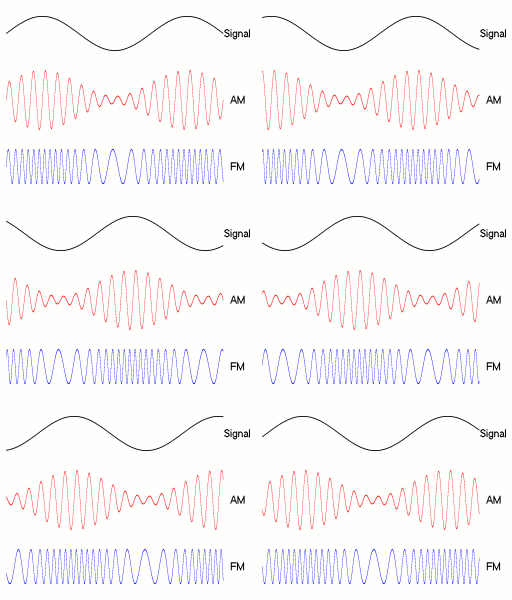
FM broadcasting
radio broadcasting using frequency modulation
ultra-wideband
Ultra-wideband (UWB, ultra wideband, ultra-wide band and ultraband) is a radio technology that can use a very low energy level for short-range, high-bandwidth communications over a large portion of the radio spectrum. UWB has traditional applications in non-cooperative radar imaging. Most recent applications target sensor data collection, precise locating, and tracking. UWB support first appeared in high-end smartphones in 2019. For a detailed list of Ultra-wideband supported mobile devices, see List of UWB-enabled mobile devices.
AM broadcasting
radio broadcasting using amplitude modulation
two-way radio
a radio that can do both transmit and receive a signal (a transceiver), unlike a broadcast receiver which only receives content; allows the operator to have a conversation with other similar radios operating on the same radio frequency (channel)
radio silence
telecommunications status
received signal strength indication
measurement of the power present in a received radio signal
types of radio emissions
classification of a radio signal
small cell
cellular network infrastructure
radiogram
formal written message transmitted by radio
radio spectrum pollution
straying of waves in the radio and electromagnetic spectrums outside their allocations that cause problems for some activities, of particular concern to radio astronomers
International distress frequency
radio frequency designated for emergency communication
PoC radio
push to talk over cellular radio
Codan
Codan Limited is a manufacturer and supplier of communications, metal detection, and mining technology, headquartered in Adelaide, South Australia with revenue of A$348.0 million (2020).
curtain array
class of large multielement directional wire radio transmitting antennas
CQ
operating signal for "request to communicate"
wideband
In communications, a system is wideband when the message bandwidth significantly exceeds the coherence bandwidth of the channel. Some communication links have such a high data rate that they are forced to use a wide bandwidth; other links may have relatively low data rates, but deliberately use a wider bandwidth than "necessary" for that data rate in order to gain other advantages; see spread spectrum.