Category
page 1Radioactive contamination

radiation syndrome
health problems caused by exposure to very high levels of ionizing radiation
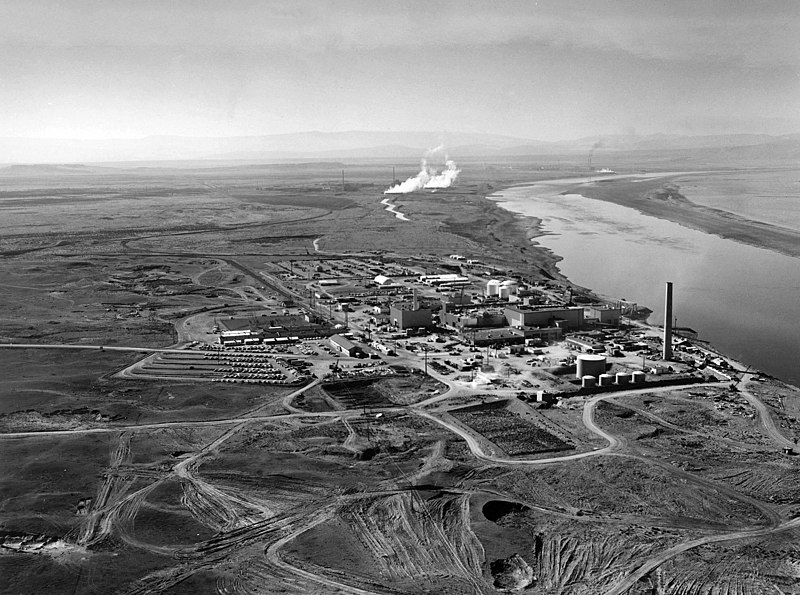
radioactive contamination
presence of radioactive substances where they are undesirable

nuclear fallout
residual radioactive material following a nuclear blast
.jpg)
caesium-137
Caesium-137 (), cesium-137 (US), or radiocaesium, is a radioactive isotope of caesium that is formed as one of the more common fission products by the nuclear fission of uranium-235 and other fissionable isotopes in nuclear reactors and nuclear weapons. Trace quantities also originate from spontaneous fission ofuranium-238. It is among the most problematic of the short-to-medium-lifetime fission products. Caesium has a relatively low boiling point of and easily becomes volatile when released suddenly at high temperature, as in the case of the nuclear accident and with nuclear explosions, and c

cobalt-60
thumb|right|γ-ray spectrum of cobalt-60
CBRN defense
CBRN
plutonium-239

iodine-131
Iodine-131 (131I, I-131) is a radioisotope of iodine discovered by Glenn Seaborg and John Livingood in 1938 at the University of California, Berkeley. It has a radioactive decay half-life of about eight days. It is associated with nuclear energy, medical diagnostic and treatment procedures, and natural gas production. It also plays a major role as a radioactive isotope present in nuclear fission products, and was a significant contributor to the health hazards from open-air atomic bomb testing in the 1950s, and from the Chernobyl disaster, as well as being a large fraction of the contamination
strontium-90
Strontium-90 () is a radioactive isotope of strontium produced by nuclear fission, with a half-life of 28.91years. It undergoes β decay into with a decay energy of 0.546MeV. has applications in medicine and industry and is an isotope of concern in fallout from nuclear weapons, nuclear weapons testing, and nuclear accidents.
nuclear decommissioning
process whereby a nuclear power plant site is dismantled
nuclear fission product
product of nuclear fission
downwinder
Downwinders were individuals and communities, in the United States, in the intermountain West between the Cascade and Rocky Mountain ranges primarily in Arizona, Nevada, New Mexico, and Utah but also in Oregon, Washington, and Idaho who were exposed to radioactive contamination or nuclear fallout from atmospheric or underground nuclear weapons testing, and nuclear accidents. Although, when the term first originated, it mainly referred to the affected peoples near the Nevada Test Site (NTS), but the label has since expanded to include people experiencing negative effects of radiation in places
radiation monitoring
measurement of radiation dose or radionuclide contamination for reasons related to the assessment or control of exposure to radiation or radioactive substances, and the interpretation of the results
Actinides in the environment