Category
page 1Radioactive waste
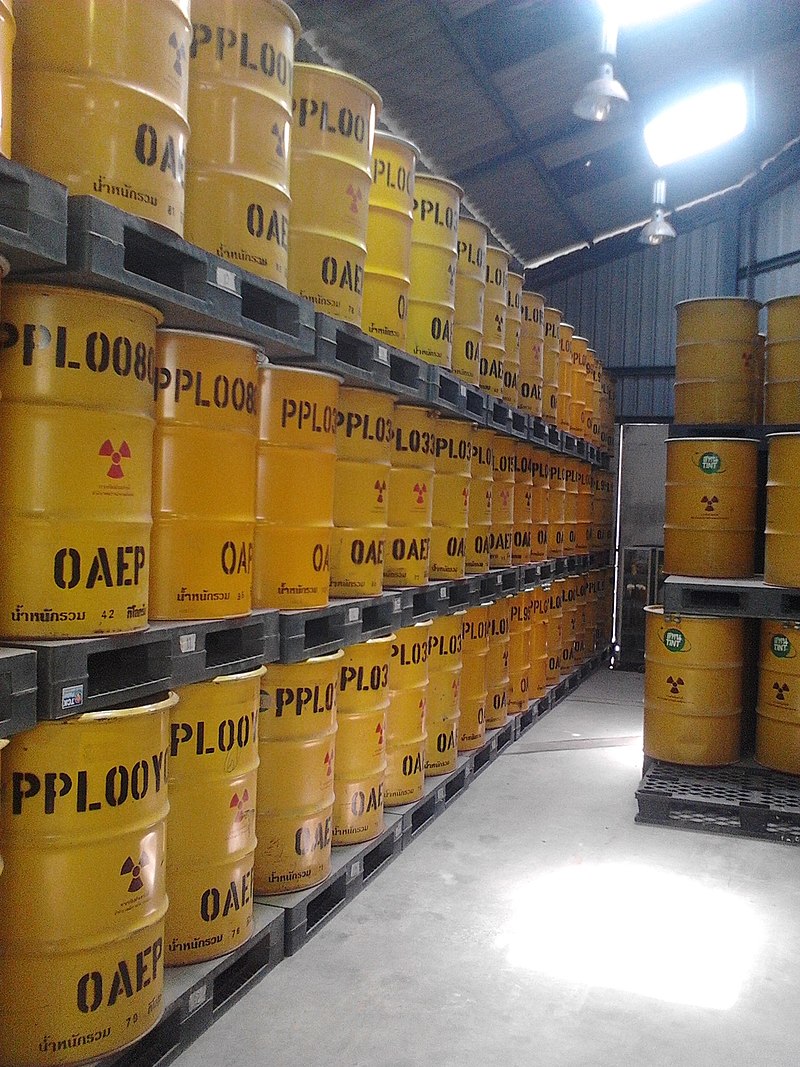
radioactive waste
waste containing radioactive material and emitting ionizing radiation

nuclear transmutation
conversion of one chemical element or an isotope into another chemical element
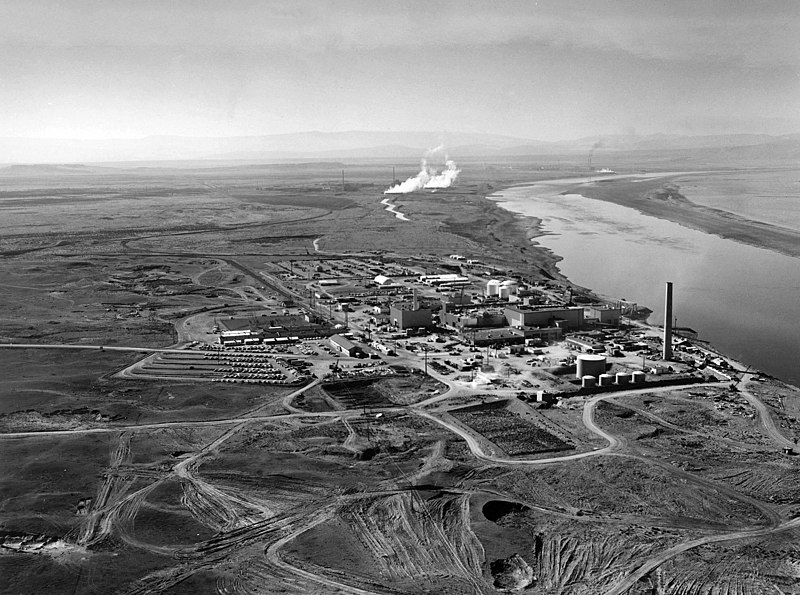
radioactive contamination
presence of radioactive substances where they are undesirable

bioremediation
Bioremediation broadly refers to any process wherein a biological system (typically bacteria, microalgae, fungi in mycoremediation, and plants in phytoremediation), living or dead, is employed for removing environmental pollutants from air, water, soil, fuel gasses, industrial effluents etc., in natural or artificial settings. The natural ability of organisms to adsorb, accumulate, and degrade common and emerging pollutants has attracted the use of biological resources in treatment of contaminated environment. In comparison to conventional physicochemical treatment methods bioremediation may o
nuclear fuel cycle
process of manufacturing and consuming nuclear fuel
tri-N-butyl phosphate
chemical compound

Goiânia accident
The Goiânia accident, also known locally as, also known locally as the Caesium-137 Accident was a radioactive contamination accident that occurred on September 13, 1987, in Goiânia, Goiás, Brazil, after an unsecured radiotherapy source was found by looters at an abandoned hospital site in the city. It was subsequently handled by many people, resulting in four deaths. About 112,000 people were examined for radioactive contamination and 249 of them were found to have been contaminated.
nuclear reprocessing
process to separate and recover fissionable plutonium from irradiated nuclear fuel

Techa River
thumb|Map of the Tobol basin. The Techa river (Теча) may be found to the left center, next to the regional ЧЕЛЯБИНСКАЯ ОБЛАСТЬ (Chelyabinsk Oblast) label.
The Techa (, ) is an eastward river on the eastern flank of the southern Ural Mountains noted for its nuclear contamination. It is long, and its basin covers . It begins by the once-secret nuclear processing town of Ozyorsk about northwest of Chelyabinsk and flows east then northeast to the small town of Dalmatovo to flow into the mid-part of the Iset, a tributary of the Tobol. Its basin is close to and north of the Miass, longer than these
deep geological repository
nuclear waste repository excavated deep within a stable geologic environment
spent nuclear fuel
nuclear fuel that has been irradiated in a nuclear reactor (usually at a nuclear power plant)
nuclear decommissioning
process whereby a nuclear power plant site is dismantled
induced radioactivity
process to make stable elements radioactive

PUREX
thumb|upright=1.1|Reprocessing of spent nuclear fuel by the PUREX method, first developed in the 1940s to produce plutonium for nuclear weapons, was demonstrated commercially in Belgium to partially re-fuel a LWR in the 1960s. This aqueous chemical process continues to be used commercially to separate [[reactor grade plutonium (RGPu) for reuse as MOX fuel. It remains controversial, as plutonium can be used to make nuclear weapons.]]
dry cask storage
method of storing high-level radioactive waste that has already been cooled

studtite
Studtite, chemical formula [(UO2)O2(H2O)2]·2(H2O) or UO4·4(H2O), is a secondary uranium mineral containing peroxide produced by the alpha-radiolysis of water during its formation. It occurs as pale yellow to white needle-like crystals often in acicular, white sprays.
sodium-cooled fast reactor
nuclear reactor type
spent fuel pool
storage pools for spent fuel from nuclear reactors

Orano La Hague site
nuclear fuel reprocessing plant at La Hague, France

Into Eternity
2010 film by Michael Madsen
phosphogypsum
thumb|Phosphogypsum stack located near Kėdainiai, [[Lithuania .]]
technetium-99
Technetium-99 (99Tc) is an isotope of technetium that decays with a half-life of 211,000 years to stable ruthenium-99, emitting beta particles, but effectively no gamma rays. It is the most significant long-lived fission product of uranium fission, and the largest single contributor to the long-lived radioactivity of nuclear waste. Technetium-99 has a fission product yield of 6.0507% for thermal neutron fission of uranium-235.
Rocky Flats Plant
defunct American nuclear weapons manufacturing site
Schikorr reaction
transformation of Fe(OH)2 into Fe3O4 with hydrogen release
Naturally occurring radioactive material
high level waste
highly radioactive waste material
Joint Convention on the Safety of Spent Fuel Management and on the Safety of Radioactive Waste Management
international treaty on radioactive waste management
transuranic waste
waste contaminated with transuranic elements
selenium-79
Selenium-79 is a radioisotope of selenium present in spent nuclear fuel and the wastes resulting from reprocessing this fuel. It is one of only seven long-lived fission products. Its fission yield is low (about 0.04%), as it is near the lower end of the mass range for fission products. Its half-life has been variously reported as 650,000 years, 65,000 years, 1.13 million years, 480,000 years, 295,000 years, 377,000 years, and most recently and the best current value, 327,000 years.
MS Sigyn
ship that transports spent nuclear fuel from Swedish nuclear power plants to Clab