Category
page 1Radiolarian orders
Nassellaria
Nassellaria is an order of Rhizaria belonging to the class Radiolaria. The organisms of this order are characterized by a skeleton cross link with a cone or ring.
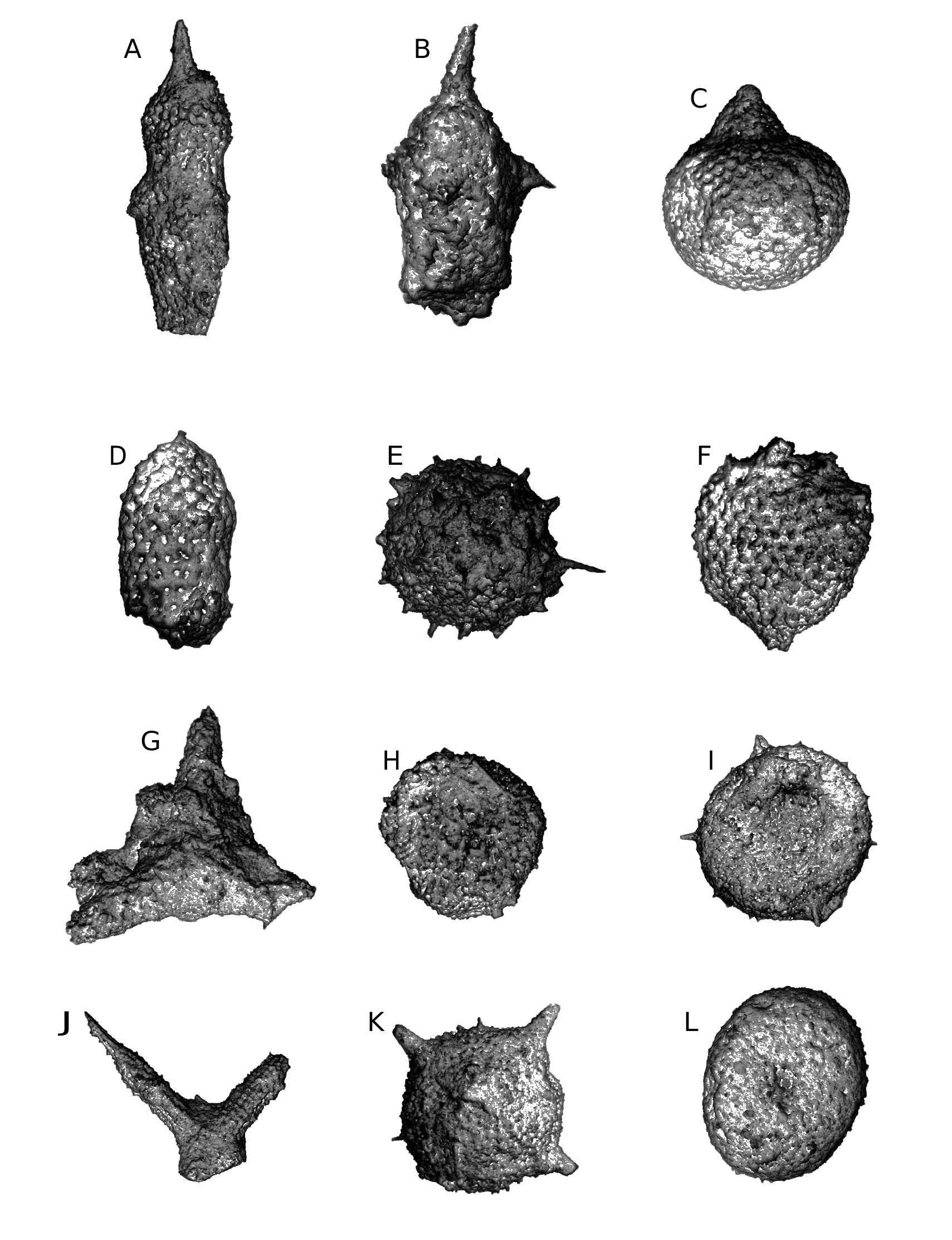
Spumellaria
Spumellaria is an order of radiolarians in the class Polycystinea. They are ameboid protists appearing in abundance in the world's oceans, possessing a radially-symmetrical silica (opal) skeleton that has ensured their preservation in fossil records. They are holoplanktonic, meaning they spend their whole lives classified as plankton. Spumellaria are globally distributed and a big part of our ocean’s silica biogeochemical cycle. Before diatoms, they were the main contributors to siliceous ocean sediments. They belong among the oldest Polycystine organisms, dating back to the lower Cambrian (ca
Collodaria
Collodaria is a unicellular order (organisms within the order are called Collodarians) under the phylum Radiozoa (or Radiolaria) and the infrakingdom Rhizaria. Like most of the Radiolaria taxonomy, Collodaria was first described by Ernst Haeckel, a German scholar who published three volumes of manuscript describing the extensive samples of Radiolaria collected by the voyage of HMS Challenger. Recent molecular phylogenetic studies concluded that Collodaria contains three families, Sphaerozodae, Collosphaeridae, and Collophidilidae.