Category
page 1Recurrent elements in fairy tales

romantic love
thumb|Romeo and Juliet, by [[Frank Dicksee, considered to be the archetypal romantic couple, depicting the play's iconic balcony scene]]

wish
thumb|A fairy offering wishes, illustration by John Bauer to Alfred Smedberg's The seven wishes
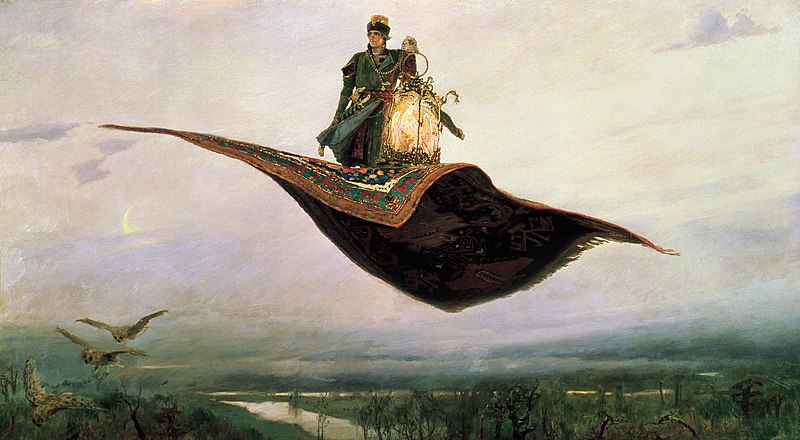
magic carpet
legendary carpet used for transportation

incantation
thumb|19th century book of incantations, written by a Welsh physician
happy ending
describes a topic, subject or symbol in a story

shapeshifting
thumb|Zeus turning Lycaon into a wolf, engraving by Hendrik Goltzius|upright=1.2
In mythology, folklore and speculative fiction, shapeshifting is the ability to physically transform oneself through unnatural means. The idea of shapeshifting is found in the oldest forms of totemism and shamanism, as well as the oldest existent literature and epic poems such as the Epic of Gilgamesh and the Iliad. The concept remains a common literary device in modern fantasy, children's literature and popular culture. Examples of shape-shifters include changelings, jinns, kitsune, vampires, and werewolves, alon
stock character
literary or social stereotype used to create characters or determine their role in a story
golden apple
mythological object, stolen or hidden by an antagonist
Seven-league boots
element in folklore
Once upon a time
fairytales opening lines
feminine beauty ideal
socially constructed norm relating to female body image
cloak of invisibility
fictional theme and a device under some scientific inquiry. In folklore, mythology and fairy tales, a cloak of invisibility appears either as a magical item used by duplicitous characters or an item worn by a hero to fulfill a quest
enchanted forest
a motif in folklore and mythology

Princess and dragon
an archetypical premise common to many legends, fairy tales, and chivalric romances.
rash promise
narrative motif documented in Thompson's Motif-Index of Folk-Literature
Henjunaha
The saga of the 2nd line of reincarnation in the Moirang kingdom in ancient Meitei Manipuri mythology
witch
archetype of the witch in Jungian psychology