Category
page 1Red algae

Rhodophyta
division of algae, red algae

agar
thumb|Green tea-flavored yōkan, a popular Japanese red bean jelly made from agar
thumb|A blood agar plate used to culture bacteria and diagnose infection
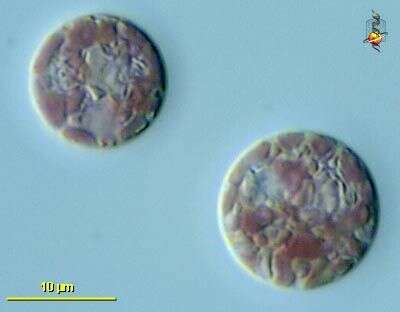
Rhodellophyceae
Rhodellophyceae is a class of red algae.

phycoerythrin
Phycoerythrin (PE) is a red protein-pigment complex from the light-harvesting phycobiliprotein family, present in cyanobacteria, red algae and cryptophytes, accessory to the main chlorophyll pigments responsible for photosynthesis.The red pigment is due to the prosthetic group, phycoerythrobilin, which gives phycoerythrin its red color.
allophycocyanin
thumb|Allophycocyanin dodekamer, Gloeobacter violaceus ()
Allophycocyanin ("other algal blue protein"; from Greek: (allos) meaning "other", (phykos) meaning “alga”, and (kyanos) meaning "blue") is a protein from the light-harvesting phycobiliprotein family, along with phycocyanin, phycoerythrin and phycoerythrocyanin. It is an accessory pigment to chlorophyll. All phycobiliproteins are water-soluble and therefore cannot exist within the membrane like carotenoids, but aggregate, forming clusters that adhere to the membrane called phycobilisomes. Allophycocyanin absorbs and emits red light (650
carpospore
thumb|300px|Cystocarp of Amphiplexia hymenocladioides
A carpospore is a diploid spore produced by red algae. After fertilization, the alga's carpogonium subdivides into carpospores, and generally the largest type of spore (larger than bispores, which are larger again than tetraspores). The wall of the carposporangium then breaks down, releasing the spores into the environment.
crustose
right|thumb|350px|A crustose lichen, Caloplaca marina
Crustose is a habit of some types of algae and lichens in which the organism grows tightly appressed to a substrate, forming a biological layer. Crustose adheres very closely to the substrates at all points. Crustose is found on rocks and tree bark. Some species of marine algae of the Rhodophyta, in particular members of the order Corallinales, family Corallinaceae, subfamily Melobesioideae with cell walls containing calcium carbonate grow to great depths in the intertidal zone, forming crusts on various substrates. The substrate can be roc
Proteorhodophytina
Proteorhodophytina is a subdivision of red algae containing unicellular, pseudofilamentous, and filamentous photosynthetic eukaryotes.
Rhodolith
thumb|upright=1.3|