Category
page 1Repetobasidiaceae

Rickenella fibula
species of fungus

Alloclavaria purpurea
species of fungus
Loreleia
Loreleia is a genus of brightly colored agarics in the Hymenochaetales that have an omphalinoid morphology. They inhabit mosses and or liverworts on soil in temperate regions of the Northern Hemisphere. Phylogenetically related agarics are in the genera Contumyces, Gyroflexus, Rickenella, Cantharellopsis and Blasiphalia, as well as the stipitate-stereoid genera Muscinupta and Cotylidia and the clavaroid genus, Alloclavaria. However, the large number of DNA base-pair changes causes a long-branch to form in phylogenetic analyses depicted as cladograms.
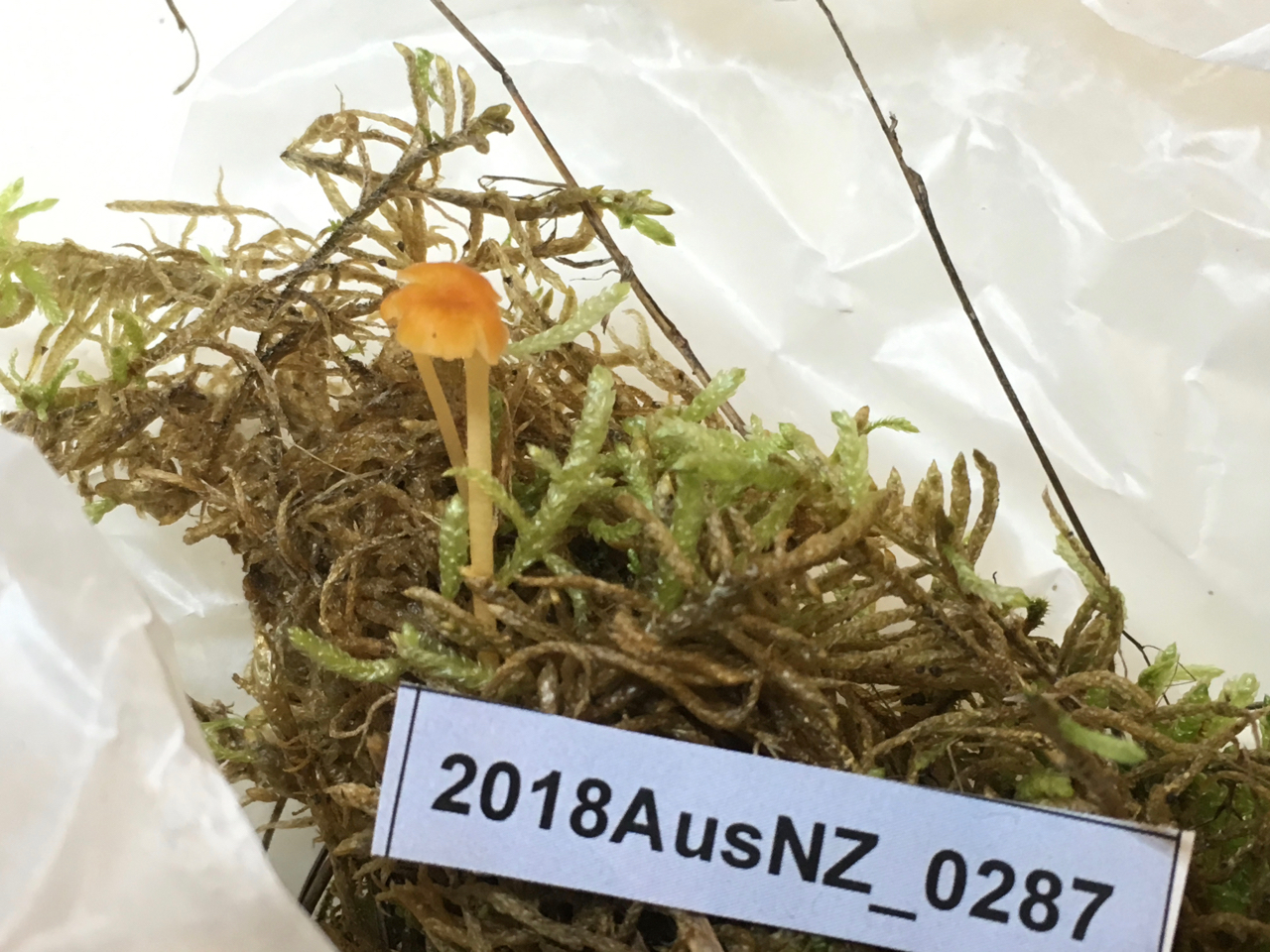
Rickenella
Rickenella is a genus of brightly colored bryophilous (moss inhabiting) agarics in the family Repetobasidiaceae (order Hymenochaetales) that have an omphalinoid morphology. They inhabit patches of moss that grow on soil, tree trunks and logs in temperate regions of the planet.
Phylogenetically related agarics are in the genera Contumyces, Gyroflexus, Loreleia, Cantharellopsis and Blasiphalia, as well as the stipitate-stereoid genera Muscinupta and Cotylidia and the clavarioid genus, Alloclavaria.
Cantharellopsis
Cantharellopsis is a tan- to whitish-colored bryophilous monotypic genus in the Hymenochaetales. The fruit bodies of the single species Cantharellopsis prescotii has a form intermediate between an Omphalina and a chanterelle (Cantharellus) because of its forked, fold-like gills. It inhabits moss on calcareous soils in temperate regions of Europe. Phylogenetically related agarics are in the genera Contumyces, Gyroflexus, Loreleia, Rickenella and Blasiphalia, as well as the stipitate-stereoid genera Muscinupta and Cotylidia and the clavarioid genus, Alloclavaria.
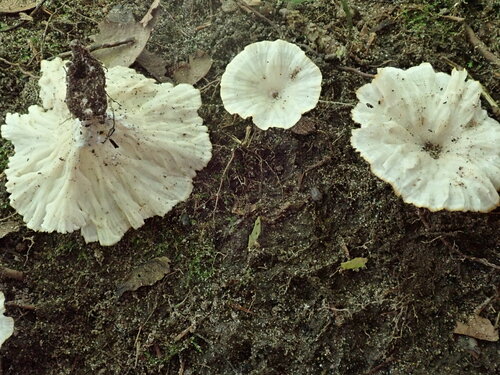
Cotylidia
Cotylidia is a fungal genus characterized by small to moderately sized, white to palely yet brightly colored, stalked, fan-shaped to funnel-shaped fruit bodies [https://web.archive.org/web/20070821184454/http://www.fungaljungal.org/family_pages/Cotylidia.htm with a smooth to wrinkled hymenium, tissues composed of monomitic hyphae, basidia producing smooth, nonamyloid spores, the absence of clamp connections, and bearing projecting cylindrical, thin-walled, hymenial cystidia. The genus is classified in the Hymenochaetales, however the type species, C. undulata has not yet been sequenced. P
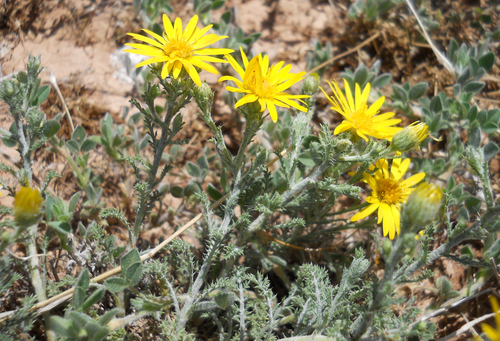
Sidera
genus of fungi
Repetobasidiaceae
Repetobasidiaceae is a phylogenetically defined family encompassing resupinate, poroid, stereoid, clavarioid, and agaricoid fungi, among other forms. Currently no description of the emended family circumscription is available.
Alloclavaria
Alloclavaria is a clavarioid genus in the Hymenochaetales recently segregated from Clavaria by molecular analysis. Phylogenetically related fungi are in the agaricoid genera Rickenella, Contumyces, Gyroflexus, Loreleia, Cantharellopsis and Blasiphalia, as well as the stipitate stereoid genera Cotylidia and Muscinupta. The only species as yet placed in Alloclavaria is the type, formerly known as Clavaria purpurea under which name it is often cited or illustrated.. It is suspected, via circumstantial evidence, i.e. habitat, but not proven, that Alloclavaria is mycorrhizal.
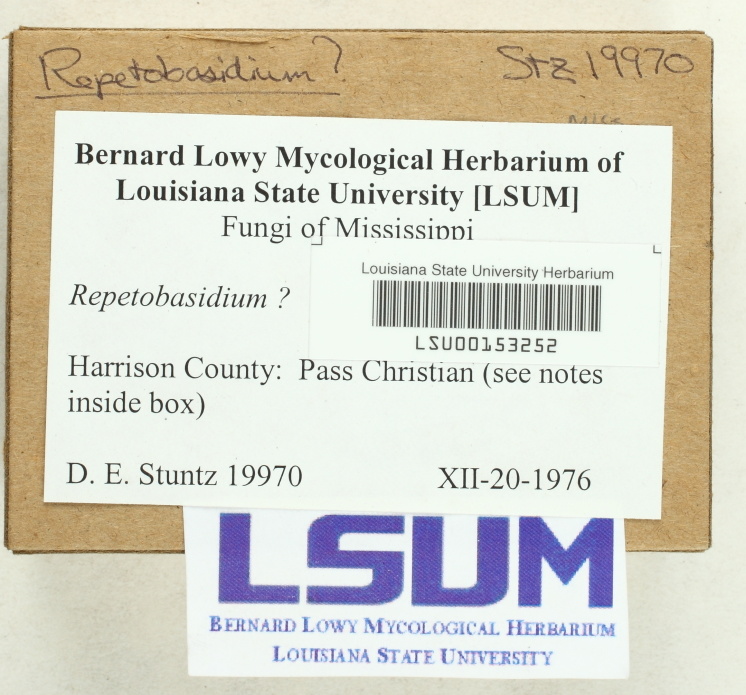
Repetobasidium
Repetobasidium is a genus of fungi in the Hymenochaetales. It was circumscribed by Swedish mycologist John Eriksson in 1958.
Contumyces
Contumyces is a genus of brightly colored possibly bryophilous or graminicolous agarics in the Hymenochaetales. They have an omphalinoid morphology, and therefore were previously classified in Omphalina. They inhabit mossy or grassy silty or sandy soils in the Northern Hemisphere. Phylogenetically related agarics are in the genera Rickenella, Gyroflexus, Loreleia, Cantharellopsis and Blasiphalia, as well as the stipitate-stereoid genera Muscinupta and Cotylidia and clavarioid genus, Alloclavaria. Contumyces is most similar to Rickenella and Blasiphalia and differs by having its cystidia on the