Category
page 1Rickettsiaceae
Rickettsia
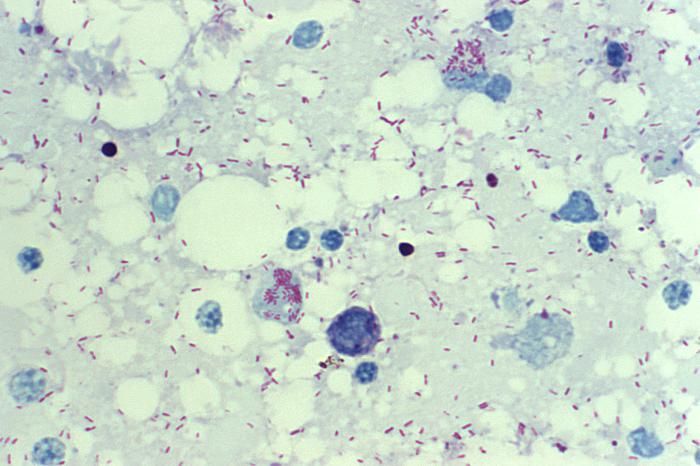
Rickettsia is a genus of nonmotile, gram-negative, nonspore-forming, highly pleomorphic bacteria that may occur in the forms of cocci (0.1 μm in diameter), bacilli (1–4 μm long), or threads (up to about 10 μm long). The genus was named after Howard Taylor Ricketts in honor of his pioneering work on tick-borne spotted fever.
Rickettsiaceae
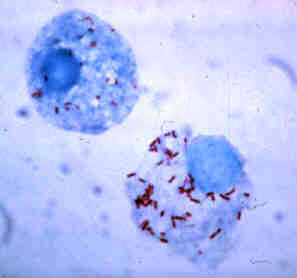
The Rickettsiaceae are a family of bacteria. The genus Rickettsia is the most prominent genus within the family. The bacteria that eventually formed the mitochondrion (an organelle in eukaryotic cells) is believed to have originated from this family. Most human pathogens in this family are in genus Rickettsia. They spend part of their lifecycle in the bodies of arthropods such as ticks or lice, and are then transmitted to humans or other mammals by the bite of the arthropod. It contains Gram-negative bacteria, very sensitive to environmental exposure, thus is adapted to obligate intracellular
Rickettsia rickettsii
species of bacterium
Rickettsia prowazekii
species of bacterium
Orientia tsutsugamushi
species of bacterium
Rickettsia conorii
species of bacterium
Rickettsia typhi
species of bacterium
Rickettsia akari
species of bacterium
Rickettsia felis
species of bacterium