Category
page 1Roccellaceae

Roccellaceae
The Roccellaceae are a family of mostly lichen-forming fungi in the order Arthoniales, established by the French botanist François Fulgis Chevallier in 1826. Species in the family exhibit various growth forms, including crustose and fruticose (shrub-like) thalli, and diverse reproductive structures. Roccellaceae species typically have disc-like () or slit-like () fruiting bodies, often with distinct blackened () margins. Molecular phylogenetics studies have revealed considerable genetic diversity and complex evolutionary histories within the family.

Enterographa
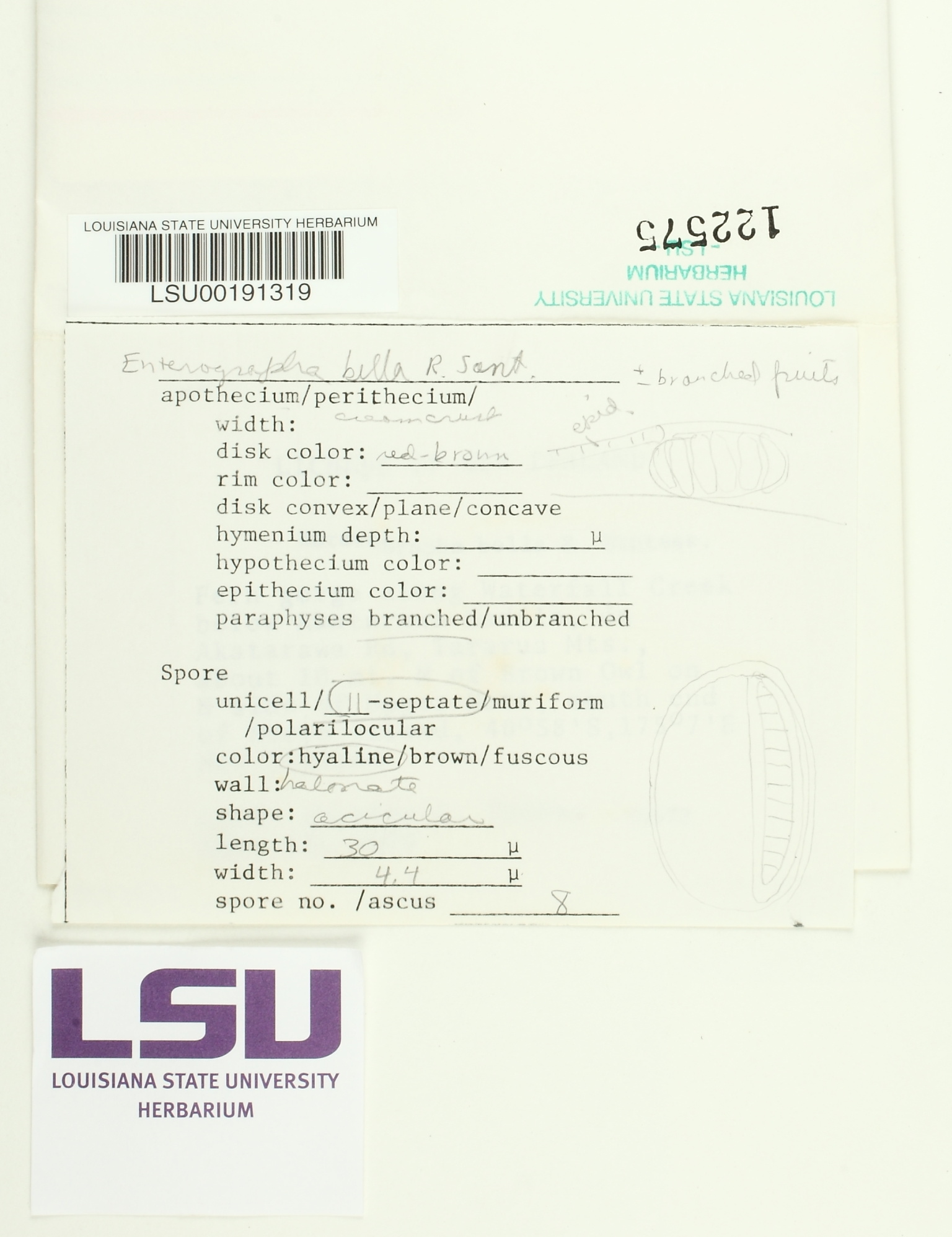
Enterographa is a genus of lichens in the family Roccellaceae. These lichens grow as thin, paint-like crusts on tree bark that range in colour from off-white and pale grey to dark olive-green or brown, sometimes breaking into networks of tiny, flat blocks. They reproduce through tiny slits or dots embedded in the crust that contain spindle-shaped spores divided into multiple cells, distinguishing them from other similar-looking bark lichens.

Lecanactis
Lecanactis is a genus of crustose lichens, commonly called old wood lichens. The mycobiont (fungus partner) is in the family Roccellaceae. The photobiont is an algae in the genus Trentepohlia. These lichens typically grow as thin crusts on tree bark or rocks, producing small black fruiting bodies that may appear as round discs or elongated slits. The genus contains about 20 species found worldwide, with some species considered rare and threatened by habitat loss.

Schismatomma
Schismatomma is a genus of mostly lichen-forming fungi in the family Roccellaceae. These lichens form thin crusts on bark or rock surfaces and reproduce through disc-shaped fruiting bodies that release spores, as well as through powdery patches that help them spread. At least one species is critically endangered due to habitat loss from deforestation in Colombia.

Dendrographa
Dendrographa is a genus of lichen-forming fungi in the family Roccellaceae. It has seven species. These lichens form small, shrubby tufts that cling to bark or coastal rocks along the Pacific seaboard, with brown-grey main branches and paler, pencil-thin tips that lack a protective outer skin. The genus was originally established in 1895 for a single Pacific coast species, but molecular studies in the 2010s expanded it by transferring four additional species from other genera and led to the discovery of a seventh species in Brazil.

Chiodecton
Chiodecton is a genus of lichens in the family Roccellaceae. The genus was circumscribed by the lichenologist Erik Acharius in 1814, with Chiodecton sphaerale assigned as the type species.

Lecanactis abietina
species of fungus
Enterographa bella
species of fungus

Sagenidiopsis
Sagenidiopsis is a genus of lichen-forming fungi in the family Arthoniaceae. It was circumscribed in 1987 by lichenologists Roderick Rogers and Josef Hafellner to contain the type species S. merrotsii, found in Australia. The characteristic features of the genus include the byssoid (cottony) thallus and bitunicate asci (enclosed in a double wall) that lack amyloid structures that are apparent in the thallus.

Roccellina
Roccellina is a genus of lichen-forming fungi in the family Roccellaceae.

Syncesia
Syncesia is a genus of lichen-forming fungi in the family Roccellaceae. These lichens typically grow as thin crusts on tree bark in humid environments, forming small raised patches that contain multiple tiny disc-shaped fruiting bodies. The genus includes about nine species found primarily in tropical and subtropical regions around the world, from the Caribbean and South America to Africa and Asia. Many species produce powdery patches on their surface that help them spread to new locations without sexual reproduction.
Syncesia afromontana
species of fungus

Graphidastra
Graphidastra is a genus of lichen-forming fungi in the family Roccellaceae.
Dichosporidium
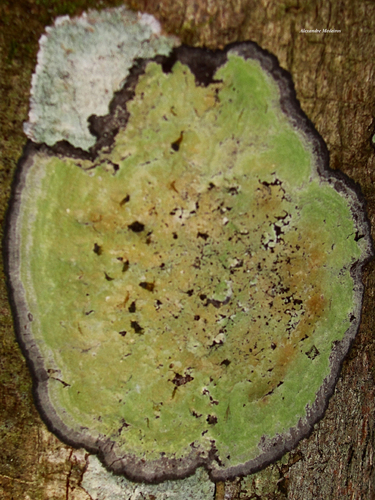
Dichosporidium is a genus of lichen-forming fungi in the family Roccellaceae.
Austrographa
Austrographa is a genus of lichen-forming fungi in the family Roccellaceae. It has three species. The genus was circumscribed in 2013 by lichenologists Laurens Sparrius, John Elix, and Alan Archer, with Austrographa kurriminensis assigned as the type species. The genus had been published invalidly on two separate occasions. All three species in the genus were found in a mangrove stand in Queensland, Australia. The genus was discovered in Australia, and the name Austrographa reflects this.

Sigridea
Sigridea is a genus of lichenized fungi in the family Roccellaceae.

Mazosia
Mazosia is a genus of lichen-forming fungi in the family Roccellaceae.
Syncesia madagascariensis
species of fungus
Lecanactis rubra
species of fungus
Simonyella
Simonyella is a genus of lichenized fungi in the family Roccellaceae. A monotypic genus, it contains the single species Simonyella variegata .
Ancistrosporella
Ancistrosporella is a genus of lichen-forming fungi in the family Roccellaceae. The genus was circumscribed in 1995 by Swedish lichenologist Göran Thor, with Ancistrosporella australiensis assigned as the type species. The International Union for Conservation of Nature has classified A. leucophila as a Critically Endangered species due to its limited known distribution in South America and the threats to its habitat from deforestation and land-use changes.
Enterodictyon
Enterodictyon is a genus of lichen-forming fungi in the family Roccellaceae.

Haplodina
Haplodina is a lichenized genus of fungi in the family Roccellaceae.

Syncesia farinacea
species of fungus
Phacographa
Phacographa is a genus of lichenicolous (lichen-dwelling) fungi in the family Roccellaceae. It has three species.
Sipmania
Sipmania is a genus of lichenized fungi within the order Arthoniales. The genus has been placed into the family Roccellaceae. This is a monotypic genus, containing the single species Sipmania peltata.
Streimannia
Streimannia is a genus of lichenized fungi in the family Roccellaceae. A monotypic genus, it contains the single species Streimannia varieseptata. The genus was circumscribed by Göran Thor in Opera Bot. vol.103 on page 84 in 1990.
Paralecanographa
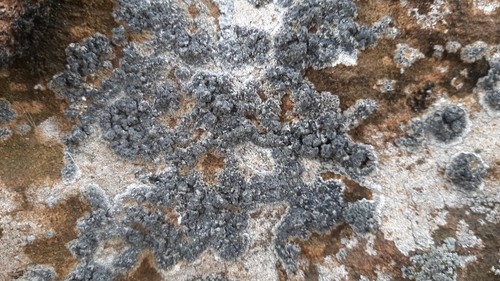
Paralecanographa is a single-species fungal genus in the family Roccellaceae. The genus was established in 2011 when genetic studies revealed that its single species does not belong where it had been previously classified and needed its own separate genus. This unusual lichen begins life as a parasite on other coastal lichens before eventually taking over and replacing its host, producing small black fruiting bodies that can appear as either tiny slits or rounded discs.