Category
page 1Romaleidae

Romaleidae
The Romaleidae or lubber grasshoppers are a family of grasshoppers, based on the type genus Romalea. The species in this family can be found in the Americas. It is known to be polyphagous, but there is not much else known regarding its diet. The descriptive "lubber" is nautical slang for a big and clumsy person, referring to this grasshopper's limited or nonexistent ability to fly, seemingly clumsy and narrow range of movement, and relatively large size.

Romalea microptera
Romalea is a genus of grasshoppers native to the Southeastern and South-central United States. As traditionally defined, it contains a single species, Romalea microptera, known commonly as the Georgia thumper, eastern lubber grasshopper, Florida lubber, or Florida lubber grasshopper, although some recent authorities regard Taeniopoda as a junior synonym, in which case there are about a dozen Romalea species in the southern United States, Mexico and Central America.

Tropidacris cristata
species of insect
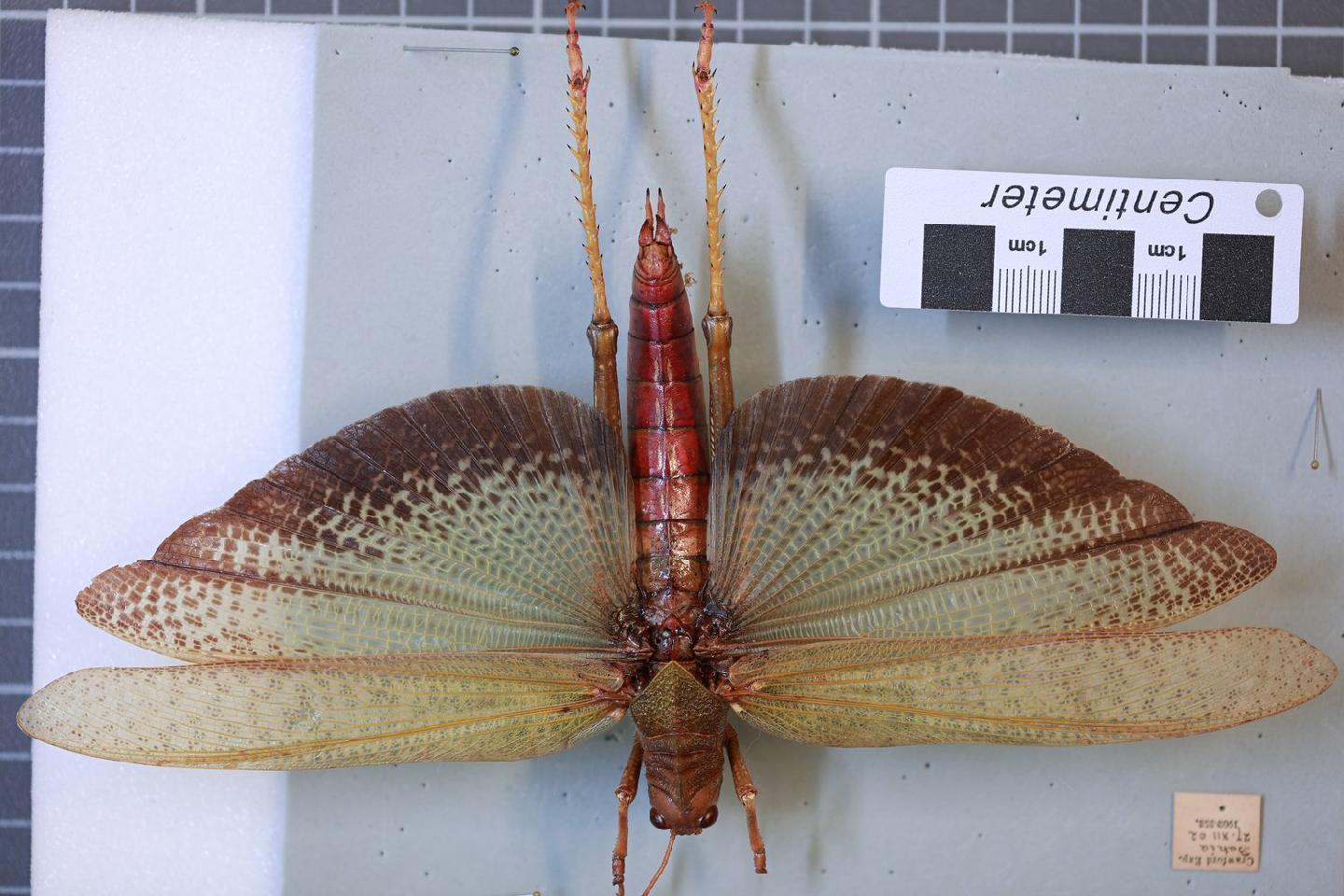
Tropidacris collaris
species of insect

Tropidacris
Tropidacris is a Neotropical genus of grasshopper in the family Romaleidae. They are among the largest grasshoppers in the world by length and wingspan, reaching up to and respectively. They are variably colored in green, brown, black, reddish or yellowish, and have wings that usually are conspicuously blue (T. collaris and T. descampsi) or red (T. cristatus) in flight. The gregarious and flightless nymphs have bright aposematic colors and are presumed to be toxic; a researcher who tasted one noted that it was very bitter, similar to a monarch butterfly.
Chromacris speciosa
species of insect

Titanacris albipes
species of insect
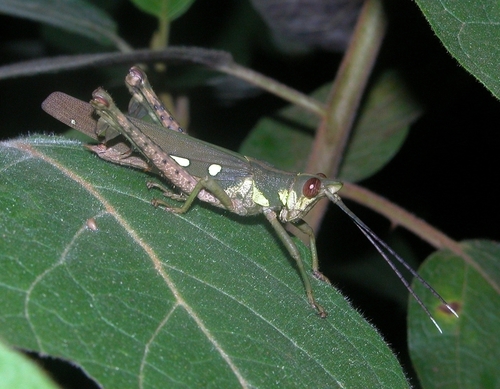
Aeolacris caternaultii
species of insect

Taeniopoda eques
species of insect
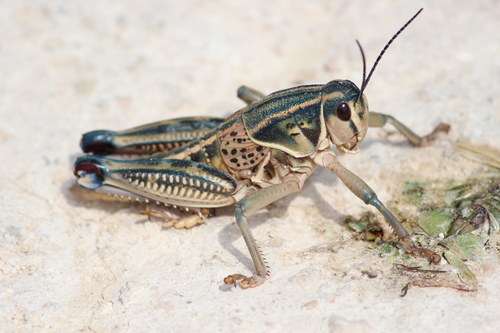
Plains Lubber Grasshopper
species of insect

Spaniacris deserticola
species of insect

Prionolopha serrata
species of insect
Titanacris
Titanacris is a genus of large grasshoppers in the subfamily Romaleinae and tribe Tropidacrini. They are found from southeastern Mexico, through Central and South America, ranging south to northernmost Argentina.
Brachystola
Brachystola is a genus of grassland lubber grasshoppers in the family Romaleidae, found in the United States and Mexico. They are among the largest grasshoppers found in North America. The species Brachystola magna has meiotic chromosomes that are relatively large and easily visible, and was used in early genetic studies.
thumb|Brachystola mexicana

Chromacris psittacus
species of insect
Taeniopoda
Taeniopoda is a genus of horse lubbers, fairly large grasshoppers in the family Romaleidae that are native to southwestern United States, Mexico and Central America. There are about 12 described species in Taeniopoda. Taeniopoda is very closely related to Romalea (members of the two genera can even produce fertile hybrids in captivity), leading some recent authorities to consider the former a junior synonym the latter.
Abila
genus of insects

Phrynotettix robustus
species of insect

Quitus
Quitus is a genus of grasshoppers in the subfamily Romaleinae; described by Hebard in 1924.
Romaleinae
Romaleinae is a subfamily of lubber grasshoppers in the family Romaleidae, found in North and South America. More than 60 genera and 260 described species are placed in the Romaleinae.
Chromacris
Chromacris is a genus of lubber grasshoppers in the family Romaleidae. The nine described species in Chromacris are found in Mexico, Central America, or South America. They often have bright aposematic colors and they are presumed to be toxic.

Phrynotettix tshivavensis
species of insect

Dracotettix
Dracotettix is a genus of dragon lubbers in the family Romaleidae. There are at least three described species in Dracotettix.

Dracotettix monstrosus
species of insect

Legua
Legua is a genus of grasshoppers in the subfamily Romaleinae; described by Walker in 1870.

Phrynotettix
Phrynotettix is a genus of toad lubbers in the family Romaleidae. There are at least three described species in Phrynotettix.
Megacheilacris
Megacheilacris is a genus of grasshopper, in the tribe Taeniophorini, found in Central and South America.