Category
page 1Rotor machines
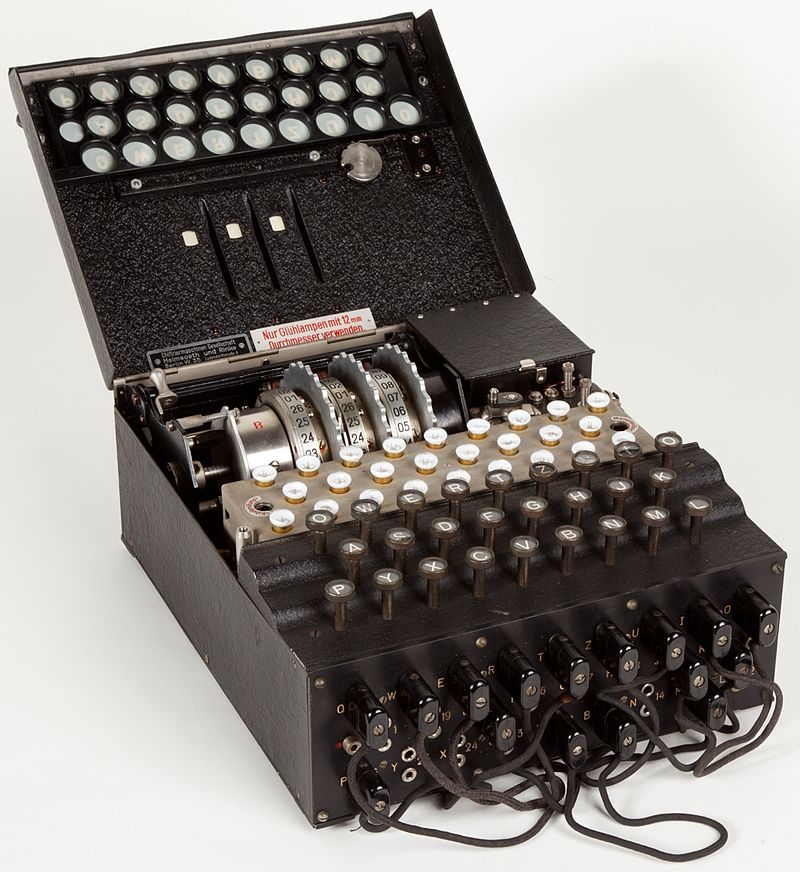
Enigma
German cipher machine
rotor machine
genre of electromechanical encryption devices, used widely from the 1920s to the 1970s
%204.jpg)
SIGABA
thumb|upright=1.2|SIGABA cipher machine at the National Cryptologic Museum, with removable rotor assembly on top
In the history of cryptography, the ECM Mark II was a cipher machine used by the United States for message encryption from World War II until the 1950s. The machine was also known as the SIGABA or Converter M-134 by the Army, or CSP-888/889 by the Navy, and a modified Navy version was termed the CSP-2900.

Typex
thumbnail|right|upright=1.2|Typex was based on the commercial Enigma machine, but incorporated a number of additional features to improve the security. This model, a Typex 22, was a late variant, incorporating two plugboards.
Fialka
In cryptography, Fialka (M-125) is the name of a Cold War-era Soviet cipher machine. A rotor machine, the device uses 10 rotors, each with 30 contacts along with mechanical pins to control stepping. It also makes use of a punched card mechanism. Fialka means "violet" in Russian. Information regarding the machine was quite scarce until c. 2005 because the device had been kept secret.
Edward Hebern
American cryptographer (1869-1952)
Red
cipher machine
KL-7
The TSEC/KL-7, also known as Adonis was an off-line non-reciprocal rotor encryption machine. The KL-7 had rotors to encrypt the text, most of which moved in a complex pattern, controlled by notched rings. The non-moving rotor was fourth from the left of the stack. The KL-7 also encrypted the message indicator.
NEMA
coding machine
Lacida
The Lacida, also called LCD, was a Polish rotor cipher machine. It was designed and produced before World War II by Poland's Cipher Bureau for prospective wartime use by Polish military higher commands. Lacida was also known as Crypto Machine during a TNMOC Virtual Talk.