Category
page 1Rupelian genus first appearances

Paraceratherium
Paraceratherium is an extinct genus of hornless rhinocerotoids belonging to the family Paraceratheriidae. It is one of the largest terrestrial mammals that has ever existed and lived from the Early to Late Oligocene epoch (34–23 million years ago). The first fossils were discovered in what is now Pakistan, and remains have been found across Eurasia between China and the Balkans. Paraceratherium means "near the hornless beast", in reference to Aceratherium, the genus in which the type species P. bugtiense was originally placed.

Fistularia
The cornetfishes or flutemouths are a small family, the Fistulariidae, of extremely elongated fish in the order Syngnathiformes. The family consists of a single genus, Fistularia, with four species, found worldwide in tropical and subtropical marine environments.

Nycticorax
Nycticorax is a genus of night herons. The name Nycticorax means "night raven" and derives from the Ancient Greek νύκτος, nuktos "night" and κοραξ, korax, "raven". It refers to the largely nocturnal feeding habits of this group of birds, and the croaking crow-like call of the best known species, the black-crowned night heron.

Sebastes
Sebastes is a genus of marine ray-finned fish belonging to the subfamily Sebastinae part of the family Scorpaenidae, most of which have the common name of rockfish. A few are called ocean perch, sea perch or redfish instead. They are found in the Atlantic and Pacific Oceans.

Mobula
Mobula is a genus of rays in the family Mobulidae that is found worldwide in tropical and warm, temperate seas. Some authorities consider this to be a subfamily of the Myliobatidae (eagle rays). Species of this genus are often collectively referred to as "devil rays", "flying mobula", or simply "flying rays", due to their propensity for breaching, sometimes in a spectacular manner. These rays gather in groups and leap out of the surface into the air up to around before splashing back into the water.
.jpg)
Chaetodon
Chaetodon is a tropical fish genus in the family Chaetodontidae. Like their relatives, they are known as "butterflyfish". This genus is by far the largest among the Chaetodontidae, with about 90 living species included here, though most might warrant recognition as distinct genera.
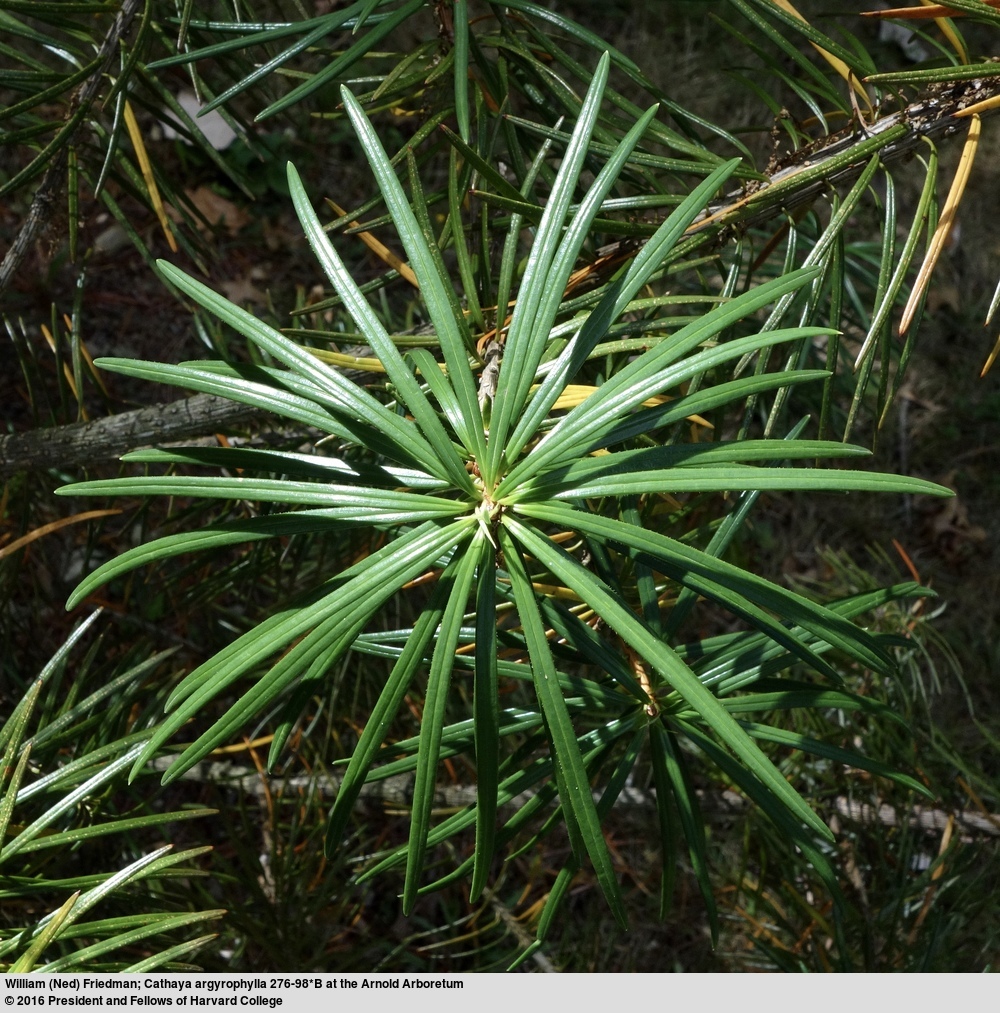
Cathaya
Cathaya is a genus in the pine family, Pinaceae, with one known living species, Cathaya argyrophylla. In foliage and cone morphology, Cathaya has been considered a member of the subfamily Laricoideae, closely related to Pseudotsuga and Larix, but more recent genetic studies have suggested a closer relationship to Pinus and Picea in the subfamily Pinoideae. A second species, C. nanchuanensis, is now treated as a synonym, as it does not differ from C. argyrophylla in any characters.

Scarus
Scarus is a genus of parrotfishes. With 52 currently recognised extant species, it is by far the largest parrotfish genus. The vast majority are found at reefs in the Indo-Pacific, but a small number of species are found in the warmer parts of the eastern Pacific and the western Atlantic, with a single species, Scarus hoefleri in the eastern Atlantic.
Sillago
Sillago is a genus of fish in the family Sillaginidae and the only non-monotypic genus in the family. Distinguishing the species can be difficult, with many similar in appearance and colour, forcing the use of swim bladder morphology as a definitive feature. All species are benthic in nature and generally coastal fish, living in shallow, protected waters although there are exceptions. Minor fisheries exist around various species of Sillago, making them of minor importance in most of their range. This genus has the widest distribution of any smelt-whiting genus, spanning much of the Indo-Pacifi

Squalodon
Squalodon is an extinct genus of whales of the Oligocene and Miocene epochs, belonging to the family Squalodontidae. Named by Jean-Pierre Sylvestre de Grateloup in 1840, it was originally believed to be an iguanodontid dinosaur but has since been reclassified. The name Squalodon comes from Squalus, a genus of shark. As a result, its name means "shark tooth". Its closest modern relatives are the 2 species of the genus Platanista ( the Ganges river dolphin and Indus river dolphin).

Calamus
genus of fishes
Coryphaenoides
Coryphaenoides is a genus of rattails which is found in all oceans of the world. They are found in deep waters and C. yaquinae, recorded to , is the only member in the family known from the hadal zone.

Nimravus
Nimravus is an extinct genus of "false" saber-toothed cat that lived in North America and Eurasia during the Eocene and Oligocene epochs 35.3—27.1 mya, existing for approximately . Not closely related to true saber-toothed cats, they evolved a similar form through parallel evolution. Fossils have been uncovered from western U.S. from Oregon to Southern California and Nebraska, and also from Eurasia from France to Mongolia.
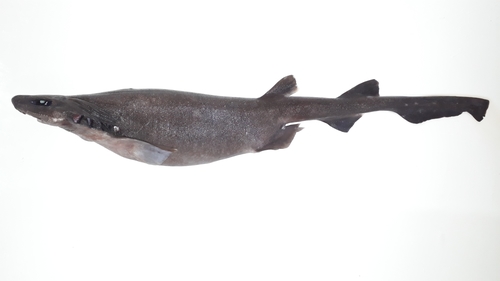
Bythaelurus
Bythaelurus is a genus of sharks belonging to the family Pentanchidae, the deepwater catsharks. The genus Bythaelurus Compagno 1988 was first described as a subgenus of Halaelurus Gill 1862 based on several morphological characteristics including a soft body with thin skin, a bluntly rounded snout without a pointed, knob-like tip, and eyes not noticeably elevated on the dorsal surface of the head. Members of this genus are generally found in deep water and have more somber body coloration.

Pontinus
Pontinus is a genus of marine ray-finned fish belonging to the family Scorpaenidae, the scorpionfishes. The scorpionfishes in this genus are distributed in the tropical and warm temperate parts of the Atlantic, Indian and Pacific oceans.
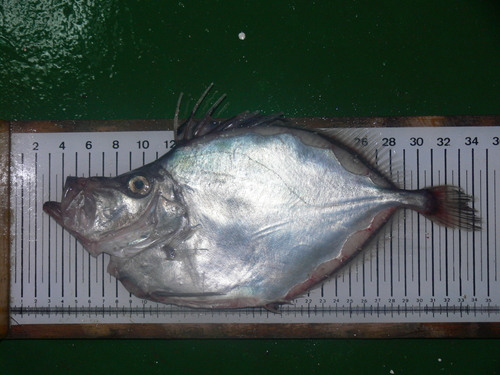
Zenopsis
Zenopsis is a genus of dories, a group of marine fish. There are five extant species, but the genus is also known from fossils dating back to the Oligocene epoch. They largely resemble the better-known John Dory, and are typically found in relatively deep water, below normal scuba diving depth.
%20skull%20compared%20to%20Leptocyon%20vafer%20skull%20cast%20(bottom)%20(cropped).jpg)
Leptocyon
The genus Leptocyon (Greek: leptos slender + cyon dog) includes 11 species and is the oldest known canine. They were small and weighed around . They first appeared in North America around 34 million years ago in the Oligocene, at the same time as the Borophaginae, with whom they share features, indicating that these were two sister groups. Borophaginae skull and dentition were designed for a powerful killing bite compared with the Leptocyon which were designed for snatching small, fast-moving prey. The species L. delicatus is the smallest canid to have existed. At the close of their genus 9 mi
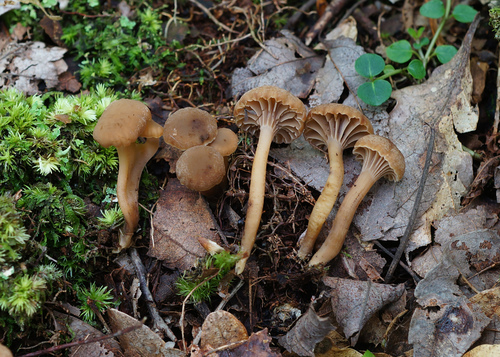
Hymenocephalus
genus of fishes
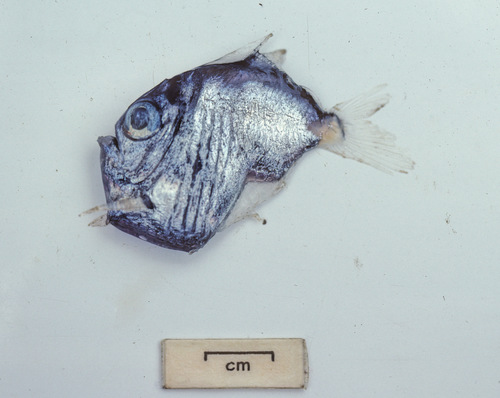
Sternoptyx
Sternoptyx is an oceanic ray-finned fish genus which belongs in the family Sternoptychidae. This is the type genus of the Sternoptychidae, as well as the marine hatchetfish subfamily Sternoptychinae.

Protoceras
Protoceras ('first horn') is an extinct genus of Artiodactyla, of the family Protoceratidae, endemic to North America. It lived from the Oligocene to the Early Miocene 33.3—16.0 Ma, existing for approximately .
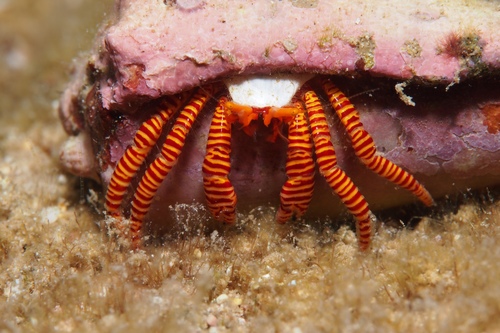
Ciliopagurus
Ciliopagurus is a genus of hermit crabs, of the family Diogenidae, which are sometimes referred to as the "left-handed hermit crabs", because in contrast to most other hermit crabs, the left chela (claw) is enlarged instead of the right. They are found in the Indo-Pacific region and in the eastern Atlantic Ocean.
Phlaocyon
Phlaocyon (from Greek phlao, "eat greedily" and cyon, "dog") is an extinct genus of the Borophaginae subfamily of canids native to North America. It lives from the Early Oligocene to the Early Miocene epoch 33.3–16.3 Mya, existing for approximately . It is closely related to Cynarctoides.
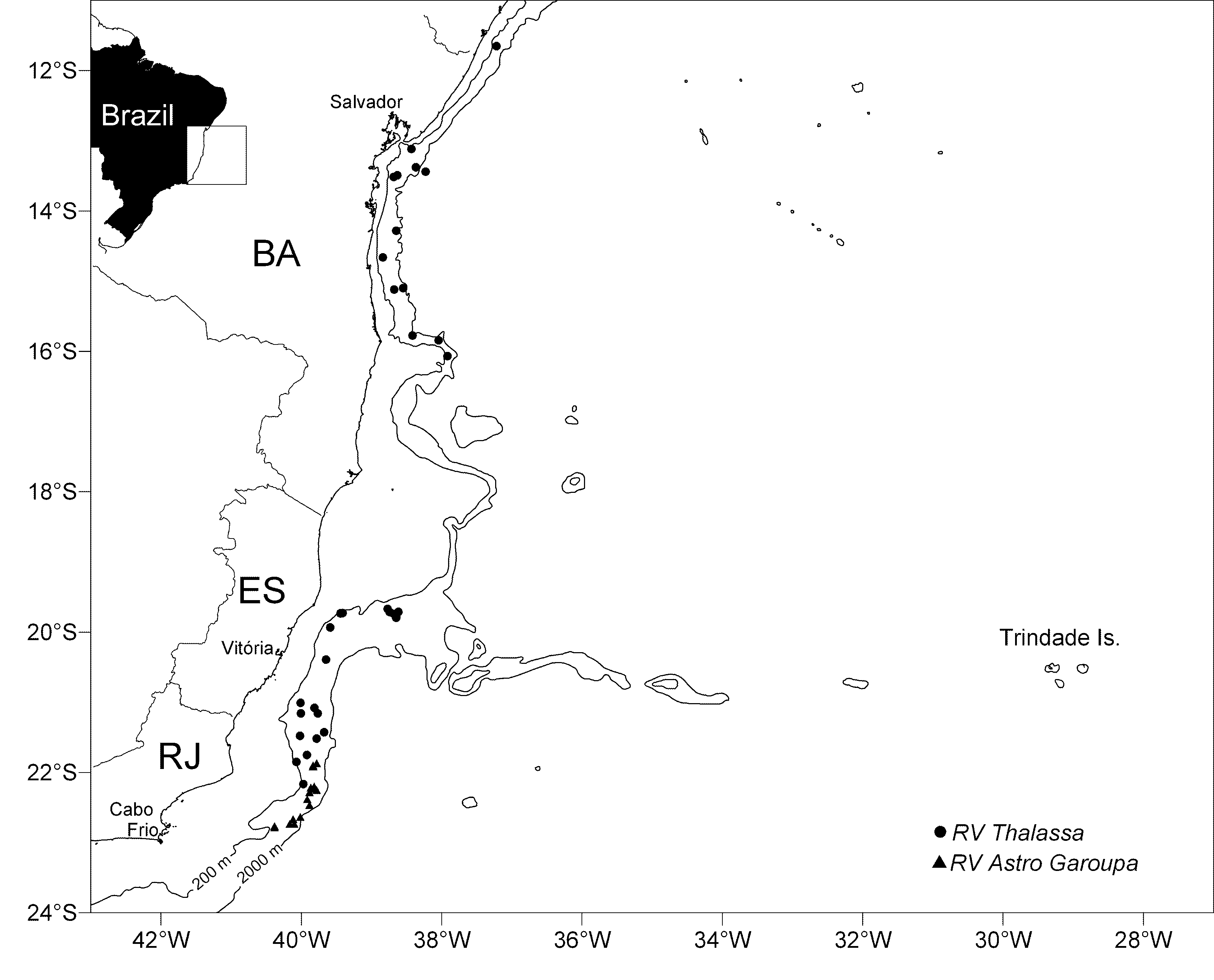
Polyipnus
Polyipnus is a genus of oceanic ray-finned fish in the family Sternoptychidae. This is the largest genus of the marine hatchetfishes subfamily Sternoptychinae and indeed of the entire Sternoptychidae. It is not quite as apomorphic as their relatives; it may be that the genus is actually a paraphyletic assemblage of less advanced Sternoptychinae and would need to be split.
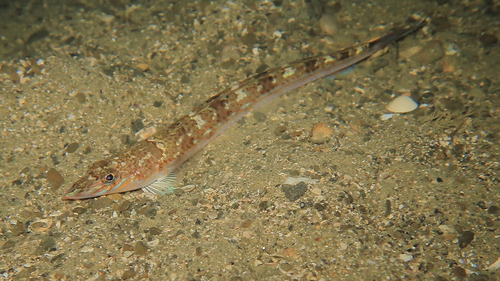
Hemerocoetes
Hemerocoetes is a genus of ray-finned fishes belonging to the family Hemerocoetidae.
Mesocyon
Mesocyon ("middle dog") is an extinct genus of the Hesperocyoninae subfamily of early canids native to North America. It lived from the Oligocene to Early Miocene, 30.3—20.3 Ma, existing for approximately . Fossils are known from Oregon, southern California and the northern Great Plains. It was roughly coyote-sized, and the first known canid to have a primarily meat-based diet.
Adilophontes
Adilophontes is an extinct monospecific genus of bear dogs, endemic to North America during the Oligocene to Miocene. It lived from 24.8 to 20.6 Ma, existing for approximately . Fossils have been found in Wyoming.
Behemotops
Behemotops (from the Biblical monster Behemoth, by Linnaeus and others believed to be a hippo) is an extinct genus of herbivorous marine mammal. It lived from the Early Oligocene (Rupelian) through the Late Oligocene (33.9 mya—23 Mya), existing for approximately . It is the most primitive known desmostylian, believed to be close to the ancestry of all other desmostylians.
Sunkahetanka geringensis
Sunkahetanka is an extinct monospecific genus of the Hesperocyoninae subfamily of early canids native to North America. It lived during the Oligocene, 30.8—26.3 Ma, existing for approximately . In form, it was intermediate between the small Cynodesmus and the later Enhydrocyon, the first hypercarnivorous, "bone-cracking", canid.
Paradaphoenus
Paradaphoenus is a physically small amphicyonid that inhabited North America from the Early Oligocene to the Middle Miocene, 33.3—15.97 Ma, existing for approximately . Fossils have been found at Haystack, Oregon, Banner County, Nebraska, Dawes County, Nebraska, and Sheep Mtn, South Dakota.
Rhizocyon
Rhizocyon ("root dog") is an early member of the subfamily Borophaginae, an extinct subgroup of canids that were endemic to western North America during the Oligocene epoch, living from ~31—24.5 Ma., existing for approximately .
Ectopocynus
Ectopocynus ("strange dog") is an extinct genus of bone crushing canid which inhabited North America from the Oligocene to the Early Miocene. It lived from 33.3 to 16.0 Ma and existed for approximately .
Philotrox condoni
Philotrox is an extinct monospecific genus of the Hesperocyoninae subfamily of early canids native to North America. It lived during the Oligocene, 30.8—26.3 Ma, existing for approximately . In form, it was intermediate between the small Cynodesmus and the later Enhydrocyon, the first hypercarnivorous, "bone-cracking", canid.

Psenes
Psenes is a genus of driftfishes native to the Indian, Atlantic and Pacific oceans.
Osbornodon
Osbornodon ("Osborn's tooth") is an extinct genus of canid that were endemic to North America and which lived from the Oligocene to the Early Miocene, 33.9—15.97 Ma (AEO), existing for approximately .
It was the last surviving genus of the hesperocyonine subfamily, the oldest subfamily of canids. The genus is named for Henry Fairfield Osborn.
==Species==
Seven known species of Osbornodon existed:
Osbornodon brachypus Cope 1881
Osbornodon fricki Wang 1994 (18 Ma)
Osbornodon iamonensis Sellards 1916 (21 Ma)
Osbornodon renjiei Wang 1994 (33 Ma)
Osbornodon sesnoni Macdonald 1967 (32 Ma)
Osbornod
Maximucinus muirheadae
Maximucinus is an extinct genus of thylacinid that lived during the Middle Miocene in what is now Queensland, Australia. It is known only a second upper molar found at the Riversleigh World Heritage Area. It was the largest thylacinid of its time, attaining a body size of 18 kg (40 lbs). The genus is monotypic, containing only one species, Maximucinus muirheadae.
Enhydrocyon
Enhydrocyon is an extinct genus of bone crushing canid which inhabited North America during the Oligocene and Early Miocene, 30.8—20.4 Ma, existing for approximately .